
From classical computers to the modern day mobile and VR era, science and technology have completely revolutionized the world like never before. And it seems to be just the beginning. The world is about to witness the next big revolution in technology with Quantum Computing.
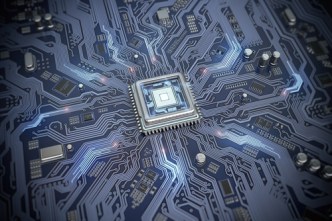 Where do we stand when it comes to understanding it?
Researchers and scientists from all over the world have thoroughly explored and realized the exceptional computing capabilities of this discrete quantity of energy. Leading technology companies namely, IBM, Google, and several others are striving to introduce a whole new era of quantum-based computers. IBM has unveiled “System One” and shared its vision to bring this unique invention to the commercial market.
How does Quantum Computing work?
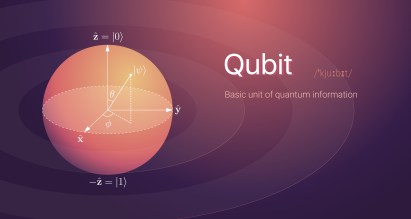
In order to draw a better understanding of this whole new technology, one has to understand the concept of “Qubits” which is similar to “Bits” in classical computing. Just like classical computing relies on the binary system that builds bits, Quantum computing relies on Qubits. These super-conducting electrons – a type of subatomic particle – enable a multilayer circuit to work.
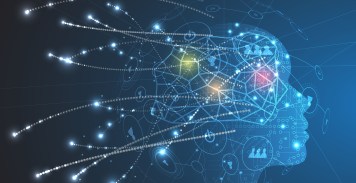 The Quantum Leap and Artificial Intelligence
In an era where Artificial Intelligence can analyze and break down the data using classical computing, “System One” is expecting to give an unbelievable boost to AI with Quantum Computing. It looks like IBM and many other renowned names in the field of science and technology have started to believe Quantum Computing as a dream for the “not too distant future” of the modern day world.
What are the Current Challenges?
According to the researchers, Quantum Computing can add great value to the existing concept of Artificial Intelligence by enabling it to extract restrained patterns within huge datasets. According to IBM scientists, they aim to build a strong and truly capable Quantum Machine which can outpace any classical computer when it comes to machine learning tasks.
Most of the industry experts and scientists have concluded that Quantum Computing may contribute extensively to the area of medical research and climate change but will not be sophisticated enough to resolve the existing scientific mysteries.
On the other hand, scientists and researchers are still striving to predict the possible uses of Quantum Computing. Moreover, they are still unclear about patterns and data-centric discoveries they should look for.
Conclusion
Leading companies are trying new and unique ways to use quantum computing and find out how it can aid and extend the various capabilities of classic computing. Researchers have concluded that the idea of Quantum Computing can benefit several diverse industries across the world which could include healthcare, climate, finance, energy and a lot more. Keeping this in view, it cannot be denied that Quantum Computing is about to become the future of today’s world while bringing exceptional technological leaps in other areas of research and development.

 Algorithms Now Run Several Industries
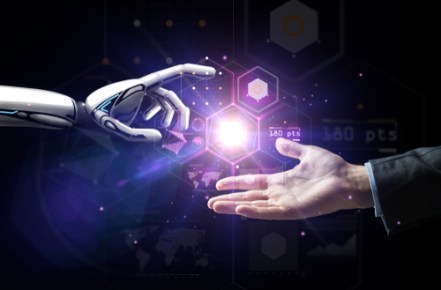 Human Vs Machines
 The Latest Scientific Development
 Lesovik’s team has conducted numerous experiments to reverse time on a single electron programmed quantum system. Compared to the three-qubits system that is more complex and resulted in only 49% succession in the objective, they found it easier to achieve an unbelievable 85% of succession towards their desired goal with a two-qubit system.
 The Russian Government has already decided to disconnect the internet across Russia before April this year. However, Russians need not worry as they will only carry out the disconnection experiment for a brief moment. The brief internet interlude will help the government gain critical insights in order to provide feedback for modifications in accordance with the telecom law that was proposed in the Russian Parliament at the end of 2018.
 especially in this technology dominated world. They are trying to figure out a way in which Russia can be completely disconnected from the internet without hindering government bodies, companies and consumers and starting up again smoothly.
 The director of the Institute for Sustainability and Energy at Northwestern University, Professor Micheal R, Wasielewski, said “Whether you use solar or wind to generate electricity, you have a source that’s intermittent and not storable, so what you need to do is find a storage method. This fake foliage closes the carbon cycle so you don’t have any excess CO2, so it’s an environmentally friendly way of storing renewable energy.”

 CERN claims that this new collider would be three to four times the size and possess seven to ten times the power of the LHC making it faster and able to cover larger parameters with more precision.
 R. E. KEARNEY