
The safety of many countries depends on their ability to defend themselves during times of war, which often requires transporting secret messages. Each country has their own spies that are responsible for obtaining and transferring this information securely. As technology has advanced, much of this secret information is stored in password protected systems. Computers often generate these passwords which makes it possible for them to be hacked. This has caused ongoing research to develop secure ways of hiding information physically. One of these is chemical cryptography, which involves creating passwords made from atomic structures.
 Although not currently on the market, the technology shows immense potential. Messages would be secured by coding them in the form of small molecules, that would be absorbed by a napkin. They could only be decrypted using the key, which would be the molecule’s structure. The method has been developed by German company Karlsruher Institut fur Technologie. Their molecular library has at least 500,000 keys that, because of their structural diversification, would be impossible to decode without the sample. The message can also only be revealed after being scanned with the same equipment used by microbiologists to analyze new compounds in their research. Researchers plan on expanding the technology to including DNA which would increase the number of keys that could be made, making passwords even more secure.
The small size of molecular keypad locks also makes them difficult to detect. This is a form of steganography, where both the locks and keys are hidden. This technology was first developed in 2007, with the possibility of only one password being used per lock. Researchers have recently found ways to allow locks to have multiple passwords, according  to a study published in Journal of the American Chemical Society. Most florescent molecular sensors generate discreet optical signals but the one used was able to generate a unique optical ‘fingerprint’ for each chemical, making it possible to differentiate between them.
This inclusion enables the system to operate like both an electronic keypad lock, which can be opened by entering the correct password, and a biometric lock, opened by recognizing a unique signature (such as a fingerprint). Electronic locks have accessible entry keys, placed on the keypad, and can be opened by anybody that knows the password. Biometric locks are more secure as each user carries their own key. The molecular keypad lock would require both a password and optical fingerprint and would increase security even more, as the key is chemical and the correct password would need to be entered.

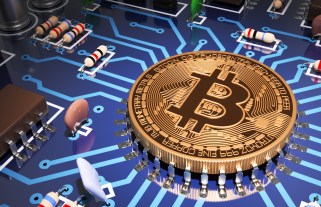 The fundamental purpose of blockchains is to distribute their ledgers across a decentralized network of nodes, replacing the need for a centralized third party to verify transactions. This method enables thousands of copies of the ledger to be stored, across all the nodes, ensuring that a single point cannot be targeted by hackers. In addition, it makes it possible for anybody with a computer, and internet access, to become a part of the ledger’s maintenance.
 By decentralizing currency, blockchain technology and ‘mining’ gives a chain of people the power to introduce new money into the economy. It also presents the opportunity for them to manage the currency currently controlled by the banks, and other appointed systems. ‘Mining’ is crucial in determining that there is value to the new currency being introduced, because of the costs associated with the running of the nodes. This idea of money being stored outside of government control is appealing, especially in countries where state finances are unpredictable. Although the technology is in its infancy, there is the high possibility that its use will expand before long, as more people are beginning to trust the system and move away from government control.
 The mission is scheduled to arrive on Mars in February 2021, where the helicopter will be deployed from the transport rover and placed on the ground. After its battery has been charged and several operational tests performed, the transport vehicle will then drive to a safe distance from which to issue commands. Although they will be sent at the speed of light, any instructions from Earth will take several minutes to reach the helicopter. During its first 30 days on Mars, the helicopter will have five different flight missions. The flights will gradually increase in time and distance, with the first lasting 30 seconds, at 20 feet off the ground.
 Dynamic RAM (D-RAM) is the most common type of RAM, in which each memory cell consists of a transmitter and a capacitor to store electrical charges. The memory is referred to as dynamic because it is only held briefly before it leaks away and needs to be charged periodically to retain data.
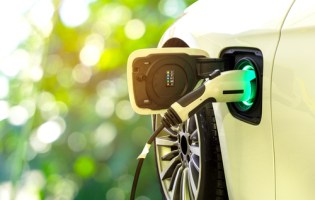 fossil fuels by 2030. The government has already drafted a map to install more electric charging roads to keep the batteries of electric vehicles affordable, as well as to prevent them from losing their charge during a journey.
 Cyber-attacks require extensive knowledge of an organization’s systems, and between 50 and 80% of them have access to insider information. A significant percentage of cybercrime is accomplished by phishing emails, of which the most successful are Spear Phishing. These emails are careful crafted to appear like they are coming from a legitimate source, such as known company executives, and may include detailed information about the person and their job. These sophisticated attacks often require multi-pronged responses. After a cyber-attack, major companies have suffered reputational damage which can be just as devastating. Companies are finding that as their technology increases, they also have to employee increasing cyber security measures which may offset profits.
 Most cybercrime takes place using malicious software that attacks computers, through various methods, which includes:
 R. E. KEARNEY