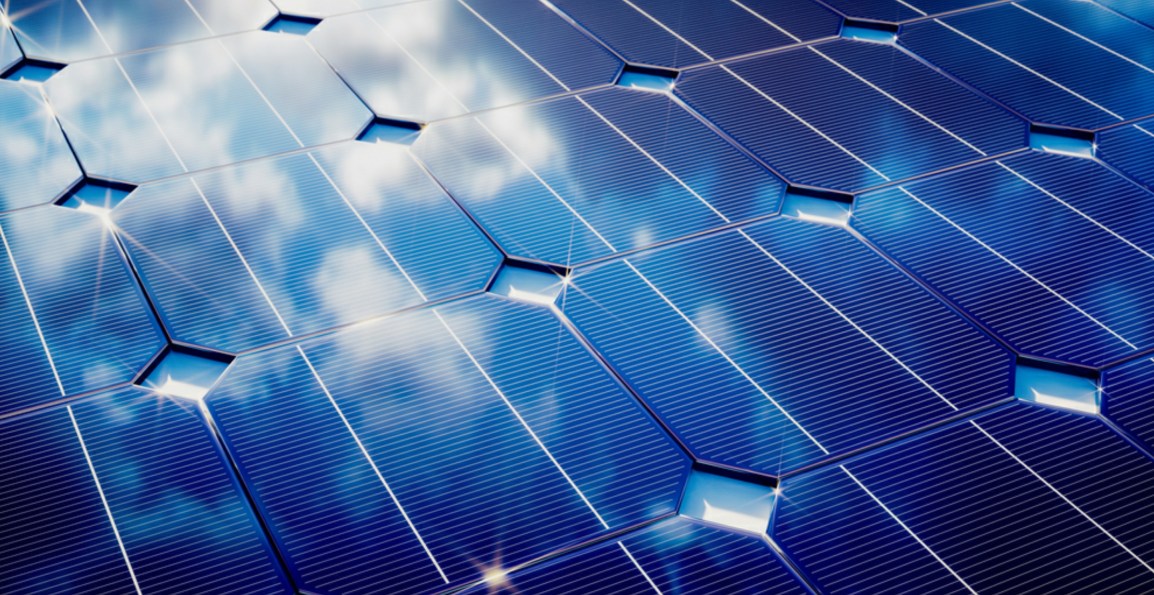
The government of Australia plans to increase the amount of energy the country gets from renewable sources. With the help of Elon Musk’s company, Tesla, they plan on building the largest virtual power plant in the world. It will be made up of 50,000 households that will be provided with power from Tesla batteries and solar panels. The project is currently underway with installation scheduled to take place over the next four years. The solar panel will  generate energy to be stored in the batteries, with the excess being sent back to the centrally controlled grid to help power the rest of the state.
A statewide blackout in 2016, blamed on the failure of renewable energy to cover the usage during peak periods and severe weather which caused transmission towers to topple, initiated the start of the project. To create a solution to the country’s energy problems Tesla gave themselves a 100-day deadline, to build the world’s biggest battery. Alongside Tesla’s installations, the government has created their own mission which will subsidize AU$2500 of the initial costs for each system.
A trial has begun, with 1100 public housing properties expected to have a 5kW solar panel system and a 13.5kW Tesla Powerwall 2 battery installed. This will be followed by another 24,000 public houses receiving the same system. The expansion into supplying private homes will begin in 2019. The company expects the system to provide as much energy as a large coal power plant or gas turbine. Once power has been stored in the battery, it will be able to restore energy to homes in a fraction of a second following an outage.
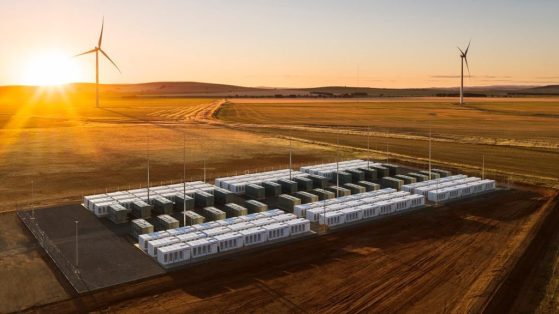 The funding for the program will come from a grant of AU$2,000,000, plus a loan of AU$30,000,000 from a state technology fund. The project’s total cost is expected to be AU$800,000,000, with the remaining funding provided by investors. Interest in the program has already been expressed by 6500 investors, and its scale may be increased if this number grows. The government expects that the virtual power plant will provide 20% of the state’s average daily requirements, as well as cut the costs of power by 30%. The project’s success will also prove South Australia as a leader in the use of renewable energy and could encourage more countries to invest in the same layout.

 Although not currently on the market, the technology shows immense potential. Messages would be secured by coding them in the form of small molecules, that would be absorbed by a napkin. They could only be decrypted using the key, which would be the molecule’s structure. The method has been developed by German company Karlsruher Institut fur Technologie. Their molecular library has at least 500,000 keys that, because of their structural diversification, would be impossible to decode without the sample. The message can also only be revealed after being scanned with the same equipment used by microbiologists to analyze new compounds in their research. Researchers plan on expanding the technology to including DNA which would increase the number of keys that could be made, making passwords even more secure.
 to a study published in Journal of the American Chemical Society. Most florescent molecular sensors generate discreet optical signals but the one used was able to generate a unique optical ‘fingerprint’ for each chemical, making it possible to differentiate between them.
 The fundamental purpose of blockchains is to distribute their ledgers across a decentralized network of nodes, replacing the need for a centralized third party to verify transactions. This method enables thousands of copies of the ledger to be stored, across all the nodes, ensuring that a single point cannot be targeted by hackers. In addition, it makes it possible for anybody with a computer, and internet access, to become a part of the ledger’s maintenance.
 By decentralizing currency, blockchain technology and ‘mining’ gives a chain of people the power to introduce new money into the economy. It also presents the opportunity for them to manage the currency currently controlled by the banks, and other appointed systems. ‘Mining’ is crucial in determining that there is value to the new currency being introduced, because of the costs associated with the running of the nodes. This idea of money being stored outside of government control is appealing, especially in countries where state finances are unpredictable. Although the technology is in its infancy, there is the high possibility that its use will expand before long, as more people are beginning to trust the system and move away from government control.
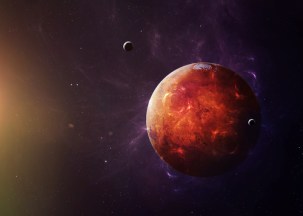 The mission is scheduled to arrive on Mars in February 2021, where the helicopter will be deployed from the transport rover and placed on the ground. After its battery has been charged and several operational tests performed, the transport vehicle will then drive to a safe distance from which to issue commands. Although they will be sent at the speed of light, any instructions from Earth will take several minutes to reach the helicopter. During its first 30 days on Mars, the helicopter will have five different flight missions. The flights will gradually increase in time and distance, with the first lasting 30 seconds, at 20 feet off the ground.
 Dynamic RAM (D-RAM) is the most common type of RAM, in which each memory cell consists of a transmitter and a capacitor to store electrical charges. The memory is referred to as dynamic because it is only held briefly before it leaks away and needs to be charged periodically to retain data.
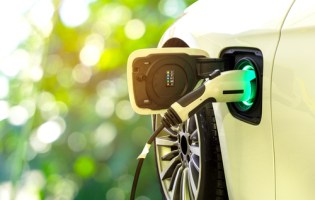 fossil fuels by 2030. The government has already drafted a map to install more electric charging roads to keep the batteries of electric vehicles affordable, as well as to prevent them from losing their charge during a journey.
