
In a society where technology dominates, cybercrime is already a big problem, and growing continuously. Cyber-attacks are particularly dangerous because they can be done from anywhere in the world, and the perpetrators are rarely caught. Many of these take place against large companies, or financial institutions, that have detailed information about their clients. Once their data is accessed, individuals may have difficulty getting their lives back on track. Organizations are becoming aware of the need to keep their customers’ information as safe as possible, by putting as much cyber security in place as they can.
 Cyber-attacks require extensive knowledge of an organization’s systems, and between 50 and 80% of them have access to insider information. A significant percentage of cybercrime is accomplished by phishing emails, of which the most successful are Spear Phishing. These emails are careful crafted to appear like they are coming from a legitimate source, such as known company executives, and may include detailed information about the person and their job. These sophisticated attacks often require multi-pronged responses. After a cyber-attack, major companies have suffered reputational damage which can be just as devastating. Companies are finding that as their technology increases, they also have to employee increasing cyber security measures which may offset profits.
Cyber-attacks may also extend further than personal information, compromising the national security of the country. Governments have also begun taking extensive measures to ensure that attacks do not get passed their security. Methods that were previously reserved for authoritarian regimes, such as a ‘national firewall,’ are being employed. Governments, large corporations and advanced academics are also combining forces to increase cyber security. In addition to businesses and governments, there are other potential cyberthreats, including evidence of hackers aiming attacks directly at the companies that provide critical internet infrastructure, putting the entire internet at risk if they are successful.
 Most cybercrime takes place using malicious software that attacks computers, through various methods, which includes:
Viruses – This software is found in file downloads or email attachments and attaches itself to another file or program and reproduces. When the attachment is clicked, or the download started the file duplicates itself and is sent to all contacts.
Worms – This type of software is capable of being spread without the help of another file or program. It can also collect and send data to a specified location using information about the network it’s on. Worms are often the cause of cyber attacks on a large scale as they spread through the entire network.
Trojan Horses – An attack that normally looks perfectly legitimate, so many aren’t aware of the breach, until it goes into action.

 In 2010, Andrew Schmeder and Don McPherson founded Enchroma Inc., to perfect technology which could be used to enhance color, for those previously unable to see it. They created lenses by combining optic technology with the latest discoveries in color perception neuroscience. Humans see when our eyes project light onto our retina, which use six million cone cells to transfer the image into neural signals. These signals are transmitted to the visual cortex, where we interpret them as images. Each cell is color specific and responds to light of a different frequency, which corresponds to the primary colors of light: red, green and blue.
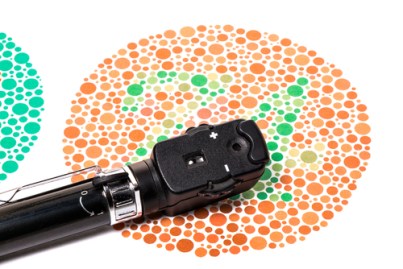 Color blindness is caused when an individual’s retinal cone cells respond to light in an abnormal manner. There are three types of color blindness, which are determined by the cones that are affected: for red-light cells, it is protan-type; green-light cells, deutan-type and blue-light cells tritan-type. Most color blindness is caused by red and green sensitive retinal cones having an overlapping response to light. Enchroma lenses are designed to remove wavelengths of light, exactly where the overlap occurs, and are expected to be able to help 80% of people with color vision deficiencies. This can be determined by getting a personal assessment done, by a qualified Enchroma specialist.

 MIT has collaborated with a new company, Commonwealth Fusion Systems (CFS), in the hopes of bringing the world’s first successful fusion power plant to working order within the next 15 years. The collaboration is using a unique form of production, called SPARC, which will build smaller, more powerful field magnets using new high-temperature superconductors. The material that will be used in their creation has recently been introduced to the market, and will result in the magnets being four times stronger than any previously used in fusion experiments. Development time for these has been estimated to be within the next three years.
 magnets would result in fusion power being used as an alternative energy source, helping to decrease climate change due to its lack of emissions.
 website-publishing technology that will be available for all site owners to take advantage of. It will allow them to increase the speed of their pages, without losing the value of having ads on their website.

 SpaceX, one of his companies with a shaky past, has surpassed expectations with its recent achievements. In February it achieved a successful launch of Falcon Heavy, and Musk said that their new aim was to complete the BFR in the shortest amount of time possible. The goal is for this rocket to be the first to transport humanity to Mars, which Musk believes is essential to the survival of our species. He declared that test flights are expected in 2019, even though he did acknowledge that his enthusiasm does sometimes result in unrealistic deadlines. In addition to the test next year, SpaceX is expected to conduct their first cargo journey to Mars in 2022, with crewed missions following by 2024.
 development of artificial intelligence. This led him to stress the importance of developing AI safely, a field in which he is ‘very close to the cutting edge.’ It was apparent in his manner, however, that this concept both fascinated and terrified him simultaneously. In Musk’s own words, ‘AI is much more dangerous than nukes,’ and requires a ‘regulatory oversight.’
 R. E. KEARNEY