
SpaceX Launches Falcon Heavy

Elon Musk’s company, SpaceX, is dedicated to advancing space exploration and development. Another step in their program was completed on February 6, 2018, when they successfully launched ‘Falcon Heavy,’ the world’s most powerful rocket. The spaceship blasted off from The Kennedy Space Center, in Florida, with a course set to take it in an elliptical orbit around the sun, before heading to Mars. In addition to being the world’s most powerful rocket, Falcon Heavy is also the largest to be launched, since NASA’s Saturn V in 1973. To demonstrate its ability to carry heavy cargo outside the Earth’s atmosphere, the rocket is transporting a limited edition Tesla Roadster (Elon Musk’s personal car) throughout its journey.
The Falcon Heavy was constructed from the cores of three Falcon 9s, SpaceX’s previous rocket model. The designers had planned for the three cores to return to Earth, after the launch, but the middle one missed its target. The two side cores landed, as planned, on twin pads at the Cape Canaveral Coast. These will be reused in the making of future rockets. Although initially designed to transport passengers, Space X has ruled this out for the future, because of how well development on their BFR (Big F*cking Rocket) has progressed. The company now intends to use the rocket to transport large national security payloads, such as satellites, that will be too heavy for small spaceships to carry. The Falcon Heavy can be launched with weight that would be equivalent to a 747 jet, full of passengers, their luggage and enough fuel for a long journey. This is more than twice the capacity of the world’s second largest rocket.

The launch has been highly publicized, to attract possible investors in the company’s future endeavors. Although NASA is developing a system to send missions to Mars, via their Space Launch System (SLS) program, they are facing severe budget restrictions and have concentrated the majority of their efforts on returning to the moon. Elon Musk has demonstrated that passenger trips outside of our planet will most likely be organized by private companies, with SpaceX being at the forefront. NASA’s SLS is anticipated to be more powerful than Falcon Heavy, and should be ready for launch by 2022. The amount that each journey would cost on SLS would be between $500 million and $1 billion, compared to $90 million aboard the Falcon Heavy. SpaceX has also estimated that this cost will decrease for further launches, emphasizing that the future of space exploration really belongs to private companies.

Printed Solar Tiles – Life Changing Clean Energy Technology

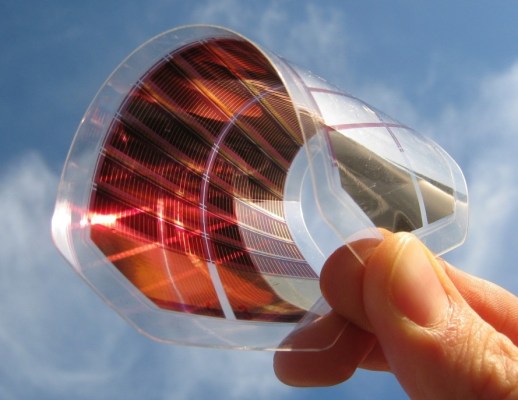
The size of traditional solar panels has made them difficult to move around, as well as relatively expensive and not conducive to life in many parts of the world. Researchers at The University of Newcastle, Australia, are hoping to change the way the sun’s energy is harvested with their printed solar tiles. Their method, called functional printing, is cheaper, easier and quicker than other solar panels, and an upgrade to the way the sun’s rays are converted to energy. Professor Paul Dastoor has led the team’s research, and they are now in their final testing phase monitoring Australia’s first printed solar field.

The technique uses an advanced electronic ink which is printed on paper thin, clear laminated sheets using a conventional printer. The ink is made by the team, from non-toxic carbon-based materials, which can be used as is or further processed into water-based inks or paints. The film is light enough to be held to the roof and walls, at the site, using velcro. Production cost is less than U$10 per tile, and they can be manufactured quicker than any other renewable energy source. A commercial printer would be capable of manufacturing kilometers of the panels each day. Dastoor’s team believes this could be the answer to the country’s search into finding ways to reduce the demand for base-load power.

Image: http://www.npl.co.uk/

It is estimated that there are currently at least 1.2 billion people worldwide without access to electricity, and this technology promises to take it into many remote communities. In addition, it would revolutionize the way in which solar power is provided, in other areas. One of the obstacles currently associated with solar power, is the initial cost of installing the panels. Printed solar tiles can be distributed by energy providers, and packages could be recommended based on each household’s usage requirements. The panels are also ideal for recovery efforts, and disaster relief, because of the speed at which they can be printed and transported via airdrop. They would also be advantageous to military operations, as the panels can provide electricity noiselessly.

The current demonstration site in Australia, has been built as a final testing stage.  Researchers aim to identify any modifications that may be necessary, before the product is marketable. The site sends feedback every half hour, and is the first time the panels have been tested in a real life situation. The long term testing will determine the durability of the printed solar tiles, and has already demonstrated that they have a more constant power flow in low-light and cloud cover, which would prevent customers experiencing dips in their service. The material is also sensitive enough to produce small amounts of energy using moonlight.

Prototype Fast Breeder Reactor

India’s size, and number of inhabitants, means that the country needs a significant amount of electricity. Over a number of years the government has introduced projects which will help them move away from coal-fired plants, and the country has recently closed 30 coal mines, with the intention of switching to renewable energy. India has taken these steps to clean up its environment, as the country is currently the world’s second largest contributor to warming gasses, after China. To help decease this, scientists have built a facility in the city of Kalpakkam, which is the home of the country’s Prototype Fast Breeder Nuclear Reactor (PBTR).

After WWII, several countries began building nuclear power plants, most of which use light water reactors to create nuclear energy. The prototype at the Madras Atomic Power Station in Kalpakkam, is a Fast Breeder Nuclear Reactor. It is part of a three stage nuclear power program, which was proposed by Homi Bhabha, in the 1950s, to allow the country to achieve long term energy independence. The program’s ultimate goal is to use the country’s large thorium reserves to meet the majority of its energy requirements. Designed by The India Gandhi Centre for Atomic Research, the facility is expected to become functional in early 2018.

Fast Breeder Nuclear Reactors differ from other nuclear plants, as the neutrons that sustain the atomic chain reaction travel at higher velocities. The use of elemental uranium in these reactors also makes it possible for them to generate more fuel. Fast reactors are therefore safer, significantly reduce the amount of radioactive waste emitted, as well as have the ability to extract up to 70% more energy. Once the PBTR in India is fully functional, it is expected that it will use rods of thorium in place of uranium.

Apart from the PBTR located in India, there is only one commercially operable Fast Breeder Nuclear Reactor in the world. This is the Beloyarsk Nuclear Power Plant, located in the Ural Mountains, Russia. This plant uses uranium to provide energy for various parts of the country. China is also experimenting with Fast Breeder Nuclear Reactors, but their progress is behind India’s by about a decade. The technology has proved extremely difficult to produce, and maintain, and other countries, such as France and Japan, have been unsuccessful in their attempts to utilize it. The world will continue to observe the capacity to which India can put their nuclear plant to use, and there may be attempts to replicate it in the future.

Molten Salt – A New Way to Store Energy

Solar energy is a clean energy source which, unfortunately, can only be harvested during the day. Researchers have experimented with different mediums to find a way of storing the energy, so that it can be used at any time. SolarReserve has developed a method of using molten salt as both a heat transfer unit, and a thermal energy storage medium. This has proven to be a flexible, cost effective, and efficient method of large scale energy storage, creating an entirely new way in which solar plants can operate. Molten salt has revolutionized the solar power industry by allowing the energy to be stored and dispatched, without the need for back up fossil fuel energy storage, keeping both the harvesting and the storage of the energy clean.

Solar energy plants have a 30+ year lifespan, during which the molten salt will not need to be replace or topped up. It is made from an environmentally friendly mixture of sodium and potassium nitrates, which can be used as a high grade fertilizer once the plant has been decommissioned. The salt is stored in tanks at atmospheric pressure, and about 566°C. The sunshine is reflected by a field of mirrors onto a tower, which heats the salt up. Using the molten salt for both heat transfer and energy storage means that the number of storage tanks and the salt volumes can remain relatively low. The salt is circulated through highly specialized piping in the receiver, during the day, and kept in storage tanks at night.
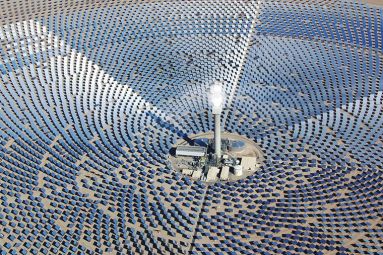
Once electricity is required, the salt is dispatched from the hot tank though a heat exchanger to create steam. This powers a conventional steam turbine, which then provides the electricity needed. Molten salt energy storage is currently the most cost effective way to store clean energy, and it is expected that the costs will continue to decrease. There are a significant amount of other benefits to using molten salt for energy storage, including:

  • It facilitates thermal power plants operating in the same way as fossil fuel or nuclear power plants, without the associated harmful emissions as well as eliminating the cost for the fuel. These plants can also operate around the clock, providing power for both on-grid and off-grid applications.
  • Energy generation can be adapted to meet different needs, using the integrated energy storage method. This also enables the delivery of reliable power at high capacities, where and when it is needed.
  • Each plant that has a molten salt storage facility can double its energy output every year.
  • The storage capabilities make the transport system more stable and secure.

SolarReserve has begun using molten salt to store energy in their 110-megawatt Solar Energy Facility in Nevada, which has the ability to power 75000 homes. The company also has similar projects planned for other countries, where they will be capable of storing up to 10 hours of energy.


IBM’s Five Year Technological Predictions

Image: Kaesler Media / Shutterstock.com

IBM has been recognized for their ability to make accurate predictions for the future of technology. The company employees approximately 380,000 people, and operates in 170 countries. It has also been responsible for many important technological items that we use every day including: UPC barcodes, ATMs and the hard drive disc. At the beginning of 2017, the company made five predictions for technology that they believe will be widely used within the next five years.

  1. Artificial Intelligence will use our words, and speech patterns, to recognize mental health problems and improve our understanding of them.

Humans can determine many things about a person’s character based on the way that they are speaking, including their current emotional standpoint. Artificial intelligence (AI) has caused a rapid advance in speech analysis, and IBM has predicted that in the near future it will use telltale signs in our speech patterns to determine both our physical and mental health. This will allow Parkinson’s and other mental diseases to be detected and treated earlier, possibly using a mobile phone app. A program that detects variations in normal speech patterns, invented by a team from the University of Southern California, is currently being used to identify when somebody is suffering from depression.

  1. Hyperimaging and AI leading to an increase in our visual capacity.

As humans, we cannot view the electromagnetic spectrum with the naked eye. IBM has predicted that technology which will allow us to see microwaves and infrared waves, will be available sooner rather than later. Variations have already been applied to several devices, including Enchroma glasses, which allow people who are colorblind to view the color spectrum.

  1. A greater understanding of our planet using macroscopes.

The most accurate description of a macroscope is a microscope which would amplify details of the Earth to much larger spectrums. This would allow us to combine all the data we receive to determine factors such as the state of the planet, the number of resources available and events in outer space that may devastate the Earth.

  1. Diseases will be traced on the nanoscale by ‘Labs on a Chip.

Nanotechnology has already played a great factor in increasing our ability to detect diseases and help to contain and cure them. IBM has predicted that this technology will continue to expand and could be applied at home by capturing and assessing bodily fluids. The earlier illnesses are detected the easier and more effective treatment is, and this application would help to significantly decrease the number of people that die from disease annually.

  1. Environmental pollution will be detected quickly and easily using smart sensors.

IBM has stated that smart sensors could be embedded in the ground, or fitted to drones, to detect pollutants and emissions. These would be extremely beneficial if placed near natural wells, pipelines and storage facilities to detect methane leaks. Methane is currently the second largest environmental pollutant, and is extremely difficult to detect. The application of the technology would significantly reduce its effect on the environment.

Macro Grids – The Future of Renewable Energy

Global warming and the dangers it poses to the planet has many countries converting to renewable sources of energy. Research into new ways of accomplishing this has been ongoing, and the last few years have unearthed numerous possibilities. Since the problems associated with non-renewable energy sources are global, many researchers are looking into ways of adapting the resources to benefit the entire world. Previous use of renewable resources, such as solar or wind powered energy, has been restricted because of intermittent energy drops. Scientists believe that this can be fixed by using grids across continents to tap into energy sources when they are needed, not only when they are available.

Most of our current energy grids operate on alternating current (AC). Converting these renewable energy sources to direct current (DC), where energy flows in a single direction, is making it possible for high-voltage lines to be installed throughout the United States. This is beneficial because DC can transport a substantial amount of power over longer distances, while reducing energy loss often associated with AC systems. Construction has begun in Wyoming on the Chokecherry and Sierra Madre Wind Farm, which will have a DC connecting Wyoming to California, Nevada and Arizona. The line is being made from a series of steel transmission towers which can carry up to 3,000 megawatts of electricity and, in addition to transporting energy from Wyoming, would also allow energy to flow from California on sunny days.

Research into ways of transporting renewable energy has resulted in a paper being published in Nature Climate Change, which shows that a better transmission infrastructure would be benefit the entire country. The United States has sources of renewable energy throughout the country, which would be sufficient to maintain its own energy requirements at costs similar to those that currently exist. This would be possible with the current technology available and research has calculated future costs, demand, generation and transmissions and shows where greenhouse gas emissions would decrease by 78% below the levels of 1990 in 15 years.

Although the USA has just started applying this technology, macro grids are already being used by other countries. Four-fifths of the hydroelectric power in China is produced in the south-west, but most people live in eastern mega cities. The country has adapted to transporting large amounts of power over significant distances in both directions. As a leader in technology, China also plans to invest $50 trillion to transport clean energy globally. This project, known as Global Energy Interconnection would connect a wind farm at the North Pole, solar power from near the Equator, as well as other natural sources, and transport it to cities throughout the world. The technology is expected to be in place by 2050, and would significantly impact the way in which the world’s energy is acquired.