
The human brain is one of the most important, complicated parts of the body. It is capable of extraordinary intelligence and guides the performance of actions that are necessary for our survival. Along with our spinal cords, our brains makes up our central nervous system which is the means of communication between our mind and our body. In addition, it is responsible for retaining our memories, reasoning ability, logical thoughts and subsequent actions. IBM, and other companies, have started to model their artificial intelligence systems on the human brain, to usher in a new era of technology.
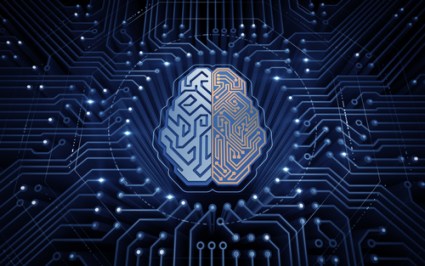 This has become necessary for artificial intelligence to continue to evolve. Previously, these systems were built with all the knowledge they require, while a human brain can accumulate additional knowledge over time. They also require access to a large amount of data to be programmed. New skills require the old information to be wiped out and completely reprogrammed. The human brain, on the other hand, learns things incrementally and adds more to its storage constantly. Our intelligence is based on our reasoning capabilities and the ability to apply new information logically, based on past experiences. Artificial intelligence cannot apply logic to any situation it may be faced with, thus limiting its uses.
IBM has done extensive research into our neurological and psychological systems, and applied the knowledge they have gained from this to their development. The company’s ultimate goal is to create artificial intelligence that can learn for a lifetime, and adapt to new circumstances while retaining all knowledge it had previously acquired. The process to achieve this has been split into two sections: short-term adaptation, where a limited amount of time is spent on training a system, and long-term adaptation, which is inspired by the way that the brain forms memories.
 The company’s DeepMind team has already created a synthetic neural network, which is designed to use reasoning skills to complete tasks. The systems fitted with the new network have been tested with a series of questions that have forced them to use this ability. 96% of the time these new systems could answer the questions correctly, compared to 42 – 77% in previous artificial intelligence models. The researchers are also adapting the network to store memories, by paying more attention to details and events.
IBM believes that these methods will be the way to change the future of artificial intelligence. These newly acquired reasoning skills mean that after a while the systems would be able to improve and build themselves, which many people think could be a scary possibility. If monitored correctly, however, this development would be monumental for the future of industries that rely on artificial intelligence for expansion. The technology could also be used to save countless lives, fast forward our space and deep sea exploration, and many life changing events.

 Devices have already been constructed that are capable of producing these extremely high temperatures. A ‘cage’ is created by strong magnetic fields, in the device, that minimizes thermal loss and allows the plasma to be confined long enough for fusion to occur. The tokamak, a donut shaped magnetic chamber, is presently the most advanced of these. Scientists have used it to create temperatures ten times higher than the center of the sun, producing megawatts of power for a few seconds.

 followed by spacer DNA segments. Jennifer Doudna compares the simple corrective procedure to a word-processing software that allows someone to correct a typo in a hefty document. The ease and low cost with which the technology can be used, render the possibilities of its application endless.
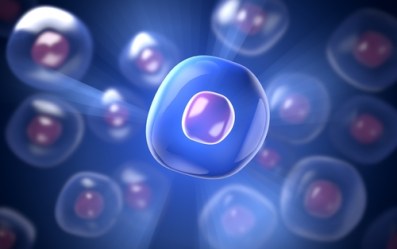 Cas9 is one of several restriction nucleuses that enables the editing of genes using CRISPR. It works as a molecular scissors, and uses a synthetic guide RNA to introduce a double strand break at a specific location on a DNA strand. This gRNA directs the cut through hybridization with its matching genomic sequence. During each procedure, a DNA construct with three major components: the Cas9 enzyme, gRNA and the replacement DNA template; is injected into an organism to modify its genes.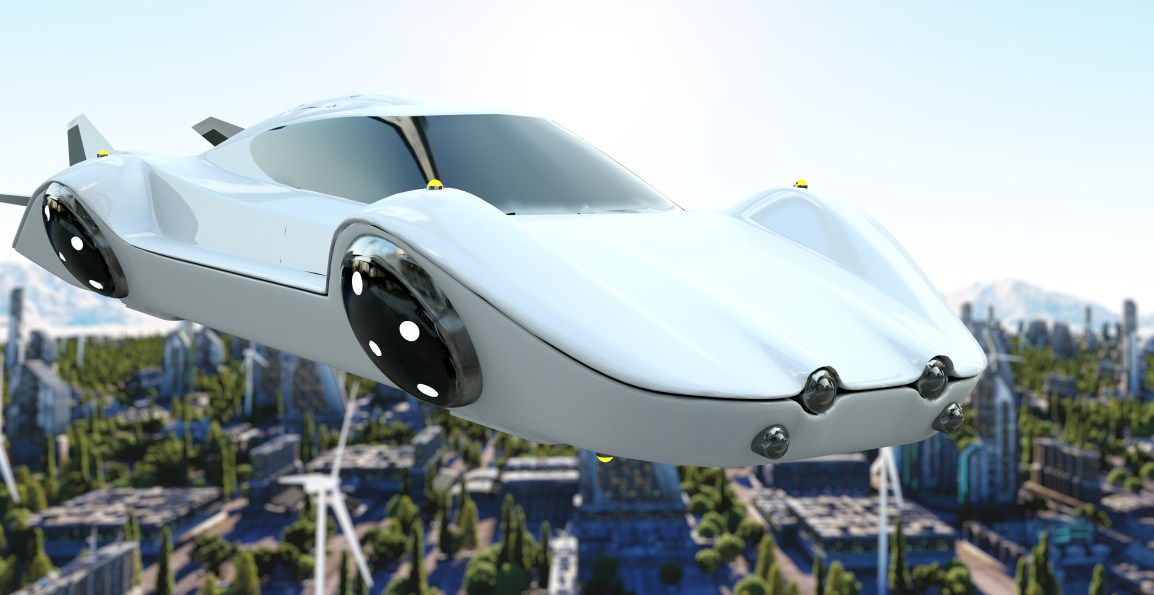
 The jet’s first successful remotely piloted test flight has recently taken place, and the company expects to conduct a manned one soon. In addition to flying as expected, the vehicle has many unique features in its design. It is a two-seater that takes off vertically, but once in the air it accelerates towards forward flight. It can reach faster speeds than cars and helicopters, and also uses 90% less energy than a drone. The vehicle is also shaped like a computer mouse, with 10 metre long wings that are responsible for its power. There are 36 jet engines, on these wings, which have been mounted on 12 movable flaps. At take-off the flaps point down allowing the aircraft to rise vertically, after which they gradually tilt into a horizontal position to facilitate it thrusting forward. A 1000 pound electric battery enables the jet to reach a maximum cruising speed of 300 km/hr and achieve a range of 300 km.

 There are three types of asteroids that are being considered for mining:
 R. E. KEARNEY