The EM Drive – Revolutionizing Space Exploration

One of the biggest obstacles we have faced when it comes to going to other planets is the amount of time that it will take for us to get there. NASA, and other independent space exploration teams, has been working on a solution to this for decades. In 1999, a British scientist, Roger Shawyer, came up with the idea of producing an EM drive (short for electromagnetic propulsion drive) which would be able to cover these amazing distances in significantly less time. The only opposition he has had to making the EM drive is the fact that it completely defies one of the fundamental laws of physics.

Newton’s third law is: ‘To each action there is an equal and opposite reaction.’ The law of conservation of momentum breaks this down further; to state that for any thruster to gain momentum it will need to expel a propellant in the opposite direction. The design of the EM drive would allow it to go in one direction without any propellant in the other. It would operate by turning radio waves into thrust by bouncing them back and forth inside of a cone-shaped closed metal cavity. The other end of the EM drive will then thrust forward. A range of tests at NASA’s Eagleworks Laboratory have proven that this ‘impossible’ device works, even though scientists are still unable to come up with an explanation as to how it can defy one of Newton’s laws.

shutterstock_309714437The possibilities of space exploration would become unlimited with the use of the EM drive, which would be able to transport humans to Mars in 70 days (presently it takes between 150 and 300).  It is rumoured that the years of research into the possibility of sending one into space has now been peer approved, and papers regarding the device are expected to be published shortly. In addition, Guida Fetta has designed a rocket engine based on the original concept of Shawyer’s EM drive and plans to launch it on a miniature satellite within a few months. His team of scientists will let it remain in orbit for at least six months to prove that the drive will continue to work over an extended period of time.

There are also speculations that other devices using the same technology are being made by the original designer Shawyer, and several private companies in China, that are almost ready to be launched as well. The race seems to now be on to see which team will be able blast the barriers of space exploration, in the shortest amount of time. Regardless of the country or inventor that makes the first launch, the important thing to note is that this invention will be one of the greatest of all time and another giant leap into our exploration of the universe.

The Airlander 10 – The Possibilities Presented by the World’s Largest Aircraft

The Airlander 10 was flown for the first time on August 17, 2016 over central England, and is believed to be the largest aircraft ever flown. The aircraft combines characteristics of airplanes, helicopters and airships, in an effort to ensure that it functions as efficiently as possible. Its manufacturer, Hybrid Air Vehicles, originally designed the aircraft to fulfill military surveillance in Afghanistan, but reprogrammed it when this project was abandoned in 2013.The company believes that the Airlander 10 will be able to serve in other areas including cargo transportation, communication, private commerce and even as a luxury airliner. In addition, it will also be significantly less harmful to the environment, because it uses helium instead of hydrogen to fuel its journeys.

Nicknamed the ‘Flying Bum,’ because of its shape, the Airlander 10 is 92m, with a height of 6100m, and can attain speeds of 90mph. The aircraft is able to remain airborne for up to 5 days when it is manned, and 10 days if unoccupied. It can carry a maximum weight of 10 tons. Hybrid Air Vehicles aims to use it to revolutionize the industry of flying both commercially and militarily. As a result of being a hybrid, the aircraft uses a traditional airplane wing structure to get 40% of its lift with the other 60% coming from the helium.

An aircraft that can be flown for an extended period, land anywhere and doesn’t have an overwhelmingly negative effect on the environment, provides great potential for the future of flying. The company plans to release the Airlander 10 as a commercial vehicle that can be used as an advertisement and communication medium, in private sector transportation and in other areas where it will have a significant advantage over ordinary aircraft. Some of these advantages include:

  • Endurance – The ability to stay in the air for weeks at a time, would allow an easier delivery of goods and longer surveillance periods than are currently available.
  • Cost Effective – The running costs of the Airlander would be lower than other aircrafts because it runs on helium, instead of fuel.
  • Less Pollution – The Airlander 10 has one of the lowest forms of carbon emissions of any aircraft currently being flown.
  • More Accessibility – The aircraft can be landed anywhere, including land, water and even ice, opening up the possibility of air transfer to previously inaccessible areas.

Hybrid Air Vehicles has presented the Airlander 10 as the first in a series of super aircraft, which will be made to carry even heavier cargo and achieve more extraordinary flight times.

Mind Controlled Technology – Brain Waves Dictating the Pace

It is believed that anything is possible once we put our minds to it. Our technological genius proves that this is definitely so. Combining the two and using the mind to control technology has become many manufacturers aim, in order to keep up with the current trends. The brain’s electrical activity can be recorded along the scalp, using a process called EEG. By monitoring these brain waves, technology has been designed to translate them into commands allowing various devices to be controlled with just the user’s thoughts.

Not only is this process convenient, but it has been useful in helping those with physical handicaps lead more fulfilling lives. Even though the technology is still being refined, paralysed individuals are able to control wheelchairs and other equipment by wearing a cap and training their brains to send the appropriate signals to the machine. EEG on its own has limited accuracy, however, and a combination of brain control and artificial intelligence seems to be the best way to operate these items. The combination means that the individual will not need to focus constantly on controlling their device. The brain would only have to produce the initial thought and then the artificial intelligence would take over.

shutterstock_119131810Operating technology with the mind has an unlimited scope, and some of the ones available or coming soon are:

  1. Prosthetic Arm by DARPA – Wearers are able to control this limb with their thoughts, and the arm will function in the same way as a real one. The introduction of these prosthetic devices means that many people will be able to use them to regain their independence, especially when the technology is applied to other prosthetic limbs.
  2. NeuroSky MindWave – This is a headset that has been designed to improve the user’s brain ability and comes with educational, gaming and life improvement apps. One of the accessories for the MindWave is the Orbit Helicopter, which the user can fly by using their concentration to dictate the aircraft’s course.
  3. Muse – This is a portable headset which controls relaxation and focus, making it easier for the user to perform mentally challenging tasks. The manufacturers are still working on the object however and in the near future the Muse will be used to control iPhones and Androids by brain wave activity.
  4. shutterstock_95312896Emotiv EPOC – This device allows people to control their computer using only their mind. It is particularly beneficial for gaming technology and can be adapted to control any electrical device.
  5. Necomimi and Shippo – Not all the technology that is being produced to be used with brain waves is for ease or convenience, some of it is just for fun. This pair of ears and tail will scan brain waves and respond to them. For example, the Necomimi ears may stand up when the user is alert and the Shippo tail will wag whenever its human is happy. The achievements we can make with technology are just simply mind-blowing!

Combating the Zika Virus – Genetically Modified Mosquitos

The Rio Olympics are in full swing and fans are as excited as ever to watch the increasingly competitive sports. Unfortunately, the number of people that have actually made their way to Brazil to be a part of the games is significantly less than in previous Olympics. Athletes have also given up the chance to participate in these legendary games, because of concerns about their health. The fear of catching the Zika virus has become greater than the love of sports for many. Governments, and other officials, have started looking into ways of eliminating or decreasing its spread, in order to ensure that it won’t affect other high profile sports games in the future.

shutterstock_363993479The best way to stop the spread of the virus would be to eliminate its cause. Zika is passed on to humans by the bite of the female Aedes aegypti mosquito. A biotech firm based in the UK, Oxitec, has developed a way of genetically modifying male mosquitos which are then released into the population. When they breed with the females, genes which will be fatal to the following generation are transferred. These offspring don’t live long enough to reproduce, and the mosquito population begins to decrease.

These GMO mosquitos have already been introduced in Cayman, Brazil and Panama cutting the amount of Aedes aegypti mosquitos in the countries by up to 90% in 6 months. The firm believes that it is currently the only viable solution, and they are negotiating terms to release the affected insects in the United States. Even though the process has already been approved by the FDA, the company is still waiting for the go ahead from other state and federal agencies. Some of the country’s citizens have expressed concern as to the possible effects that this release will have on the environment, and the human population.

shutterstock_118321864Entomologists have concluded that there is no possibility of the GMO mosquitos harming humans. Furthermore, they insist that eradicating the mosquito will cause no known side effects to the local animal life, because there is no species that relies exclusively on it for food. Many countries, including the USA, are spraying pesticides into the air to kill the mosquitos. This practice is significantly more harmful to the environment as the chemicals kill other insects, including bees.
If approved in other countries, the project is expected to eventually eliminate the fear of catching the Zika virus. The expense is expected to run quite high, however, as the estimated cost is 10c per mosquito and millions will have to be released. The positives extend far beyond eliminating the Zika virus, as the Aedes aegypti mosquito is also responsible for the spread of dengue, chikungunga and other viruses. If allowed to continue to multiply freely, there is the possibility of the mosquito adapting and starting to transfer other viruses which may become even more of a threat to humans than Zika currently is.

Pak-Da Stealth Bomber – Russia’s Incredible Design

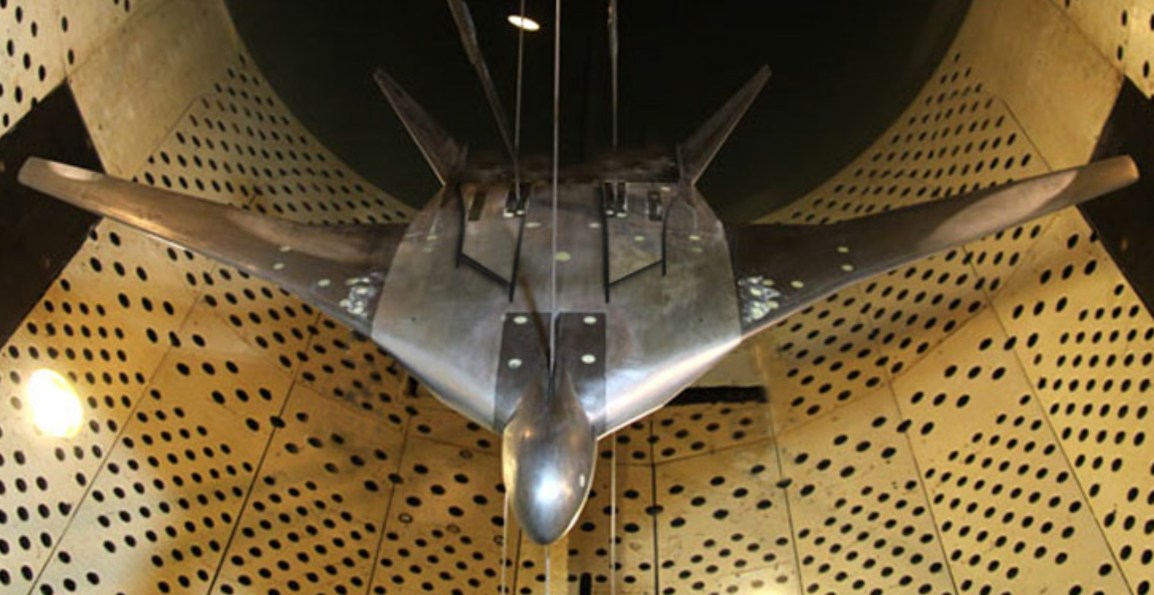
Having designed many of the stealth bombers that are currently being used by Russia, Tupolev Design Bureau was the natural choice for the country’s new proposal. The Pak-Da will be a strategic bomber meant to revolutionise wartime aviation.  The meaning of Pak-Da is aviation complex for long range aviation and the Russian Prime Minister, Vladimir Putin, in a television announcement made reference to the fact that this will be an entirely new design of stealth bomber, which is being created to replace both the turbo-powered Tupolev Tu-95 and supersonic Tupolev Tu-160.

Aircrafts that are used in war are frequently upgraded, as our technology gets more advanced. The aim of the Russians in developing the Pak-Da is to keep up with and even surpass the US military, focusing specifically on their B-21 stealth bomber design. In April 2013, the design was finalised and the construction of a prototype began. If everything goes according to the country’s plan, the prototype’s first flight is expected in 2019. Production of the aircrafts that the country will use should then begin in 2020, and be fully integrated into the military between 2025 and 2030.

Even though the bomber’s full design has yet to be revealed and will probably remain vague until the prototype is completed, a few of its components have been shared. In March 2013 the Russians announced that the aircraft’s design would include a subsonic flying wing, meaning that the bomber would be able to fly at subsonic speeds as well as use advanced types of supersonic speed, including hypersonic. This would allow the Pak-Da to arrive at any place in earth’s atmosphere within two hours.

Other aspects of the bomber’s design, continuously curvature shapes and radar absorbent outer materials, will enable the aircraft to fly into space from the upper atmosphere. This will mean that two engines and two fuel tanks will be necessary, in order to facilitate the transition from earth to outer space. One of the current engines being used is a variant of the NK-32 (used on the Tu 160), a suitable design, which will facilitate the burning of jet fuel in earth’s atmosphere where the Pak-Da will use oxygen to fly. When the aircraft has entered space it will make the shift to using its own oxidiser, and will then be propelled by oxygen and methane.

Other features that may be included in the design are:

  • The ability to fly outside the range of any interceptor
  • A combat radius of 3500 km
  • A loaded weight of between 100-120 tonnes
  • The use of avionics
  • A 30 tonne weapons payload
  • A range of 6740 nautical miles

The Russians seem to have thought of everything that will make the Pak-Da surpass any other stealth bomber currently available, and with the help of the Tupolev Design Bureau they are well on their way to achieving this.

Time Travel – The Possibility of Leaping into the Future

For a long time humanity has entertained the idea of going back in time to change the past, or going forward to see what the future holds. Physicists have been exploring ways of accomplishing this for almost as long as the idea has been around. Even though they haven’t been able to prove that a certain method will definitely work, there are several theories which show how this can be achieved. It is not expected that this will be done in our generation, but with continued research and exploration our civilization will one day make that physical journey through the ages. Some of the ways in which we may get there are:

  1. shutterstock_357220352Going through an Immense Black Hole – Black holes are extremely dense, so moving through one significantly slows down the speed at which time passes. If a spaceship enters a black hole its physical movement would be half the speed of one that was moving anywhere outside. This would enable it to enter in one period of time and reappear in another.
  2. Travel at the Speed of Light – Light travels at the unbelievable speed of 186,000 miles per second. If a spaceship was able to accelerate at the same speed it would be possible for it to leap into the future. Unfortunately, even if we were able to achieve this, the spaceship would have to make the journey without passengers as the human body would be unable to withstand the pressure resulting from the jump.
  3. Cosmic Strings – Cosmologists have observed these one-dimensional cracks in the universe closely enough to conclude that they might be the key to allowing humans to travel in time. They are thought to be either infinite or looped and each contains a large amount of mass. This makes it possible to twist time around them, if two of them are parallel. This connection would then create a bend in time and space, allowing us to make the journey. In order to facilitate this, our society would need to drastically increase the control we have over our energy resources.
  4. shutterstock_313598879Wormholes – These are connections, or bridges, through time and space that scientists are certain exist throughout the universe. So far no wormholes have been discovered, but time travel would be possible by manipulating their entrances to make a path or road from one to another. The only problem physicists think might prevent us from using this method, if the possibility arises, is the fact that there might be a significant amount of radiation caused by the manipulation.

Einstein’s theory of general relativity proves that time travel is possible, and as our knowledge of the universe expands scientists will continue to work towards finding a way to make this possibility a dream come true.