Progress with Anti-Gravity Tech

Everyone must have heard the tales of secret technologies created by the USA, Russia, and various other global agencies. For instance, anti-gravity technology has always been mentioned multiple times by the great scientists of NASA and DARPA, especially during the discussions about UFOs.

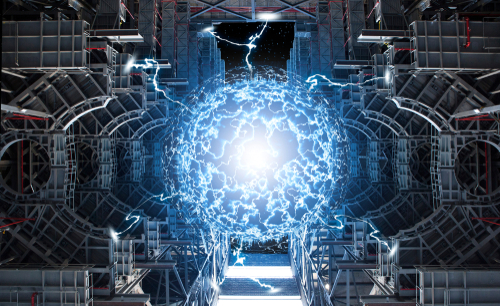
However, the serious investigation and discussion into such technology has so far been elusive to leading scientists, or at least, was until November 2020. It was the beginning of an evolution that brought the leading scientists from NASA, DARPA, and Harvard on a single platform through the Zoom app, in an open discussion about anti-gravity tech. 

Anti-gravity discussion – Is it a Taboo?

On 10 November 2020, and nearly a year into the covid-19 pandemic, Google meetings, and Zoom calls had become commonplace. However, the scheduled conference was confidential, and the individuals were anything but ordinary.

Far from the myriad of online meetings held since last summer, the introductory Alternative Propulsion Energy Conference (APEC) was created to provide scientists an opportunity to discuss anti-gravity by using alternative ideas besides mainstream science. Undoubtedly, theoretical physics is respectable, but the conference was steering towards engineering, which ultimately leads to new experimental methods, all with a mutual goal of trying to comprehend and hopefully understand the most significant force in our universe, gravity.

According to The Debrief’s reports, the experts have attended almost 22 virtual meetings to discuss Non-Newtonian Propulsion, and Unidentified Aerial Phenomena (UAP).

Avoiding conflicts:

During an interview, conference organizer Tim Ventura notified The Debrief about the convergence of the Alt Propulsion community, and how they’ve collided between the theories of aerospace, defense, electrical engineering, UFOs, physics, and the frontier science cultures.

Tim further stated that they’re acquiring residents from all of these cultures who attend the conferences, regardless of having different beliefs from others on certain topics; they avoid providing room for any conflict.

According to The Debrief, despite the unusual subject, 16 out of 71 witnesses at the November conference were current or prior NASA scientists and engineers, while the others were associated with well-known institutions including, MIT and Harvard.

UFOs in the spotlight:

The subject of UFOs created a pivotal pop-culture revival this year, with military pilots discussing their. Previously, every scientist was aware of UFO reorts, but due to the lack of acknowledgment, they weren’t utterly relevant. With that said, the scientific community is now examining the subject more seriously than ever.

Regardless of their exceptional efforts, gravity remains unbeaten.

Lab Grown Meat

As meat consumption increases around the globe, food scientists are working harder to develop healthier, appetizing, and more sustainable plant-based protein nutrients replicating meat as well as poultry products including, cheese, eggs, and milk.

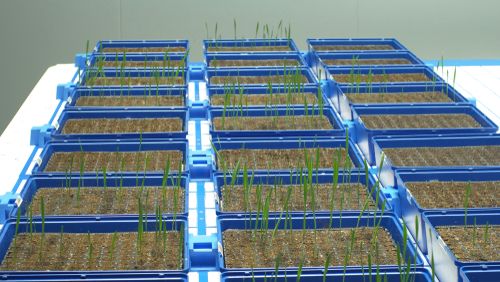
According to a BBC report, over 100,000 genetically modified barley plants are being grown in a greenhouse in Iceland for producing artificial meat. These genetic alterations along with the natural evolutionary changes have resulted in ordinary food that are now genetically distinct from their ancestors.

The modified barley was gathered and refined with an aim to eliminate the human race’s reliance on living animals in the meat sector. With meat production contributing to approximately 60% of all greenhouse gases, such a progression could have profound implications in our fight against climate change.

Utilizing Cultivation methods:

ORF Genetics, the organization behind the greenhouse is harvesting the biogenetically changed barley over 22,000 sq. feet by utilizing futuristic hydroponic cultivation methods. The growth factors that are uprooted from the barley’s seeds are of pivotal importance for the well-being of stem cells. In 2010, ORF created a skin care product by using the growth factor hormones. Over 10 years, the platform expects to enter the cell-cultured beef market. Growth factor hormones help the tissues containing animal muscles and fatty cells.

ORF Genetics director of protein technology, Arna Runarsdottir, reported to the BBC about the rise in population and how they’re responsible for their nourishment. Fortunately, artificially prepared meat would offer a plethora of benefits that might help feed the world if researchers could figure out how to produce it for the masses.

How it becomes a matter of concern?

The extract of Mesokine from a barley seed is said to be a budget-friendly and scalable technology compared to traditional growth factor sources.

Indeed, the cost of producing cell-based meat has decreased over time. For instance, a Chinese biotech company has recently revealed its lab-grown pork. However, the growth factor hormone is still a luxury ingredient that blocks the way of extensive manufacture and commercialization, but Mesokine might change that.

Social disruption ahead:

Beneficial outcomes of these genetic modifications include enhanced food production and improved nutritional values. These objectives continue to motivate research companies who have designed modern genetic modifications for recognizing, selecting, and analyzing individual living organisms that possess genetically attractive features.

In any food industry, there’re plenty of players, and some are more focused on sustainability than others. As an undetermined technology, it suggests that synthetic lab grown food might be harmful to the livelihoods of farmers, certainly in the progressing world. While reporting to the BBC, Arna Runarsdottir said that it’s a more reliable and environmental-friendly option compared to traditionally grown meat.

The Future of Humans and Robots

Presently, Neuralink is developing brain-computer interfaces, and judging by the CEO’s role at the company, the platform is striving to enable machines and human to work as one, despite his recent statements.

Furthermore, Neuralink officials have reiterated multiple times that machines will replace the manual worker, and it’s a warning that will cause many to worry about the progression of cutting-edge technologies. The platform suggests that humans must physically merge with robotic advancements or become obsolete.

The fate of humanity:

The deceased co-founder of Neuralink, Max Hodak has predicted a creepy clichéd story on the fate of human beings. He implied that robots will occupy space and will leave the human race behind. The keystone to his argument suggests that robots probably won’t cling to humanity’s political and economic models for a community.

The former co-founder believed that the ‘value systems’ that humans have used for structuring societies for decades, might become irrelevant in the coming years. He further expressed his belief about the flexibility of machines and how well-organized they are.

From the beginning, Max Hodak was cautious about the arrival of robots and how dramatically they’ll reshape the world. However, there is extensive reluctance to even identify it as a tangible issue, making it harder to seek for potential solutions to prevent potential adverse impacts.

In the late 1990s, researchers began placing instructions within the brains of paralyzed computer cursors to let them display the movements of robot arms through signals. Also, it analyzed how mice with visual impairment could perceive infrared rays. Relying on these experiments, Neuralink hopes to progress the development of a brain-computer interference to the point that every individual could operate computers with brain signals efficiently.

Mankind’s progression in robotics will permit us to proceed with efficient ways to identify future obstacles, but, according to Max Hodak, this kind of transformation requires an entire generation. However, if there ever becomes a situation where a human’s input becomes unnecessary, machines can effortlessly proceed without it, and it would ultimately lead to our termination from the technological world.

Microwave-Powered Spacecraft

A group of researchers from the University of Tsukuba in Nagoya, Japan, is experimenting with ground-centered microwave pillars for controlling rockets with an aim to make the spacecraft lighter, as a significant portion of a rockets weight is taken by its fuel.

Technological advancements helped engineers.

A study published in the Journal of Spacecraft and Rockets says that during recent tests, the engineers managed to assign a tiny gliding four-rotor drone with a versatile microwave. This test was implemented for making sure that their idea was viable.

According to the engineers, they weren’t certain about the flexibility of their idea regarding the experiment, but these adjustments were made so that the microwave beams might not only enable the upgrading of an aircraft but also take a rocket into orbit someday.

Former experiments:

These researchers weren’t the first ones who implemented versatile spacecraft with a microwave beam. However, this latest attempt by researchers in Japan had stronger beams and advanced tracking systems, which made this experiment succeed where the former ones failed.

According to the head author and Tsukuba engineer Kohei Shimamura, the team of engineers used a futuristic beam tracking system for ensuring that the drone received maximum power. Furthermore, for improving the transmission efficiency, they carefully rearranged the microwave phase utilizing an analog phase sifter, which was integrated with a GPS. The propulsion technique might appear a bit unusual, but it was enough to maintain a four-engine drone upwards.

However, the technology is still quite premature, and it’s unlikely that we’ll get to witness microwave-powered NASA rockets going to space anytime soon. Presently, a huge obstacle is the energy that’s lost during the procedure. According to the examiners, the comprehensive energy efficiency obtained in the experiments was relatively low, reaching just a rate of 0.43%.

Currently, it’s still low, but more feasible than the 0.1% achieved in former experiments. Further work to tackle the problem of energy efficiency continues.

Shimamura evaluated that this outcome shows that more improvement is expected to further develop the transmission effectiveness and success for aircraft, space apparatus, and rockets of the future.

Even though microwave-controlled rocket propulsion is still in the initial phases, one day it could potentially be a better way of dispatching rockets into space without the massive fuel demands currently being used by conventional spacecraft.

Reengineering the Wooly Mammoth

Ever thought the giant sized tusked wooly elephants who went extinct some 10,000 years ago and only recently seen in animated movies & ancient history programs will come to life on this earth again? That’s exactly what US based startup Colossal Biosciences has announced and already secured funding of $15 million.

The project spearheaded by Harvard geneticist George Church aims to use CRISPR gene editing technology to engineer Asian elephant embryos with characteristics closest to the now extinct Wooly Mammoths. The idea is to create and then release these giants in the Arctic Tundra region in a bid to positively impact the ecosystem and play their role in environmental conservation. The scientists at Colossal Biosciences also believe that if they are successful in recreating the Wooly Mammoths, they might even be able to prevent the extinction of other endangered species.

Possible Hurdles that Scientists Face in Reengineering Mammoths

While it all sounds pretty fascinating, the whole idea or reintroducing the Wooly Mammoths into the wild will need a lot of thinking. There’s a lot that needs to be addressed before the scientists in George Church’s team attempt to recreate the giants. For instance, scientists are already questioning how will these giant Mammoths be gestated? While there is no mature technology for artificial wombs which could be used to gestate the Mammoth embryos, scientists around the world are quite skeptical about using an Asian elephant as the mother, which are listed as endangered species themselves.

Also, it must be considered that the present day human race knows very little about the Wooly Mammoths. With such little knowledge, releasing these giants into the Arctic Tundra is another point of concern.

Real Mammoths or Hybrids

Another big question being raised by scientists is that whether or not these Wooly Mammoths will be what Colossal Biosciences claims them to be. Asian elephants generally share 99% of their DNA with this particular mammoth species but with smaller ears and a stark shaggy coat, this animal will most likely be an elephant-mammoth hybrid and not the real ancient mammoths.

While researchers have previously discovered calves of wooly mammoths in the permafrost, scientists at Colossal Biosciences agree that it might be really hard to study the properties of the mammoth and that it is highly likely this project might very well be impossible to successfully complete.

What Does this Mean for Biosciences?

Church’s cofounder at Colossal, software entrepreneur Ben Lamm, said “I hope the tech could prevent the extinction of endangered mammals like elephants and rhinoceroses, or even let conservationists tinker with the genetic code of existing creatures to help them survive a changing climate.”

“We can leverage these genetic tools,” he further said, to “allow for species to not be isolated to one geographic location, but be adaptable to others.”

A Car That Collects Pollution

A London-based designer and architect, Thomas Heatherwick of the Heatherwick Studio has come up with a state-of-the art electric car concept that could clean air pollution as it drives around.

The concept car was introduced earlier in April 2021, after the designer was approached by a Chinese vehicle manufacturing company, IM Motors, to design the concept car, which is not only friendly to the environment, but also looks quite different.

The Airo, as it is being called, is a compact electric car, with its front grills containing air filters which could collect air pollutants amounting up to the size of a tennis ball in a year. The car uses the HEPA-Filter technology and doesn’t cause its own pollution but also actively contributes to vacuuming up all the pollutants from the cars driving alongside on the roads. If such a mechanism is introduced in all of the cars in China alone, it could create a significant change.

Talking to the BBC, the designer of the car said, “Think of a tennis ball in your lungs that is contributing to cleaning the air, and with a million vehicles in China alone that adds up.”

In addition to its pollutant collection functionality, the car looks nothing like your usual car. The interior of the car has more of a living room appeal with a table in the middle of four adjustable chairs, which can even be converted to a bed. The steering wheel of the car is hidden in the dashboard allowing extra room making it a good choice for sustainable living.

According to sources at the IM Motors, Heatherwick was approached intentionally knowing that he had no experience in designing cars and will come up with a novel idea, one that hasn’t ever been on the books before. Combining his knowledge of interior design with the blank canvas of eco-friendly car design, the London-based designer came up with the unique concept of Airo, which is now expected to go in production in China by 2023.

“Car manufacturers are falling over themselves to make electric cars, but a new electric car shouldn’t just be another one with a different look,” the designer of the car said.

While many welcomed the concept, the car has received a lot of criticism from automotive experts as well as environmentalists who are quite skeptic about the ability of the car to cut down pollution.

Peter Wells, a professor of business and sustainability at the Cardiff Business School’s Centre for Automotive Research believes that the car will not make any significant contribution towards eradicating environmental pollution. He also firmly believes that the car is not practical for most vehicle owners.

According to Peter Wells, since the car only gathers a tennis ball’s worth of pollutants in a year, it’s contribution in the urban areas of China alone will be insignificant and almost impossible to measure.