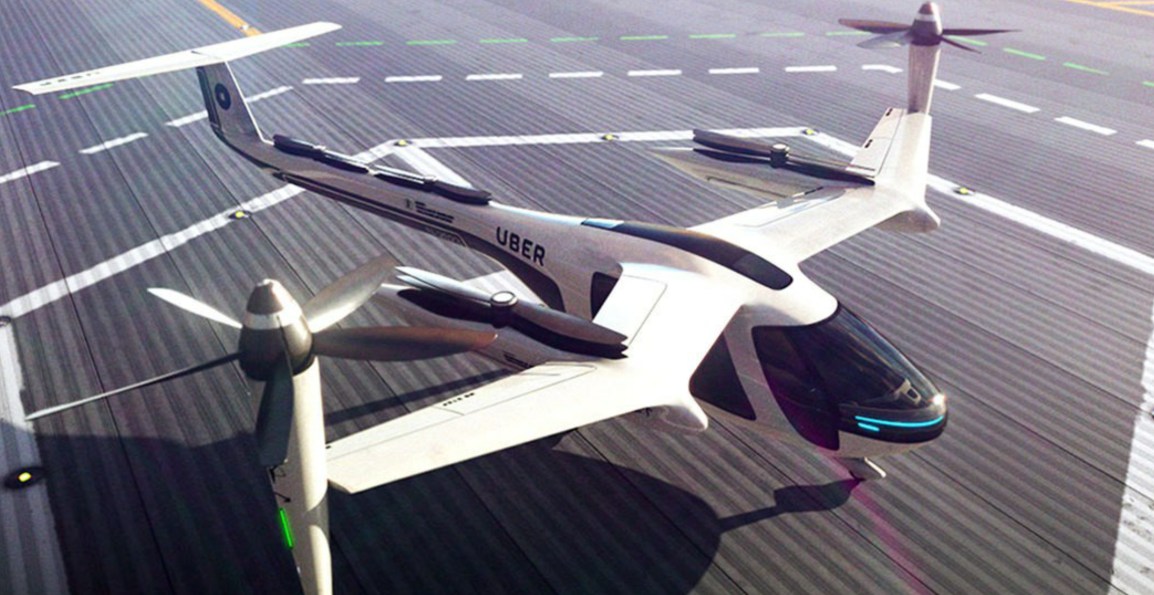
Uber cabs have begun to dominate the local transportation market in many large countries. Like other big companies, Uber plans to expand its services, intending to provide their customers with the easiest ways of commuting. One of their ideas is to fly passengers to their destination. This would decrease the amount of time each journey takes and could be used to travel long distances quickly and easily. The project is known as Uber Elevate, and the company has revealed their plans and progress in their Second Annual Elevate Summit.
 The vehicles would be Vertical Takeoff and Landing Vehicles (VTOL), which the company plan to make cheaper than taking a car. They are also expected to be autonomous, when this becomes possible. Uber has announced plans to begin testing prototypes within the next two years. The company has several obstacles that will need to be overcome before this can be attempted, however, and have put an extra effort into recruiting top aviation researchers to put the pieces together. Company officials are also hoping to collaborate with governments, vehicle developers, and other technologically advanced companies to bring the best product to the market.
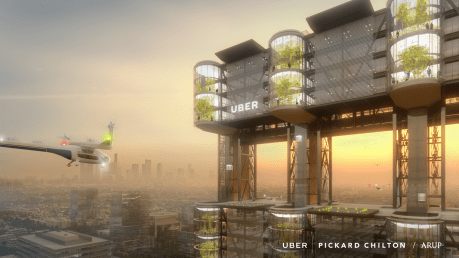
The VTOLs would need take-off and landing locations and the company has proposed using the tops of parking garages, existing helipads and unused land close to highways. This would cost less than existing infrastructure for commute, such as roadways and trainlines. Unlike cars, which need to follow roads, or public vehicles, that make stops at certain places along the way, the VTOLs would have access to any required route. Uber has also pointed out that an increase in technology has facilitated the creation of several VTOL prototypes, and companies continue to maximize resources to get them up and running.
Other benefits include making use of electric propulsion so there are no operational emissions, as well as being relatively quiet transport vehicles. The inclusion of autonomous flying would significantly reduce accidents, caused by operational error. The company plans to begin by using the Uber Elevate services for daily long distances journeys in urban and suburban areas, and in places that are lacking current travelling infrastructure.
Uber has taken every step to prove that ‘flying’ will no longer need to be an expensive, and rare, form of travel and they plan to fulfill their customers requirements completely. Uber’s main aim in creating their flying taxis is to give commuters back some of the time it takes to get places. Time which can be spent with family or being more productive at work. Regardless of the circumstances and obstacles that will need to be overcome, it is guaranteed that there will be a built-in customer base as soon as their VTOLs are up and running.

 Tokyo Institute of Industrial Science have recently created a biohybrid robotic finger with the ability to bend itself up and down. They published the results in Science Robotics recording that the finger remained functional for more than a week.
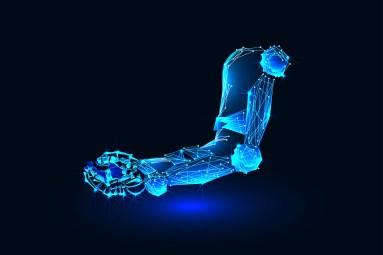 to undertake specific tasks. The inclusion of muscle tissue would result in smoother, steadier overall movements. Scientists are planning to use these biorobots for more detailed exploration of the human body, as well as to enhance our medical capabilities. This could be partially accomplished by performing tests on the biorobots, instead of humans. In addition, they would increase the manufacturing ability of robots, currently limited due to intricate parts and assembly necessary, and their ability to monitor certain environments.
 generate energy to be stored in the batteries, with the excess being sent back to the centrally controlled grid to help power the rest of the state.
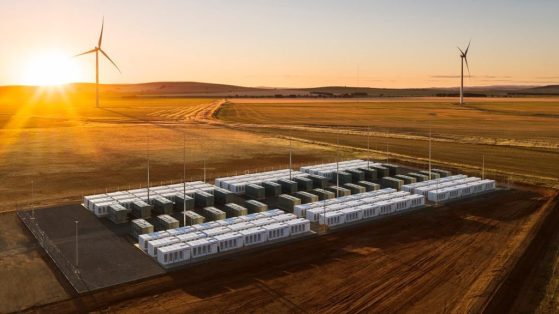 The funding for the program will come from a grant of AU$2,000,000, plus a loan of AU$30,000,000 from a state technology fund. The project’s total cost is expected to be AU$800,000,000, with the remaining funding provided by investors. Interest in the program has already been expressed by 6500 investors, and its scale may be increased if this number grows. The government expects that the virtual power plant will provide 20% of the state’s average daily requirements, as well as cut the costs of power by 30%. The project’s success will also prove South Australia as a leader in the use of renewable energy and could encourage more countries to invest in the same layout.
 Although not currently on the market, the technology shows immense potential. Messages would be secured by coding them in the form of small molecules, that would be absorbed by a napkin. They could only be decrypted using the key, which would be the molecule’s structure. The method has been developed by German company Karlsruher Institut fur Technologie. Their molecular library has at least 500,000 keys that, because of their structural diversification, would be impossible to decode without the sample. The message can also only be revealed after being scanned with the same equipment used by microbiologists to analyze new compounds in their research. Researchers plan on expanding the technology to including DNA which would increase the number of keys that could be made, making passwords even more secure.
 to a study published in Journal of the American Chemical Society. Most florescent molecular sensors generate discreet optical signals but the one used was able to generate a unique optical ‘fingerprint’ for each chemical, making it possible to differentiate between them.
 The fundamental purpose of blockchains is to distribute their ledgers across a decentralized network of nodes, replacing the need for a centralized third party to verify transactions. This method enables thousands of copies of the ledger to be stored, across all the nodes, ensuring that a single point cannot be targeted by hackers. In addition, it makes it possible for anybody with a computer, and internet access, to become a part of the ledger’s maintenance.
 By decentralizing currency, blockchain technology and ‘mining’ gives a chain of people the power to introduce new money into the economy. It also presents the opportunity for them to manage the currency currently controlled by the banks, and other appointed systems. ‘Mining’ is crucial in determining that there is value to the new currency being introduced, because of the costs associated with the running of the nodes. This idea of money being stored outside of government control is appealing, especially in countries where state finances are unpredictable. Although the technology is in its infancy, there is the high possibility that its use will expand before long, as more people are beginning to trust the system and move away from government control.
 The mission is scheduled to arrive on Mars in February 2021, where the helicopter will be deployed from the transport rover and placed on the ground. After its battery has been charged and several operational tests performed, the transport vehicle will then drive to a safe distance from which to issue commands. Although they will be sent at the speed of light, any instructions from Earth will take several minutes to reach the helicopter. During its first 30 days on Mars, the helicopter will have five different flight missions. The flights will gradually increase in time and distance, with the first lasting 30 seconds, at 20 feet off the ground.
 R. E. KEARNEY