
Many people often wish that it was possible to recreate themselves to be ‘perfect,’ physically, mentally or both. To fulfil this desire, scientists are exploring how DNA manipulation can be used to change plants and animals, as well as redesign our human bodies and minds. DNA is the source code of all forms of life, and changes in our genetic composition may make it possible for us to survive longer, and in more extreme situations. Founding Director of the Life Sciences project at Harvard Business School, Juan Enriquez, has spoken about using gene editing to take evolution into our hands, instead of depending on nature to choose which species survive. One of the easiest ways to accomplish this is through CRISPR, a genome editing technique that can modify a specific part of a gene without harming any  others.
Enriquez pointed out the evolution of science itself, which used to be about discovery but is now about creation.’ Technology has changed the pattern of our world from ‘survival of the fittest,’ to one in which humans can decide which species live and die. We can also modify the genes of plants and animals to live in conditions they would previously have been unable to survive in. Although the ability to modify the body of different species is phenomenal, an even greater achievement is the ability to recreate our minds.
DNA manipulation means humans can decide who they want to be, and which experience they want to dominate their lives at any given moment. The mind can be shaped by altering, creating and deleting memories, which are the foundation of who we are. This would allow people to change their entire identity, past experiences and personal beliefs almost instantaneously. This altering of self, with technology, raises many questions and the possibility of harmful or immoral consequences. Would justice still be served if a person had  no recollection of committing a crime? Would other members of society be affected if somebody ‘created’ a relationship in their head? Would existing financial obligations be avoided by changing the circumstances in the mind?
Although the question of the morality remains, the ability to change our DNA would be frequently lifesaving. In addition to altering or removing DNA associated with genetic illnesses, the length of time taken to make vaccinations would decrease significantly. Future survival would be guaranteed, even in the event of a catastrophic planetary event, as DNA could be altered for life outside of our atmosphere. Space exploration would increase exponentially, as Enriquez believes that the human species was created for expansion. ‘As explorers at heart’ we will always be drawn to the unknown, breaking barriers, creating and recreating, with DNA manipulation being only a part of the process of expanding our beings.

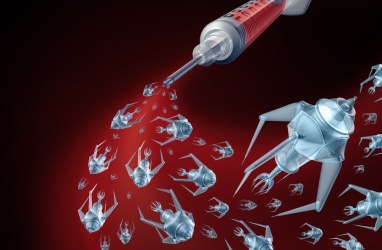 The study has been a collaboration between Arizona State University and National Centre for Nano Science and Technology of the Chinese Academy of Studies, and proves that nanorobots can effectively eliminate cancer tumors. The results were published in Nature Biotechnology, and included conclusive tests in which the blood supply to cancerous tumors in mice, had been cut off resulting in the tumors’ death. The tissue began to shrink two weeks after treatment, and the treatment effectively removed breast, ovarian, lung and other types of cancerous tumors.
 materials. Each nanorobot is made from a flat DNA origami sheet 90 x 60 nanometers. This is 1000 times thinner than a human hair, and the system is the first capable of targeting the cancerous cells so precisely. The process’s efficiency is increased because of an enzyme that causes clots to form in the blood vessels feeding the tumor, being attached to the sheet.
 Ice Loss from Greenland and West Antarctica – Increased heat on the planet is also causing the ice sheets that cover these regions to melt at a faster pace. Research has shown where meltwater from above, and seawater from below, is seeping in between the sheets, causing the ice streams to move more quickly into the sea. Higher sea temperatures also result in the ice shelves, extending from Antarctica, to melt.
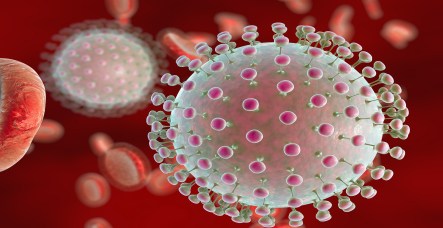 Tedros pointed out that, ‘Universal health coverage is the greatest threat to global health.’ He went on to explain that as many as 3.5 billion people still do not have access to essential health services. Others that can attain the services are often forced into poverty, because of the high costs of this care. To avoid this problem many people neglect seeking medical treatment, even when it is necessary. This results in many illnesses progressing further than can be treated, and an unnecessary spreading of infectious diseases. This negligence could result in the earliest signs of an outbreak being overlooked.
 Tedros pointed out that healthy citizens are an advantage to the economy of any country. It has been proven that proper healthcare from children are in the womb, which is continued throughout their childhood, helps to make them stronger members of society. He also noted that at the moment a possible pandemic couldn’t be predicted, but dreads the terrible toll it would take on humanity. Despite there being no guarantee that a pandemic free world will ever be created, he is urging that we take back the control of our own lives. The best way to ensure our survival is by governments investing in proper healthcare, in every way possible, for each and every one of its citizens.


 Energy – Fujisawa SSC’s energy system was created with the intention of consuming as well as generating energy within the boundaries of the city. 30% of the town’s energy comes from renewable sources, and each household can monitor its consumption online. All lighting fixtures are LED and buildings are equipped with solar panels, storage batteries, fuel celled co-generation units and heat pumped water heaters.
 Panasonic began as a company that enhanced lifestyles through the application of its products, but have an overall vision of creating a future where ‘smart cities’ dominate on a global scale. Their mission of ‘a better life, a better world’ continues to becomes a reality, as the company entered a partnership with Denver, Colorado to build their second smart city. The project began in 2016, and is expected to take at least ten years to come to fruition.
 R. E. KEARNEY