
Even though scientists have considered the possibility of humans being able to live on another planet, most of our space exploration to this point has been to satisfy our immense curiosity. Is it possible, however, that the survival of our species will rely on us finding a home outside of Earth? World renowned, and greatly respected, scientist Stephen Hawking has recently expressed this exact concern. He has publicly stated that humanity will be unable to continue living on this ‘fragile’ planet for more than another 1000 years.
Hawking, who made this announcement at the Oxford Union, said that his conclusion was based on several contributing factors. These include: overpopulation, a growing resistance to antibiotics which will possibly cause worldwide pandemics, habitat destruction and what seems to be our most unnecessary human compulsion – war. Nuclear and autonomous weapons are sources of widespread, uncontrollable destruction, and even the creators of many new weapons are unaware of the full extent of the damage that their designs may have on the Earth.

As an intelligent species we have also taken steps towards creating artificial lifeforms, in our own image. The consequence of this to humanity has been predicted in many science fiction films and books, and is now becoming a high possibility. This is the fact that our artificial intelligence is so advanced that they may turn on the humans that created them. If this ever happened, due to their combined intellect, strength and longevity, robots would be a force that humans would be unable to control after letting loose on the earth.
The reasons that the scientist based his beliefs on are not just those controlled by humanity, but also a factor outside of our planet. This would be a possible result of actually making contact with extra-terrestrial beings. We have no idea whether they will be friend or foe, and how destructive they might be to our species and planet once we have approached them. Hawking’s scientific opinion is that they will be either the best thing, or the worst that has ever happened to us. Many other scientists also share the view that any alien species that is able to communicate with us may either surpass us in intellect, and therefore uninterested in us for more than experimental purposes, or may be violent and determined to attack Earth rather than befriend those on it.
Based on his certainty that our planet will soon be inhabitable, Hawking has taken steps towards finding humanity a future possible home. He advises ‘remember to look up at the stars, and not down at your feet,’ and is one of the major investors in the Breakthrough Starshot program currently exploring our nearest star system. Stephen also urges us to continue to enjoy our life on earth as ‘2016 is a great time to be alive.’ Even though there are many that disagree with his thoughts about the future of mankind on the planet, it would be hard not to agree with his belief that we are certainly living in an exciting era.

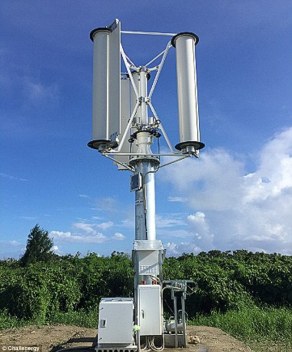 These large storms are created in regions of low atmospheric pressure, with winds which can exceed 85 mph. Japan has been using European designed wind turbines which have been proven to be incapable of withstanding the force behind the typhoons, and many of them are destroyed by the winds. Shimizu’s eggbeater shaped turbine has been specifically designed to withstand these conditions with two vital changes to the traditional design.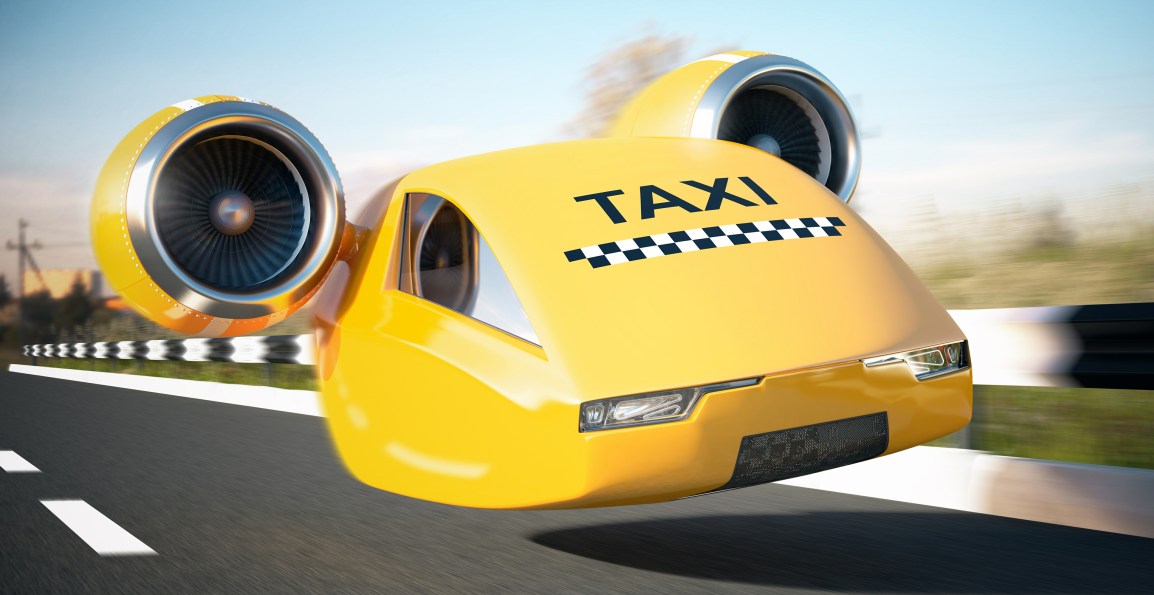
 Project Vahana, as the undertaking has been named, currently faces many challenges. These include air traffic management hurdles, as well as structural requirements for such a vehicle. Spokespersons for Airbus have said that their aim is to work with several other companies in order to overcome these obstacles. They have already begun to take into consideration the regulations that the Federal Aviation Administration will be putting into place, in order to approve the use of flying vehicles.
 In addition to the pilot, the expectation is that the vehicle will at first be able to carry a single passenger. A testing contract has been granted to the company and they have chosen to have their first trial flights in Singapore. Airbus has said that their aim is to begin testing their prototype by the end of 2017. They are well on their way to meeting this target, after which they plan to introduce the vehicles to commuters by 2020. They are confident that this will be the biggest solution to the current traffic problem that the world is experiencing.
 The unit is made from a special type of material, designed by the company, which is able to absorb water from the air. Its solar panels are then able to harvest the energy from the sun to heat the liquid enough to turn it into steam. This evaporation is the way in which the water is purified. It is then run through a mineral block, adding beneficial nutrients and improving the taste.
 There are two types of gene therapy. The first is known as in-body therapy, where researchers transport new cells within our bloodstream by using viruses. These organisms facilitate the reproduction of the cells as they are naturally designed to replicate. The first attempts at in-body therapy used the virus that causes the common cold, but scientists found that this wasn’t very effective because of the automatic immunity the body develops against it. A genetically modified adeno-associated virus has replaced this, as it is not known to cause any reaction in humans.
 Gene therapy will introduce one of its greatest achievements to the market in 2017. A cure developed for blindness, caused by the condition hereditary retinal dystrophies, is in its final stages of being approved by the FDA. The procedure works by directly targeting the hereditary mutation which is the cause of blindness. New cells will be injected into the patient in a 45 minute surgery. Within thirty days it is expected that the majority of sufferers will experience vision improvements.
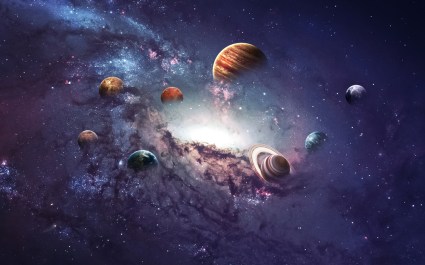 Breakthrough Message – A competition with the top prize of $1,000,000 has been announced for individuals, or groups, to design a complete message about life on our planet and its people. This should be made with the intention of communicating with any extra-terrestrials that might be found. The public is included in order to create awareness of the mission, and get the general outlook behind space exploration.
 R. E. KEARNEY