Proxima B – The Closest Earth-like Planet to our Solar System

The infinite nature of the Universe indicates that there are or should be other habitable planets. Our natural curiosity, as human beings, dictates that we will continue searching until we find them. After that we will make it a priority to explore these planets, and the life that we find there, in the most thorough way possible. A team of international scientists, based at the Queen Mary University in London and led by astronomer Guillem Anglada-Escude, have recently discovered a planet in the habitable zone of our neighboring star system. Temporarily called Proxima B, the team believes that this is the closest we have come to verifying the existence of life outside of our Solar System.

The closest star system to ours is the Alpha Centauri which consists of three stars; Alpha Centauri A, Alpha Centauri B and Proxima Centauri, which is a red dwarf meaning that it is smaller and cooler than our sun. The planet has been discovered orbiting this star and, because of its distance, is believed to be warm enough for water to remain in liquid form on some parts of its surface. This is one of the main criteria that determines whether a planet will be able to sustain life.
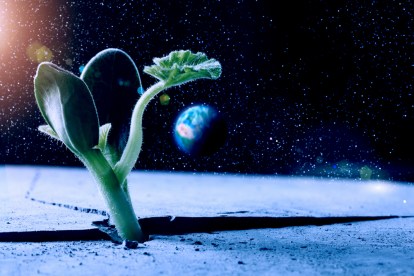
shutterstock_413371993Proxima Centauri is a more active star than our sun, which would result in the planet being exposed to 100 times more radiation. Without any protective magnetic field, this level would be detrimental to any living organism. If the planet does have an atmosphere, however, life would still be able to survive especially in its water bodies.

Proxima B is 30% larger than earth and 95% closer to its sun, being only 4 million miles away as opposed to our planet’s 93 million.  It orbits the star every 11.2 days, and is located approximately 4.2 light years away from us. This distance means that, even with current technology, it will be possible to send a probe there in as short as a few years. The biggest mystery about Proxima B, even though it is centred in a habitable zone, is whether or not there is actually life on the planet.

If the planet was formed by being blown away by stellar radiation, it means that without an atmosphere it would be unable to sustain life. Another obstacle to the presence of any living species is the fact that Proxima B may be tidally locked, meaning that the same side of the planet always faces the sun. An atmosphere as thick as earth’s would allow it to rotate in a way that would provide the entire surface with the necessary warmth, in order to create habitats in which plants and animals would be able to survive. Since there is so much potential for life on this new planet, some scientists have ventured as far as to say that we can assume that life exists there until it is proven that there isn’t.
Mind Controlled Technology – Brain Waves Dictating the Pace

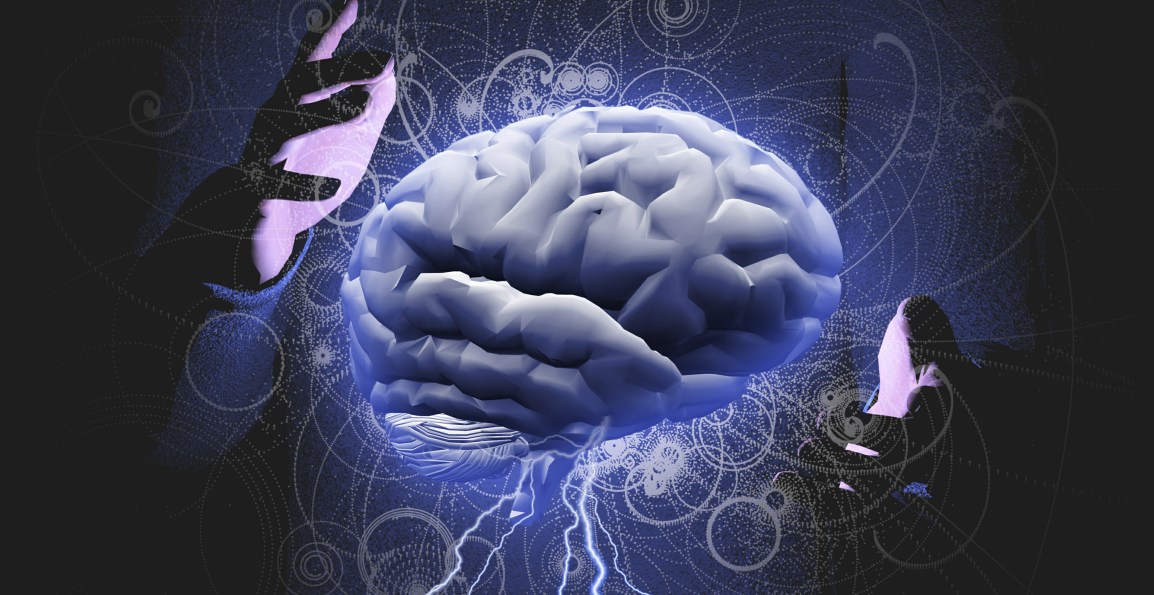
It is believed that anything is possible once we put our minds to it. Our technological genius proves that this is definitely so. Combining the two and using the mind to control technology has become many manufacturers aim, in order to keep up with the current trends. The brain’s electrical activity can be recorded along the scalp, using a process called EEG. By monitoring these brain waves, technology has been designed to translate them into commands allowing various devices to be controlled with just the user’s thoughts.

Not only is this process convenient, but it has been useful in helping those with physical handicaps lead more fulfilling lives. Even though the technology is still being refined, paralysed individuals are able to control wheelchairs and other equipment by wearing a cap and training their brains to send the appropriate signals to the machine. EEG on its own has limited accuracy, however, and a combination of brain control and artificial intelligence seems to be the best way to operate these items. The combination means that the individual will not need to focus constantly on controlling their device. The brain would only have to produce the initial thought and then the artificial intelligence would take over.

shutterstock_119131810Operating technology with the mind has an unlimited scope, and some of the ones available or coming soon are:

  1. Prosthetic Arm by DARPA – Wearers are able to control this limb with their thoughts, and the arm will function in the same way as a real one. The introduction of these prosthetic devices means that many people will be able to use them to regain their independence, especially when the technology is applied to other prosthetic limbs.
  2. NeuroSky MindWave – This is a headset that has been designed to improve the user’s brain ability and comes with educational, gaming and life improvement apps. One of the accessories for the MindWave is the Orbit Helicopter, which the user can fly by using their concentration to dictate the aircraft’s course.
  3. Muse – This is a portable headset which controls relaxation and focus, making it easier for the user to perform mentally challenging tasks. The manufacturers are still working on the object however and in the near future the Muse will be used to control iPhones and Androids by brain wave activity.
  4. shutterstock_95312896Emotiv EPOC – This device allows people to control their computer using only their mind. It is particularly beneficial for gaming technology and can be adapted to control any electrical device.
  5. Necomimi and Shippo – Not all the technology that is being produced to be used with brain waves is for ease or convenience, some of it is just for fun. This pair of ears and tail will scan brain waves and respond to them. For example, the Necomimi ears may stand up when the user is alert and the Shippo tail will wag whenever its human is happy. The achievements we can make with technology are just simply mind-blowing!

Time Travel – The Possibility of Leaping into the Future

For a long time humanity has entertained the idea of going back in time to change the past, or going forward to see what the future holds. Physicists have been exploring ways of accomplishing this for almost as long as the idea has been around. Even though they haven’t been able to prove that a certain method will definitely work, there are several theories which show how this can be achieved. It is not expected that this will be done in our generation, but with continued research and exploration our civilization will one day make that physical journey through the ages. Some of the ways in which we may get there are:

  1. shutterstock_357220352Going through an Immense Black Hole – Black holes are extremely dense, so moving through one significantly slows down the speed at which time passes. If a spaceship enters a black hole its physical movement would be half the speed of one that was moving anywhere outside. This would enable it to enter in one period of time and reappear in another.
  2. Travel at the Speed of Light – Light travels at the unbelievable speed of 186,000 miles per second. If a spaceship was able to accelerate at the same speed it would be possible for it to leap into the future. Unfortunately, even if we were able to achieve this, the spaceship would have to make the journey without passengers as the human body would be unable to withstand the pressure resulting from the jump.
  3. Cosmic Strings – Cosmologists have observed these one-dimensional cracks in the universe closely enough to conclude that they might be the key to allowing humans to travel in time. They are thought to be either infinite or looped and each contains a large amount of mass. This makes it possible to twist time around them, if two of them are parallel. This connection would then create a bend in time and space, allowing us to make the journey. In order to facilitate this, our society would need to drastically increase the control we have over our energy resources.
  4. shutterstock_313598879Wormholes – These are connections, or bridges, through time and space that scientists are certain exist throughout the universe. So far no wormholes have been discovered, but time travel would be possible by manipulating their entrances to make a path or road from one to another. The only problem physicists think might prevent us from using this method, if the possibility arises, is the fact that there might be a significant amount of radiation caused by the manipulation.

Einstein’s theory of general relativity proves that time travel is possible, and as our knowledge of the universe expands scientists will continue to work towards finding a way to make this possibility a dream come true.

Seasteading – Benefits of Living on the Water

Our generation has brought about significant changes in the way that we live, and it is now expected that whatever we do will enhance the lives of those that come after us. Seasteading is just another one of these opportunities for change which may lead to a better future. While we wait to see where and when the first floating city will arise, we continue to examine the possibilities for improvement. As with any new venture there are unpredictable changes that will occur, but the initial gains that these new cities will bring are:

  1. Personal Freedom – Pioneers in change, the first residents of any seasteading nation will be in charge of themselves. As the only unclaimed territory on our planet, the water provides Seasteadingthe chance for a clean start, and occupants will need to find ways of redeveloping government and collaboration to benefit the limited population. It is imperative that they learn from the mistakes that other nations have made before, and improve on all their strong points.

  2. Chance to Increase Wealth – Whenever humans expand their colonisation, there is always the opportunity for many to gain a significant monetary advantage. The new seasteading nations will need goods and services, and ways in which they can continue to exist outside regular society. This close proximity to the ocean will also allow for further exploration into harvesting its strength for energy.
  3. An Alternative to Continued Destruction of Land Masses – Our disregard for the planet has led to a serious depletion of natural resources, resulting in the breaking down of the earth itself. Instead of destroying more land masses in an effort to accommodate our ever expanding population, creating one that will sustain itself while floating on the sea may help the earth to heal and, over time, rebuild necessary resources.
  4. Expanding our Horizons – Living on the sea will give us more of an understanding of the obstacles presented in occupying a different type of habitat. This may be the first step into furthering our knowledge enough in order to branch off into living in the unknown.

Even though seasteading is a relatively new phenomenon, the building of an independent nation in the middle of the ocean has been attempted before. In 1971, a wealthy real estate mogul, Michael Oliver, began setting up his dream of a self-sufficient territory on a small land mass situated in the Pacific Ocean, about 250 miles away from Tonga. Oliver’s idea was to eliminate taxes and economic intervention, and create a nation whose main source of income was tourism. The people who lived there were expected to support themselves by fishing, trading and agriculture. His dream was becoming a reality after he extended the land mass, to build The Republic of Minerva with its own declaration of independence and currency. Unfortunately, before the island became acknowledged worldwide, Tonga declared their ownership and the project had to be abandoned.

In the science based fiction ENDLESS FIRE FUTURE FURIES, the corporate state of SPEA establishes the seasteaded city-state of Venus in the Pacific Ocean Kiribati island chain. The seasteaded state is established to acquire intellectual freedom, escape onerous US immigration and religious laws and to achieve fiscal, energy and environmental self-sufficiency. Due to advances in engineering, communications and food production, a seasteaded city-state such as SPEA’s Venus is now possible.

Mankind’s Survival – The Biggest Threats to our Existence

Scientists have proven that the Earth had existed for billions of years before the evolution of mankind. This means that humans are not necessary for the planet’s survival, but the perfect conditions need to exist for the continuation of our species. There have been many others on Earth which have become extinct for one reason or another. Humans are also susceptible to extinction, and some the biggest threats to our survival are:

  1. A Pandemic

Due to the fragility of the human body, our most deadly enemies are actually the ones that are physically the smallest. Microscopic viruses have proven fatal for a considerably large number of people worldwide and, even with our advanced medical knowledge, it is still possible for an infectious virus to develop and rapidly deplete a significant amount of the world’s population as it spreads. A virus’ survival instinct would not allow it to kill all its hosts, but a high percentage of the remaining human population would die as a result of events taking place due to so many other fatalities. An example would be the deaths of the elderly and extremely young, because of the absence of their caregivers.

  1. The Eruption of a Super Volcano

Whenever a volcano erupts there is major damage done to the surrounding area. The last super volcano eruption occurred approximately 27000 years ago, and would shutterstock_90131104have been responsible for an excessive amount of damage to the planet. Remnants of this eruption, and others, have provided geologists with clues about the devastation that would occur if one was to take place in the near future.

The blast would shoot approximately 1000 cubic kilometres of ash and rock into the air, and lava and debris would flow to cover an area larger than the European continent. Sulphur gases emitted would expand in the atmosphere, to create a thin layer of sulphuric acid that would reflect sunlight. With its source of heat blocked, there would be extremely cold temperatures (significantly below freezing) everywhere on the earth for between 5-6 years after the eruption. Only the most resilient and adaptive plant and animal life would survive.

Scientists have only been able to identify the location of a surprisingly few number of super volcanoes around the world, but are aware of the fact that there are many more. They have also concluded that there is no way to predict an eruption, as well as no means of preventing one from taking place.

  1. shutterstock_323772509An Asteroid Impact

The diameter of the asteroid that is believed to have been the cause of the obliteration of the dinosaurs was approximately 6.2 miles in diameter. An asteroid that is 1mile wide is expected to hit the earth at an incredible speed only once in every million years. The explosion on impact, as well as the after-effects (such as a worldwide ice age, acid rain and rampaging fires) would ensure that humans follow the dinosaurs to their unfortunate demise.

Modern Building – Innovations that are Changing the World

Innovative building ideas are increasingly revolutionizing the ways that we create both our homes and office spaces. Recognizing that we need to save the environment and decrease overall building costs, governments and individuals are coming up with new ideas to help us conserve energy and use materials more efficiently.

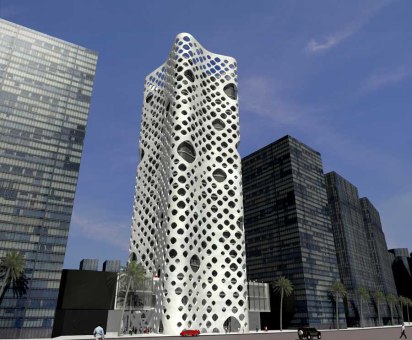
o14_tower_dubai_rur011008_2Among the leaders in technological advancement and development, Dubai has one problem that it constantly has to battle, which is the desert heat. This means that they have had to come up with creative ways to keep their buildings cool. The O-14 is one that displays an ingenious way of doing this, even winning many architectural prizes for its unique and workable design. It has been built with a space that is 1m wide, between its façade and glass windows. The façade is made of an extremely fluid concrete and houses 1000 circular openings. Along with the space, this design cools the entire building down by allowing hot air to rise and cool air to enter.

Earthquakes are one of the most destructive natural disasters, and each one can cause an unimaginable amount of damage to buildings and high fatality levels. Basing their concept on the idea of semi-detachable bases for buildings, Japanese engineers have designed a building foundation which can levitate it on a cushion of air to avoid the damage that an earthquake can cause. When the building’s sensors pick up an earthquake’s seismic activity they trigger an air compressor to release air between the building and its foundation. This air pocket lifts the structure off the ground protecting it from the earthquake’s direct hit. After the danger has passed, the compressor will turn itself off and release the air so that the building is once again resting on solid ground.

Insulation is very important in colder climates and when done efficiently can keep the entire building warm and save a substantial amount on energy bills. Insulation has been developed using a combination of mushrooms and hemp fibers to create a cheaper, sturdy, environmentally-friendly product that can be used in both commercial and residential buildings for amazing results.

Experiencing the outdoors, while warm and cozy indoors, is a dream for many people. The beauty of the colder seasons is normally lost because people are hibernating, in an effort to avoid the extreme temperatures. Removable glass wall technology enables building owners to view the wonders of nature while relaxing inside. They can also be taken out to allow for welcoming the outdoors in, especially when the weather is warmer.

It is widely known that solar panels are one of the best ways of conserving energy, but until now, they have posed a problem because of the fact that they cannot be removed from the building once they have been installed. The introduction of removable solar panels fixes this problem, as they are easily transferred from one building to another allowing for maximum energy efficiency regardless of where the owner might be.