
Imagine walking around with your clothes lighting up like a digital display, allowing you to send messages and emails and turning into a keyboard. Even more shocking, imagine a direct communication with your clothes allowing them to adapt to varying temperatures or share crucial fitness information with your instructor while you are in the middle of a marathon run.
While it sounds like an ironman suit straight out of science fiction, smart fabric is quite real and scientists from the Fudan University in China have been able to create a fabric with embedded digital components that can conveniently be used as a digital display and communication tool while being folded, washed, and worn like your regular clothes.
The introduction of durable smart fabrics are set to revolutionize the world of wearable gadgets. According to experts the market size is expected to exponentially increase by 30.4% from 2019 to 2025.

The attempts at building conductive yarns that could be woven into fabrics had been going on for decades, but most attempts barely made it out of the research labs and onto people’s bodies since the resulting fabrics were extremely fragile and couldn’t withstand the abuse our clothes are usually put through.
Other smart fabrics which have been able to make it to market operate in predetermined ways such as the high-end beachwear manufactured by a French startup Spinali Design, with ultraviolet sensors which notify users when to apply sunscreen.
However, this new fabric developed by the researchers in China has been able to withstand over 100 washing and drying cycles and its display continues to work just fine, becoming a revolutionary leap forward in the field of electronic textiles that will have an insurmountable impact on industries worldwide, according to research published in the journal “Nature.”
The authors of the research journal suggest that the practical use for smart fabrics will not just be limited to fashion designer being able to integrate adaptive electronic displays into their outfits, but will have far more serious and life changing applications.
People with physical or cognitive impairments will be able to conveniently communicate with the smart fabrics. In addition, the speech-to-text display will allow communicating in foreign languages. The use of smart fabrics for the advertising industry will also evolve the concepts of marketing & advertising allowing people to turn into walking billboards.
Many tech giants around the world have been actively working on integrating the smart fabric technology to new applications. For instance, Google has been working with Levis for quite a few years to develop a smart denim jacket using Google’s Project Jacquard Smart Tech giving built in touch controls to the sleeves of the jacket. Similarly, Apple filed a patent to integrate health monitoring technology into clothing.
There’s still some time until we see our local clothing outlets displaying digital clothing on their mannequins, but it may just happen in the very near future.
 The Tesla Powerwall typically works on Lithium Battery Systems and until now served as the perfect alternative to generating and storing energy for when the sun went out.
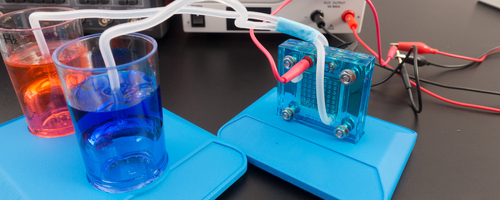 simultaneously storing hydrogen in a metal hybrid sponge. When the energy is needed, the battery uses a fuel cell to deliver this energy directly to your home and power your appliances.
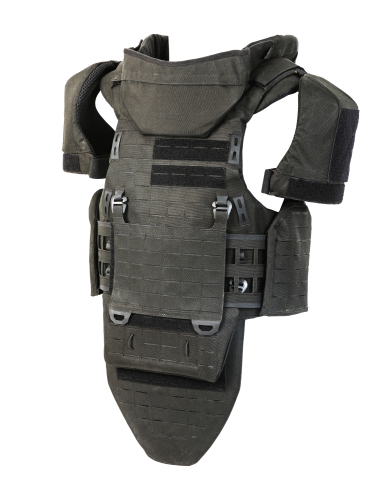 In the 1990s, US Helicopter crews were issued with the SARVIP (Survival Armor Recovery Vest Inserts and Packets) including huge pockets for ceramic plates to withstand the 0.50 caliber bullets. However, the weight of the armor was so much that they were hardly ever worn by the crew.
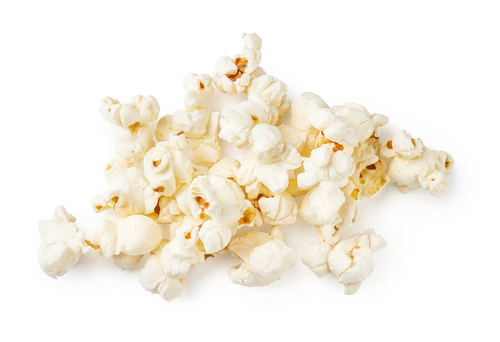 With his team of researchers, Ceron drafted a paper explaining how simple robots can be powered by Popcorn without electricity or hydraulics, at the IEEE International Conference on Robotics and Automation. Yes, it’s true! In this ultra-modern era, it has become commonplace that we come across strange yet astounding developments in the sci-fi field and a popcorn robot is exactly that. The engineers from Cornell University demonstrated their hypothesis. Inside a silicon beam that was fastened with toasted wire, they put 36 kernels. An electrical current was dispersed through the metal chord, warming up the kernels which eventually started popping due to the heat, moving the silicon.
 Unarguably, the most enigmatic celestial object, black holes, are now believed to be energy powerhouses. For several decades, astrologists and scientists have contributed to decrypting the mystery of black holes. Roger Penrose discovered that the development of black holes is a prediction of the theory of relativity. Stephen Hawking theorized the entire phenomenon “Hawking Radiation.”
 As far as the theory goes, human habitats in space seem like a reality. Asenjo, the coauthor of the study, postulated that energy extraction is possible because of the high relative velocity between captured and escaping plasma particle streams. Plasma energization is known to produce maximum efficiency due to the black holes “leak energy”. Leak energy is an accumulation of negatively charged particles in black holes reducing energy. Comisso’s theory is subjected to the polarity of the plasma shot against the spin of the black hole and not with the spin of the black hole.
 Plastic alone acquires more space than marine and terrestrial animals, statistically, double the weight. Whereas buildings and other infrastructure have surpassed shrubs and trees. In simpler words, the material created by man has become the dominant force in 2020 and will continue to do so. Thus, human beings may not be just a trivial speck anymore. Now that we are the principal force, it shows the power that we hold. With this power, human beings also become responsible for the resulting consequences.
 What it means for the future
  R. E. KEARNEY