
Starting today I’m giving away five signed books of my latest novel, Future Furies. Just enter the Goodreads Giveaway. It’s free to enter and continues until April 2nd. Good luck!

Starting today I’m giving away five signed books of my latest novel, Future Furies. Just enter the Goodreads Giveaway. It’s free to enter and continues until April 2nd. Good luck!
In modern times, the use and control of tiny matter (nanotechnology) has become increasingly important. It has many uses from developing sports equipment to medical applications, to uses within the textile industry and even helping with energy. There are, however, some concerns about its use. The tiny matter is referred to as nanoparticles. These particles are measured in nanometers (nm). A nanometer is one billionth of a meter (0.000,000,001m). Nanotechnology is concerned with the use and control of structures that are 1-100 nanometers in size.
Some of these nanoparticles occur naturally, for example in volcanic ash. Some occur by accident, for example during the combustion of fuels. Many occur by design. However, nanotechnology has a number of interesting potential applications in areas.
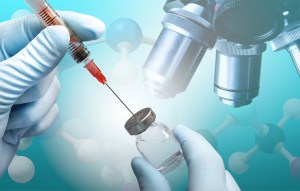 Medicine
Things behave differently at the nanoscale. An excellent example is the fact that gold actually reflects red light at the nanoscale. This has resulted in the design of experimental systems that kill cancerous cells with normal visible light, but leave normal cells unharmed. Also, body tissue can be reproduced or repaired using nanotechnology, which could eventually develop into treatments to replace or repair organs.
Nanotechnology could be harnessed to consume extremely low amounts of energy, making it a vital alternative to current methods of supplying power.
Nanotech is already at use in consumer products ranging from stain-resistant and anti-wrinkle textiles in clothing, to cosmetics. If keeping clothes clean isn’t enough, ‘smart clothing’ could monitor your heart rate and other vital signs.
The relationship between the volume and surface area of some particles can change at nanoscales in such a manner that they can end up with more ‘outside’ than ‘inside.’ (If you’re a “Dr. Who” fan, think of it as the opposite of a TARDIS.) The advantage is that the more surface you have, the more reactions you can have on that surface. This can allow new kinds of filtering, such as water for drinking or light for solar energy.
From the North Pole to the South Pole, there is change in the air. The planet is warming up. Science fiction authors tell sometimes of what will happen with a warmer world—but that future isn’t so far away. Many changes are happening right now. This rising heat is melting sea ice and destroying glaciers. It’s changing the way animals live and the way our weather works. Slowly but surely, a warmer world will make its effects known. But what will that world be like?
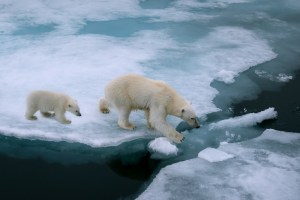 In the near future, sea levels are expected to rise over 7 inches, and by the end of this century, with continuous melting at the poles, those levels could add between six to eight inches more to seas around the world. Freak weather will become far more common with storms, hurricanes and other catastrophes looking ever more likely. Plants will bloom earlier than the insects that pollinate them. Droughts will become far more common. Fresh water will become rarer, and disease will run rampant with the onset of mosquitoes carrying malaria.
The ecoystems of the world are going to change drastically with animals on the move. Those that can adapt, will—those that cannot adapt will die. Polar bears have already been showing signs of becoming skinnier, and it has already been said that if the sea ice disappears, the polar bear will become extinct.
These are just some of the changes we will face in the future. But we already facing changes on a day-to-day basis. Researchers have tracked the decline of the Adélie penguins on Antarctica, where their numbers have fallen from 32,000 breeding pairs to 11,000 in 30 years. Some butterflies, foxes, and alpine plants have moved farther north or to higher, cooler areas. Spruce bark beetles have boomed in Alaska thanks to 20 years of warm summers. The insects have chewed up 4 million acres of spruce trees.
So it isn’t just science fiction authors who have ideas about a warmer future. It’s today, tomorrow and every day until the end of Earth’s life.
Here are six predictions that the French Apothecary Nostradamus wrote in his collection of prophecies together with the passage from those prophecies. Was Nostradamus truly a foreteller of the future, or have his writings been misinterpreted and deciphered in such a way as to make the facts fit the writing? Continue reading “6 Predictions Nostradamus Made”
 Nostradamus, was a French Apothecary who wrote a collection of prophecies that predicted the Great Fire of London, the rise of Adolph Hitler, as well as the attacks of 9/11.
Here are six of his predictions for the future that may yet still come true. Continue reading “Nostradamus’s Predictions For The Future”
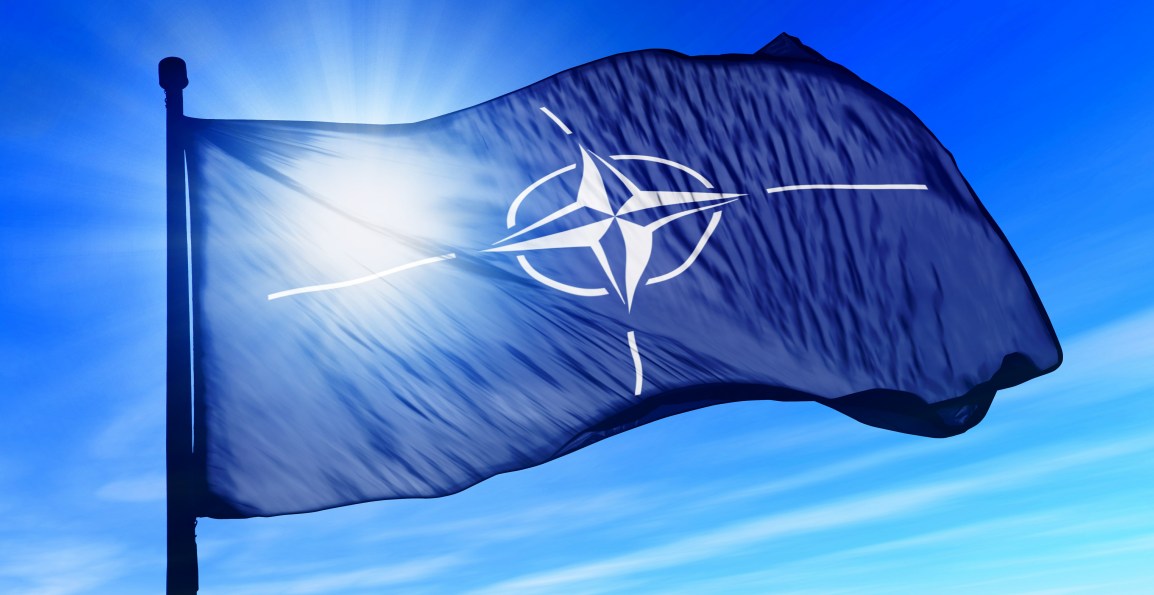
The North Atlantic Treaty Organization (NATO or the North Atlantic Alliance) is an intergovernmental military alliance based on the North Atlantic Treaty, which was signed on 4 April, 1949. Continue reading “Brief Guide To NATO”

 R. E. KEARNEY