Blog

Cheaper Nuclear Fusion

At a Shanghai facility the size of a soccer field, Chinese scientists are firing powerful laser beam pulses at a tiny pair of gold cones in a bid to replicate the nuclear fusion process at the heart of the sun.

The cones, as small as pencil tips, have narrow ends which face each other and emit a plasma of hydrogen. When the two hot gas streams collide at precisely the right time and place, and in the right manner, they trigger a fusion reaction – the process which ultimately could provide a source of endless, sustainable energy.

With government funding of 1 billion yuan (US$156 million) over six years, Zhang Zhe and his colleagues from the Chinese Academy of Sciences’ Institute of Physics in Beijing began their unprecedented experiments at the Shenguang II laser facility in Shanghai last summer.

The research team has conducted three tests so far, with another scheduled for next month, and encountered some unexpected challenges. But initial results suggest the theory works and part of the findings were published recently in domestic peer-reviewed journal Acta Physica Sinica.

“Our goal is to achieve sustainable fusion,” Zhang said in a phone interview, “the cones can be mass-produced and loaded as bullets in a machine that will rotate and fire like a Gatling gun”.

The race to fusion power heated up in 2021, when researchers with the US National Ignition Facility (NIF) achieved an energy output eight times greater than ever before. While the output was still lower than the energy input, the breakthrough gave hope as well as added pressure to research teams in other countries, including China.

The NIF experiment aimed more than 100 extremely strong laser beams at a single target, using some of the largest laser generators on Earth, producing enough heat to deform mirrors but also reducing accuracy after repeated shots.

In China, researchers were looking for a cheaper, simpler way to achieve fusion with a less powerful laser. One result was the double-cone ignition scheme developed in 1997 by Zhang Jie, a leading Chinese physicist and former president of Shanghai Jiao Tong University.

The plasma generated by relatively weak laser beams on a single target was insufficient to create the right conditions for fusion, but when two plasma streams hit each other, the temperature, density and pressure of the gas would increase significantly to allow two atoms to fuse into one and release energy in the process.

The idea remained on paper for two decades because the required cutting-edge laser technology was not available. However, Chinese scientists have recently built some of the world’s most powerful ultra-fast laser sources able to release a considerable amount of energy in a split second. It was these new technologies which paved the way for the government’s greenlight of the experiment in Shanghai last year.

The gold cones vaporize after fusion, but “the cost of gold will be extremely small – if not negligible – in the future operation of a power plant”, Zhang Zhe said. “A small grain of gold can make thousands of cones.”


E-Bike Game Changer

The dramatic increase in the sales of electric powered bikes is a clear sign that in the upcoming decade, E-bikes could crush the sales of e-cars by becoming the highest-selling electrical vehicle. According to a recent report from the New York Times, over half a million e-bikes were purchased in America during 2020, however during the same period, only 231,000 e-cars were purchased.

The sales of electric bikes in recent years has dramatically changed and increased, even though they were considered elite for years. As per New York Times, the boom in sales happened during the pandemic from 2019 to 2020. It is now believed that the number of e-bicycles on the streets will dominate other electric vehicles within the next year. Due to improvements in lithium-ion batteries, pricing, and new technology, many popular metropolitan cities like Chicago, and New York have started incorporating e-bikes into their public transport infrastructure.

The additional number of bike trips each year means fewer vehicle trips and lower emissions, which translates into a decrease in traffic congestion and improved air quality. In Britain, the government is offering tax breaks for e-bikes and supports local endeavors to extend bike paths and lanes. A study by Mintel found that the e-bike market in the UK saw a 70% jump with 170,000 sold in 2020.

E-Bikes are eco-friendly, compact, and help keep you in shape. At the point when a person runs out of breath, they can change to the electric mode and let the battery do all the difficult work. Moreover, they are also incredible for making rough terrain trips for individuals who might not otherwise be able to transport up a mountain passes or across an extensive or harsh landscape. In contrast to electric cars that need special charging stations, e-bikes can be recharged anywhere with a plug.

In Europe, the number of e-bikes sold annually could increase from 3.7 million in 2019 to 17 million by 2030, based on recent forecasts. A Forbes article recommends that twice as many bikes as e-cars will be registered each year in the European Union if those forecasts prove accurate. Even though e-bikes don’t have the range and speed of e-cars, they have several other advantages including lower costs, free parking, and faster urban commutes. These are the reasons why sales of e-bikes have boomed in recent years.

In many cities, the governments are striving hard to create a safe and comfortable cycling environment for bikers by providing them with good and secure infrastructure. This will give a sense of security to riders and help them commute much quicker than before. All of these factors have increased the demand for e-bikes and many people from different cities are keen to make the switch.

Progress with Anti-Gravity Tech

Everyone must have heard the tales of secret technologies created by the USA, Russia, and various other global agencies. For instance, anti-gravity technology has always been mentioned multiple times by the great scientists of NASA and DARPA, especially during the discussions about UFOs.

However, the serious investigation and discussion into such technology has so far been elusive to leading scientists, or at least, was until November 2020. It was the beginning of an evolution that brought the leading scientists from NASA, DARPA, and Harvard on a single platform through the Zoom app, in an open discussion about anti-gravity tech. 

Anti-gravity discussion – Is it a Taboo?

On 10 November 2020, and nearly a year into the covid-19 pandemic, Google meetings, and Zoom calls had become commonplace. However, the scheduled conference was confidential, and the individuals were anything but ordinary.

Far from the myriad of online meetings held since last summer, the introductory Alternative Propulsion Energy Conference (APEC) was created to provide scientists an opportunity to discuss anti-gravity by using alternative ideas besides mainstream science. Undoubtedly, theoretical physics is respectable, but the conference was steering towards engineering, which ultimately leads to new experimental methods, all with a mutual goal of trying to comprehend and hopefully understand the most significant force in our universe, gravity.

According to The Debrief’s reports, the experts have attended almost 22 virtual meetings to discuss Non-Newtonian Propulsion, and Unidentified Aerial Phenomena (UAP).

Avoiding conflicts:

During an interview, conference organizer Tim Ventura notified The Debrief about the convergence of the Alt Propulsion community, and how they’ve collided between the theories of aerospace, defense, electrical engineering, UFOs, physics, and the frontier science cultures.

Tim further stated that they’re acquiring residents from all of these cultures who attend the conferences, regardless of having different beliefs from others on certain topics; they avoid providing room for any conflict.

According to The Debrief, despite the unusual subject, 16 out of 71 witnesses at the November conference were current or prior NASA scientists and engineers, while the others were associated with well-known institutions including, MIT and Harvard.

UFOs in the spotlight:

The subject of UFOs created a pivotal pop-culture revival this year, with military pilots discussing their. Previously, every scientist was aware of UFO reorts, but due to the lack of acknowledgment, they weren’t utterly relevant. With that said, the scientific community is now examining the subject more seriously than ever.

Regardless of their exceptional efforts, gravity remains unbeaten.

Lab Grown Meat

As meat consumption increases around the globe, food scientists are working harder to develop healthier, appetizing, and more sustainable plant-based protein nutrients replicating meat as well as poultry products including, cheese, eggs, and milk.

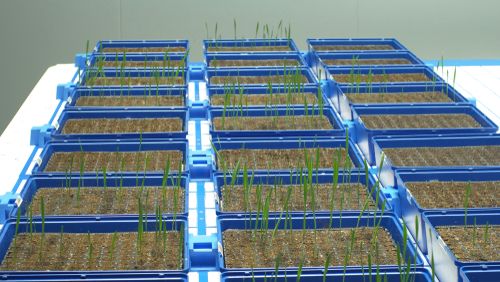
According to a BBC report, over 100,000 genetically modified barley plants are being grown in a greenhouse in Iceland for producing artificial meat. These genetic alterations along with the natural evolutionary changes have resulted in ordinary food that are now genetically distinct from their ancestors.

The modified barley was gathered and refined with an aim to eliminate the human race’s reliance on living animals in the meat sector. With meat production contributing to approximately 60% of all greenhouse gases, such a progression could have profound implications in our fight against climate change.

Utilizing Cultivation methods:

ORF Genetics, the organization behind the greenhouse is harvesting the biogenetically changed barley over 22,000 sq. feet by utilizing futuristic hydroponic cultivation methods. The growth factors that are uprooted from the barley’s seeds are of pivotal importance for the well-being of stem cells. In 2010, ORF created a skin care product by using the growth factor hormones. Over 10 years, the platform expects to enter the cell-cultured beef market. Growth factor hormones help the tissues containing animal muscles and fatty cells.

ORF Genetics director of protein technology, Arna Runarsdottir, reported to the BBC about the rise in population and how they’re responsible for their nourishment. Fortunately, artificially prepared meat would offer a plethora of benefits that might help feed the world if researchers could figure out how to produce it for the masses.

How it becomes a matter of concern?

The extract of Mesokine from a barley seed is said to be a budget-friendly and scalable technology compared to traditional growth factor sources.

Indeed, the cost of producing cell-based meat has decreased over time. For instance, a Chinese biotech company has recently revealed its lab-grown pork. However, the growth factor hormone is still a luxury ingredient that blocks the way of extensive manufacture and commercialization, but Mesokine might change that.

Social disruption ahead:

Beneficial outcomes of these genetic modifications include enhanced food production and improved nutritional values. These objectives continue to motivate research companies who have designed modern genetic modifications for recognizing, selecting, and analyzing individual living organisms that possess genetically attractive features.

In any food industry, there’re plenty of players, and some are more focused on sustainability than others. As an undetermined technology, it suggests that synthetic lab grown food might be harmful to the livelihoods of farmers, certainly in the progressing world. While reporting to the BBC, Arna Runarsdottir said that it’s a more reliable and environmental-friendly option compared to traditionally grown meat.

The Future of Humans and Robots

Presently, Neuralink is developing brain-computer interfaces, and judging by the CEO’s role at the company, the platform is striving to enable machines and human to work as one, despite his recent statements.

Furthermore, Neuralink officials have reiterated multiple times that machines will replace the manual worker, and it’s a warning that will cause many to worry about the progression of cutting-edge technologies. The platform suggests that humans must physically merge with robotic advancements or become obsolete.

The fate of humanity:

The deceased co-founder of Neuralink, Max Hodak has predicted a creepy clichéd story on the fate of human beings. He implied that robots will occupy space and will leave the human race behind. The keystone to his argument suggests that robots probably won’t cling to humanity’s political and economic models for a community.

The former co-founder believed that the ‘value systems’ that humans have used for structuring societies for decades, might become irrelevant in the coming years. He further expressed his belief about the flexibility of machines and how well-organized they are.

From the beginning, Max Hodak was cautious about the arrival of robots and how dramatically they’ll reshape the world. However, there is extensive reluctance to even identify it as a tangible issue, making it harder to seek for potential solutions to prevent potential adverse impacts.

In the late 1990s, researchers began placing instructions within the brains of paralyzed computer cursors to let them display the movements of robot arms through signals. Also, it analyzed how mice with visual impairment could perceive infrared rays. Relying on these experiments, Neuralink hopes to progress the development of a brain-computer interference to the point that every individual could operate computers with brain signals efficiently.

Mankind’s progression in robotics will permit us to proceed with efficient ways to identify future obstacles, but, according to Max Hodak, this kind of transformation requires an entire generation. However, if there ever becomes a situation where a human’s input becomes unnecessary, machines can effortlessly proceed without it, and it would ultimately lead to our termination from the technological world.

Covid-19 Origin Examined

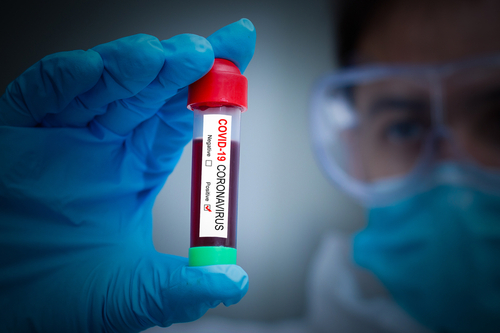
According to CNN reports, China is preparing to run tests on tons of blood samples collected and stored in Wuhan to uncover the origins of Covid-19 in the following weeks.

Wuhan is located in central China’s Hubei province and is considered as the source of the global pandemic. During the initial stages of the pandemic, researchers suggested obtaining blood samples from the urban residents so they might help examiners discern how the pandemic started.

In a report by the World Health Organization, a foreign team of investigators visited Wuhan to probe if the collected blood samples contained antibodies to the virus or not. If stored correctly, the samples could contain significant signs of the first antibodies produced by humans against the disease.

Escalation of Covid-19 in Wuhan:

Chinese officials confirmed the spread of the virus in Wuhan in 2019. Unfortunately, China has been criticized for not revealing enough information or being sufficiently transparent as researchers have been working to comprehend the virus’s origin.

Chinese executives have kept more than 200,000 samples at the Wuhan Blood Centre in case the blood samples are required as evidence against any lawsuits. Some of these samples, which were collected at the beginning of covid-19, have to be reserved for two years as per the Chinese regulations.

In an interview with CNN, a senior fellow for global health, Yanzhong Huang stated that it provides the closest insights to the appearance of the covid-19 pandemic and helps us easily acknowledge the timings of an outbreak.

Assumptions by experts:

Previously, the World Health Organization announced the investigation into the spread of Covid-19 in China, given that its origin remains unconfirmed. Some researchers and politicians from the USA have already blamed China for concealing the causes and studies of the outbreak, claiming that the virus has leaked from a science lab in Wuhan.

Numerous scientists concluded that probably the pandemic escalated through an insect-like animal, or possibly a bat that might have passed the virus onto an intermediary host that infected human beings, possibly at a wild creature farm in Southern China.

Several WHO officials who formerly visited China stated that Chinese executives refuse to provide any confidential information that might have helped determine the source of Covid-19.

Are Chinese pandemic reports trustworthy?

If researchers are fortunate, the blood samples might emerge with antibodies against the Covid-19, which might serve as a proxy for the appearance of a pandemic. However, with the increasing unreliability, the question is whether Chinese officials will conduct the research with their standard of secrecy or if the transparent reports will make it to the external world.