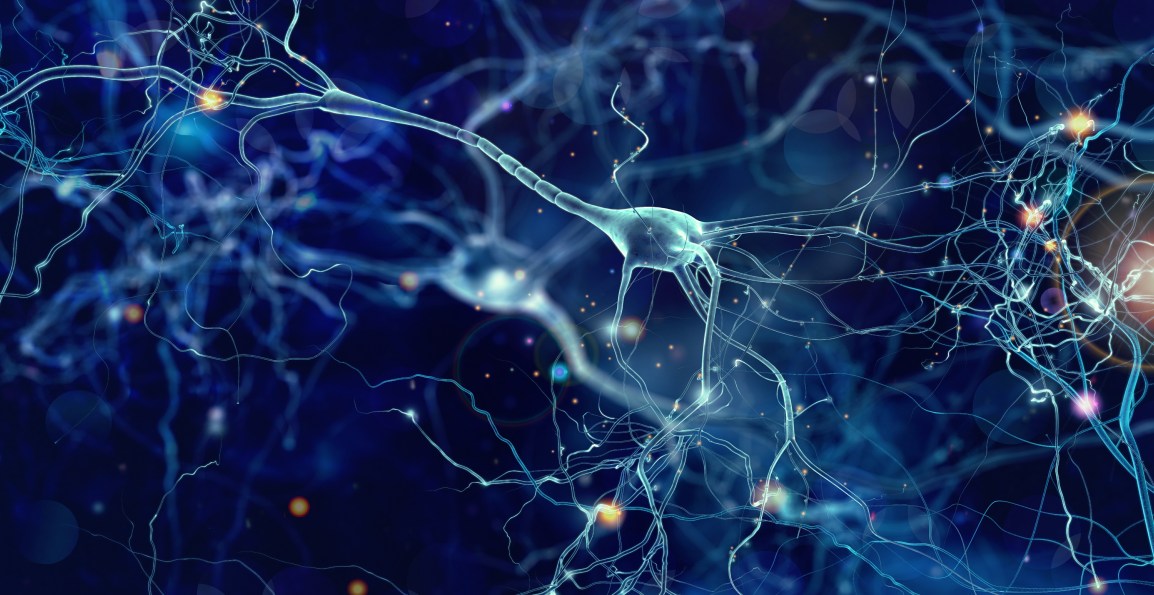
For a long time, science has attempted to imitate the human brain’s intellectual and adaptive capabilities to create artificial solutions. Artificial Intelligence was the first big step towards imitating the functions of the brain. However, today AI has developed far beyond a simple problem-solving data model and machine learning system, to artificial neural networks, a more complex imitation of the human nervous system.
While machine learning systems chiefly operated according to programmed algorithm and data, like the Facebook Facial Recognition feature that scanned through millions of uploaded photographs, scientists are now taking AI a step further by making the machines think, really think.
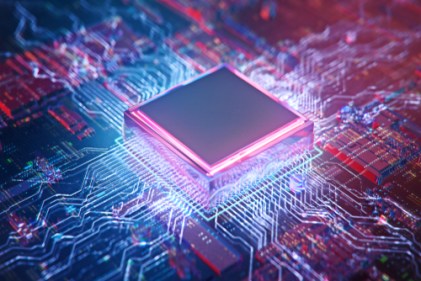 Project Neu-Chip
In an effort to harness the intelligent processing capabilities of the human brain, a team of international scientists from Aston University, England have embarked on project Neu-Chip, a detailed study and experiment to try to physically integrate human brain cells into Artificial Intelligence Microchips.
The research has received a grant of €3.5 Million from the European Commission. Scientists will try and layer complex networks of brain cells onto microchips in order to enable the chips to dynamically solve problems from the data. The brain cells integrated on the chips will be stimulated by firing varying patterns of light beams. Scientists will then use 3D computer modeling to study any changes to track the adaptability of the cells.
The project includes research associates, professors and scientists from institutions throughout Europe and beyond.
The Endless Possibilities
According to a press release issued by Aston University, mathematician David Saad, one of the scientists participating in the research program said that the aim of the study is to harness the unrivaled computing power of the human brain in order to dramatically increase the ability of computers to solve problems.
The scientists on the research team collectively believe that this integration of human brain cells into a microchip has all the potential to surpass the limitation in machine learning technology. It’s believed to have the potential to bring about a dramatic shift in AI technology by improving the processing power as well as the energy consumption of AI machines for solving complex problems.
 Dr. Jordi Soriano, an associate professor of Physics at the University of Barcelona said that the ability to engineer neuronal circuits in a dish and train them to conduct data analysis will provide new insights into how the brain computes information and finds solutions. The developed technology may even help to design unique and exciting human-machine interfaces.
Project Neu-Chip is not just focused on making AI algorithms more efficient and faster, but also more powerful and independent. Until now, all AI powered programs and machines typically relied on artificial circuitry inspired by the human brain. However, with Project Neu-Chip, scientists are actually experimenting on implementing the biological cell itself for the very first time.

 With more and more cars running on the roads emitting toxic fumes, more CFC emitting devices, and increased industrialization leading to the cutting down of forests, the global temperature is rising and causing a major climatic change despite the efforts environmental agencies are putting in to save the environment. Studies suggest that the 100-year projections are still very bleak.
 Environmental scientists from the University of Copenhagen and the Bjerknes Center for Climate Research in Norway joined hands and derived a new way to measure the direct impact of rising global temperatures on the sea levels. Their findings were published in February 2021, in the Ocean Science Journal and have raised serious concerns.
 With his team of researchers, Ceron drafted a paper explaining how simple robots can be powered by Popcorn without electricity or hydraulics, at the IEEE International Conference on Robotics and Automation. Yes, it’s true! In this ultra-modern era, it has become commonplace that we come across strange yet astounding developments in the sci-fi field and a popcorn robot is exactly that. The engineers from Cornell University demonstrated their hypothesis. Inside a silicon beam that was fastened with toasted wire, they put 36 kernels. An electrical current was dispersed through the metal chord, warming up the kernels which eventually started popping due to the heat, moving the silicon.
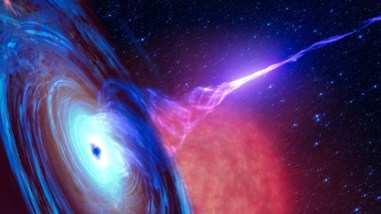 Unarguably, the most enigmatic celestial object, black holes, are now believed to be energy powerhouses. For several decades, astrologists and scientists have contributed to decrypting the mystery of black holes. Roger Penrose discovered that the development of black holes is a prediction of the theory of relativity. Stephen Hawking theorized the entire phenomenon “Hawking Radiation.”
 As far as the theory goes, human habitats in space seem like a reality. Asenjo, the coauthor of the study, postulated that energy extraction is possible because of the high relative velocity between captured and escaping plasma particle streams. Plasma energization is known to produce maximum efficiency due to the black holes “leak energy”. Leak energy is an accumulation of negatively charged particles in black holes reducing energy. Comisso’s theory is subjected to the polarity of the plasma shot against the spin of the black hole and not with the spin of the black hole.
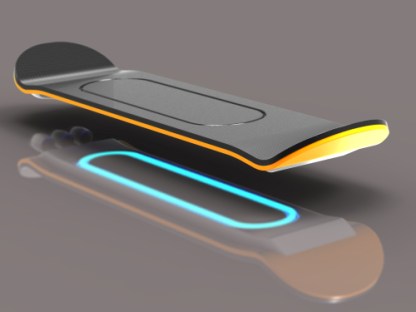 The genius who conceived the hoverboard project was Jimmy Zhou, an intern at Hacksmith Industries who is also an engineering student in Canada. Zhou devoted a number of hours to work on the complex technicalities that entailed the creation of the hoverboard. The founder of Hacksmith Industries, James Hobsen, gave a befitting analogy in his attempt to describe how hard Zhou worked: “He drank more Red Bulls than a frat house on spring break.” The statement reflects the unbridled dedication and consistency that Zhou displayed, both of which serve as key components in creating something of scientific value.
 The accelerating rotation varies all the time because of variations in the atmospheric pressure, winds, ocean currents and movement in the Earth’s core. However, these variations can be troublesome for the timekeepers who are responsible for setting the Coordinated Universal Time (UTC). The UTC is used to set clocks and whenever the astronomical time differs by 0.4 seconds from UTC; UTC is adjusted.
  There’s no doubt that global warming has disturbed most natural habitats, processes and ecology, but it could not be the only cause of the increase in spin speed. No matter what the factors and reasons are, the addition of a negative leap second could have catastrophic impacts on modern technologies. To avoid any disastrous consequence, some scientist suggests to let the difference between astronomical and atomic times expand until the addition of leap hour is required.
  R. E. KEARNEY