Blog

New Alexa Device Uses Radar to Track Your Breathing

Amazon is devising an instrument which scans your body while you sleep via radar. The company has assembled a team who are reportedly working on manufacturing a new Alexa-abled device that measures your breathing for sleep apnea symptoms with radar.

Credible sources associated with the project recently reported that this is a palm-sized device with the core objective of monitoring your breathing and sensing if there are any interruptions. In case there are, it detects that you have a sleep apnea disorder. There have been no details released by those working on the project regarding the final product’s look.

This is currently an undercover plan with the internal codename “Brahms”. It is interesting to note where the codename is derived. Johannes Brahms was a German composer who wrote a famous lullaby and was suspected of having sleep apnea in his lifetime.

Amazon’s Contributions to the Health Sector

Business Insider has further been informed that the shape of the device is apparently like a “standing hexagonal pad connected to a metal wire base”.

The goal of installing the tracker may not be limited to detecting signs of sleep apnea; Amazon could employ its AI prowess to examine various other sleeping disorders like sleepwalking or insomnia. Through its cloud technology, the tracker could have the potential to develop a wide-ranging sleep analysis system that keeps these disorders in check.

It will not be the first time Amazon integrates its machine-learning technology into the health sector. Only last year, the company introduced an affordable Halo fitness tracker that assesses your health by scanning your body and voice. Amazon Pharmacy, a well-developed prescription drug delivery service, was also introduced recently. All of this is reflective of how the company is continually making valuable contributions to the healthcare and wellness domain, improving the quality of life for people worldwide.

Company’s Future Plans

Amazon has maintained silence on ‘Brahms’ to uphold a mysterious impression surrounding its upcoming release. This was corroborated when a spokesperson of the company refused to talk about the project. Recently, a firm that Amazon launched, partnered with JPMorgan and Berkshire Hathaway called Haven Healthcare, was shut down. According to CNBC, it was a corporation that was anticipated to reduce the costs of employee healthcare.

However, there are a variety of projects which Amazon is involved in when it comes to healthcare space and is working on its execution. Despite Haven turning out to be an unsuccessful venture, Amazon will not be shying away from the healthcare area any time soon.

Human-made Biomass outweighs everything

Recent reports have revealed the massive impact of human beings on planet earth, as man-made products surpass all that exists in the world confirming the creation of a new geologic epoch called the Anthropocene.

Human Beings often hid behind the “we are just specks” in a greater galaxy when it came to the impact of their doings on the planet. However, a recent paper by Nature has revealed that global humanmade stuff now outweighs all living biomass.

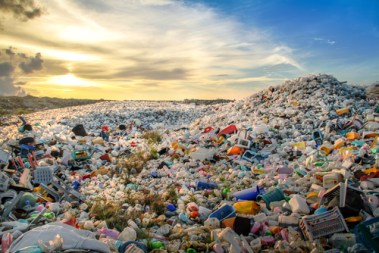
From roads, smartphones, buildings, chairs, telephones to bricks, blocks and bottles, have now dominated most of the Earth. According to the stats, the humanmade mass totals up to 1.1 million metric tons. This amount means that biomass created by men now dominates most of the Earth, a result caused by modern development to urban society.

Plastic alone acquires more space than marine and terrestrial animals, statistically, double the weight. Whereas buildings and other infrastructure have surpassed shrubs and trees. In simpler words, the material created by man has become the dominant force in 2020 and will continue to do so. Thus, human beings may not be just a trivial speck anymore. Now that we are the principal force, it shows the power that we hold. With this power, human beings also become responsible for the resulting consequences.

“We cannot hide behind the feeling that we’re just a small species, one out of many,” says study co-author Ron Milo.

Human-made biomass from 1900 – Present

Scientists say that this increase was bound to happen at some time. However, the process of expansion of humanmade products sped up after 1900. In 1900, the Earth made up only 3% of the humanmade biomass, which means that the materials have doubled up within the gap of 20 years. The scientists say that most of the construction is in infrastructure, concrete, and asphalt used between World War II and the oil crisis of 1973. That was the time when first-world countries were actively building new estate.

In 2020, we are living in a reality that is much closer to Anthropocene. A new geological epoch where the humans are the dominant force, and that actions of every living person is driving the changes.

“It is an indication that, indeed, the transition happened and the name is appropriate,” Milo says

What it means for the future

The increase of humanmade biomass is not unexpected. However, the decrease of the total biomass on Earth is a cause for concert. The research shows that total biomass on Earth has declined about 1100 billion tons since the year 1900. This decline could be attributed to deforestation and extinction. In this case, the increase in manufactured products made by man is somewhat problematic for human health. If the speed with which mass is increased in 2020 persists, the humanmade products will increase three times more by 2040, eventually turning into waste and a threat to human life.

How does a Graphene battery compare to Lithium-ion battery

Tech-savvies believe that we’d genuinely be futuristic when we have easy access to Graphene batteries. A battery may sound like a simple thing to many, but Graphene batteries could change the game forever.

Scientists say that Graphene batteries will genuinely create a futuristic society where your devices can run up to days and weeks without charging.

A Graphene Battery in a nutshell

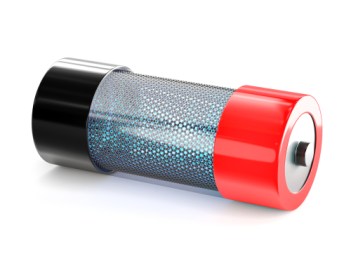
Packed together in a honeycomb structure, graphene is a carbon atom composition that has a thick two-dimensional atomic layer. The 2D structure of this composition allows graphene to be highly flexible, stalwart, and light in weight, as well as offer exceptional electrical and thermal conductivity that is even better than that of copper – an element that is known to be most conducive.

Graphene battery vs your regular battery 

The battery that we use in our portable devices is made with lithium-ion, also known as Li-ion. A lithium-ion battery has a similar structure to a graphene battery. Both the batteries have two conductive plates coated in an electrolyte solution, but the characteristics of both batteries differ on a considerable margin.

As mentioned earlier, graphene’s electrical and heat conductivity is higher than the most conducive element copper. Thus, it’s conductivity surpasses that of Lithium-ion as well. As a result, a device can be charged a lot faster as current travels more quickly. This high conductivity also extends the life span of a battery as they cool down faster.

A regular battery’s charging rate doesn’t remain consistent throughout its lifetime. A lithium-ion battery starts faster, tires out, and then delivers slower current, reducing the rate of charging. On the other hand, a Graphene battery offers linear charging rates, which means that this type of battery doesn’t tire out.

“Graphene batteries can make batteries charge faster and dissipate heat more effectively. This has big implications. It means power tools don’t overheat as quickly. It means home appliances serve families better, and for longer. And it eventually means [electric cars] can charge faster.” Chip Breitenkamp, VP of business development at the graphene battery company said.


Most importantly, Graphene batteries are safe. The incidents of smartphones burning up, overheating, and damage due to overcharging are overly familiar. Users can avoid these unfortunate events by opting for Graphene Batteries instead. There’s virtually no chance of overheating Graphene batteries as they are more robust than lithium-ion ones.

A Rare Commodity – Water Makes It To WSJ Futures Commodity

Water is all set to join the expensive commodities on earth like gold and oil on Wallstreet futures commodity. In an unexpected turn of events, water now sits next to the rare-valued items. 


Wallstreet futures commodity is a separate section where people in the relevant fields can bet on the price and worth of an item in the future. Earlier, rarities such as gold, copper, and diamonds acquired several spots. However, with water running scarce in many parts of the world, the Wallstreet Journal has added this to their futures commodity. 

 

This addition will allow the farmers, investors, and municipalities to bet on the worth of water in future. As water becomes a rare commodity for many, investors took this opportunity to bet on it by adding it to futures rare materials. CME Group launched the contract, which is tied to $1.1 B of California spot water market, according to Bloomsburg. 


The contracts were laid out in September, whereas the trading began on December 7. During the month of September, when the contract was initially laid out, California was experiencing high temperatures, long drought and scarcity of water. The deficiency of water in a developed country only hinted at more dangers to come across the world. 


Netizens are raging over Wallstreet journals’ addition of water into their betting services, as it may have a significant impact on prices of water in future. For example, in dry areas where water may be expensive during summers, people can offset the cost on futures commodity to reset the rates of water. However, this can work the other way around as well in order to reduce rates of water.


Patrick Wolf, the lead product developer with Nasdaq Global indexes, told CNN that this could be used for a good cause as well, as the contract will bring transparency to market pricing whenever water became scarce. 


“California has long periods of dry conditions followed by short periods of very wet conditions. And that affects the price a lot,” Patrick Wolf said. 


A report revealed by food and agriculture organization confirmed that around 1.2 B people in the world are experiencing a high level of water shortage. Another report confirmed the scarcity by revealing that the availability of freshwater resources per person has decreased by more than 20% in the past twenty years. 
 

“Climate change, droughts, population growth, and pollution are likely to make water scarcity issues and pricing a hot topic for years to come,” RBC Capital Markets managing director and analyst Deane Dray told Bloomsberg


Despite the rage and anger, it is a moment of truth of human beings. Water is becoming increasingly scarce in different parts of the world due to repetitive droughts, dry weather due to global warming, and heat. As the earth is ageing, the impact of human activities is speeding up the process of natural damage to the Earth, resulting in droughts and bad weather conditions.


Quintessence – A New Element That May Rip the Universe Apart

Every unexplainable event in Space is generally attributed to dark energy. So was the unexpected expansion of the Universe. However, many scientists suggest that “Quintessence” might be responsible for the expansion.

Generally considered as Space’s intrinsic element, dark energy has been found to form 68% of everything that exists in the universe. Fortunately, scientists now have a name for it.
To understand Quintessence, one must go back to the ‘Big Bang,’ that formed a universe. A blast, for example, blows up and then culminates into nothing by collapsing. Similarly, the universe was expected to collapse. However, there are three ways in which this could stop:

  • The gravitational force takes over, resulting in a Big Crunch.
  • Expansion overpowers the gravity, and universe freezes into a Big Rip.
  • Both the forces balance out one another, shutting down the collapse.

Making sense of Quintessence

First discovered in 1988 by Ratra and Peebles, the idea of Quintessence later matured into a whole concept in Robert R. Caldwell, Rahul Dave, and Paul Steinhardt’s paper in 1998. The authors breathed life into this hollow concept which was later considered as the fifth element by many scientists.

To explain the expansion, scientists’ first guess was that dark energy is something that inherently existed in Space. They implied that dark energy per unit of Space is fixed as a “cosmological constant.” However, not all scientists were on the same page. These were the scientists who first coined the term Quintessence, derived from the fifth element.

According to a cosmologist at Dartmouth College, Robert Caldwell, “Quintessence is a tangible medium that has fluctuations of its own,” and is a mix of matter and the cosmological constant.

Big Rip Vs the Big Crunch

When the Big Bang took place, the universe was hot, dense, and full of matter. It had anti-matter, energies, and radiations. Scientists discovered and made sense of many elements. However, missing out on Quintessence birthed many false theories.

The data collected since the year 1990 is proving that Big Crunch may not happen and a new matter that defines the universe in the 21st century may change everything forever.

Scientists have already predicted the final fate of the universe. According to cosmologists, the universe will eventually wrap up in a big crunch. However, the accelerating rate of expansion is contrary to all theories. The universe is swelling faster than ever, instead of crunching. Scientists now believe that a Big Rip is more likely to end the universe than a Big Crunch, and the mysterious element Quintessence would be responsible for that.

Cosmologists are still working on confirming the presence and impact of the fifth element; however, if the component does prove to be the force behind expansion. It would help scientists determine the fate and age of the Universe.

Years Later, Radio Bursts in Space Remain A Mystery

Theories and assumptions chipped in by scientists around the globe keep stacking up, but none of them has been able to detect the source of a mysterious radio burst in space.

“The joke is that the number of theories outnumbers the number of known bursts,” says astrophysicist Emily Petroff of The Netherlands Institute for Radio Astronomy.
First discovered in 2007 by Lorimer et al., Fast Radio bursts (FRB) continue to be an exciting topic of research due to their mysterious nature. FRBs seem like an aesthetic meteor shower gone mega, but they are much complicated than that.

Fast Radio Bursts in a Nutshell 

The source might be unknown, but scientists have been able to define the fast radio bursts aptly. As evident from the name, they are a burst of radio emission that last for milliseconds. These short-lived blasts are anything but ordinary. A generic FRB releases as much energy in milliseconds as the sun radiates in 3 days.

When the bursts were first spotted, they were considered to be rare. Not much attention was paid to it as enough data wasn’t available. Fortunately for the researchers, the bursts became more frequent. Unfortunately, more data hasn’t been much help.

FRBs are becoming repetitive.

There have been dozens of FRBs since 2007. However, no pattern was found, making it challenging for astrophysicists to make sense of anything. In 2012, repeated bursts were observed for the first time, allowing the researchers to collect data effectively. These bursts are typically known as FRB 121102 and have helped the scientists understand this enigma better. For the first time, the bursts weren’t random, but they were found in the same position in the sky. These bursts kept repeating on a 157-day cycle, allowing the researchers to gather the appropriate data that might answer some questions.

The data collected from FRB 121102 did set a base. The majority of scientists agreed that Magnetars cause these bursts. Magnetars are sub-class of neutrons that are formed from stellar explosions. Type-I explosions (super luminous supernovas) create these magnetars that are capable of producing such intense energy that is detectable from other galaxies.

Despite theories and research, scientists are still to come to a conclusion. Data from 2012 confirmed that these explosions are taking place outside of our galaxies. However, new data testifies that bursts are gradually nearing the universe. In fact, the first burst within the milky way was spotted this year in April. Known as FRB 200428, these bursts were accompanied by X-rays, something that has never happened before. Similar outbreaks were repeated on 3 and 24 May, some 30,000 light-years away from earth.

It’s hard to say whether the new information collected each day is bringing us closer to unraveling this enigma, or just making it all more complicated.