
There are certain elements that are required for the possibility of life on any planet. These include all essential chemical elements (including Carbon, Hydrogen, Nitrogen, Oxygen, etc.), sources of energy, and of course liquid water. After much research, scientists have been able to find hints of small amounts of water on other planets in our universe. Does this mean that maybe Earth is not the only planet where life is achievable?
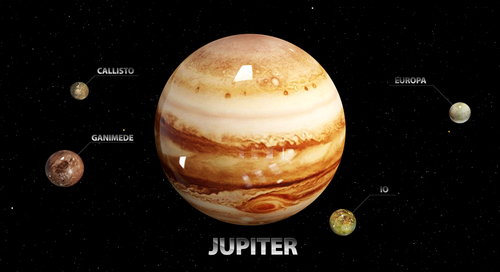 Europa is one of Jupiter’s 79 moons. About forty years ago, a voyager spaceship was sent to photograph it and it was able to take a close-up photograph of the exterior of the moon. In these pictures it was visible that Europa had an ice surface, with cracks and splits, which gave it the look of an eyeball.
What makes this planet of great interest to the scientists is the fact that it may contain all the requirements for life. Scientists believe that under the moon’s thick outer surface, there might be liquid water present. According to the evidence they have, it is thought that this water might even erupt into space in the form of huge geysers. Recently, an international research team was able to prove the presence of water when they used one of the world’s largest telescopes and measured a water molecule by peering at Europa through it.
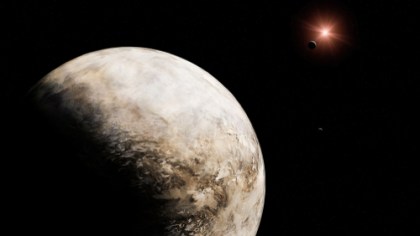 Then further research took place where scientists started researching the inner workings of the planet and the water’s location. It is believed by many researchers that a large water ocean, double the size of the Earth’s surface is present underneath the icy surface of Europa. Another theory which the scientists believe is that there might be shallow reservoirs of melted water below the thick exterior of the moon. The third theory was that the reason water vapor exists outside Europa is Jupiter’s powerful radiations, which are stripping water vapors off of the ice shell of its moon. This theory was made due to the fact that when water was discovered on Europa, it was always near the part of the moon which was facing Jupiter during the orbit.
By investigating further, researchers will be able to explain the exact location of the water, its amount and whether or not it is a hint towards the possibility of achievable life.


 Of course, exiting the Earth’s atmosphere and escaping into the vast universe is no easy job. For a rocket to overcome such a strong gravitational force, it requires an extremely powerful thrust and that is exactly what the engineers at NASA had in mind when designing the Space Launch System. While taking off Space Launch Rocket is capable of producing an unbelievable 8.8 million pounds of thrust. To imagine such a figure is mind-boggling let alone building a machine capable of doing it. If you think that wasn’t “jaw-dropping” enough, the Space Launch System is capable of achieving a record speed of Mach 23 or more than 17,000 miles per hour before separating from the crew capsule. For a rocket the size of a 20 story building, exiting earth at a rate of 17,000 miles per hour is simply a scientific marvel.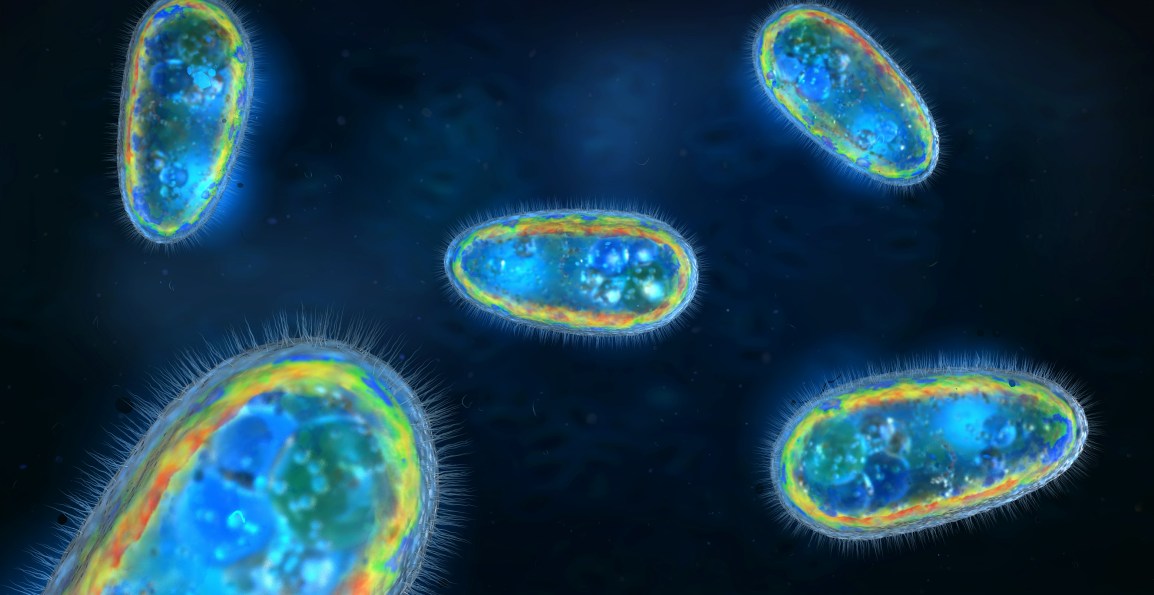
 It was believed that due to the fact that single celled organisms have neither a brain nor a nervous system, they do not have the ability to make complex decisions or the ability to memorize. However, scientists say they have recently discovered what they are calling signs and symptoms of complex decision making in a single celled organism, giving a new existence to an idea that was brushed off and not taken seriously over a century ago.
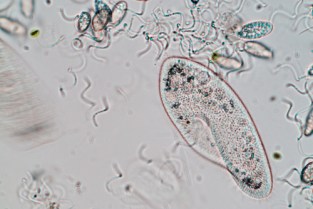
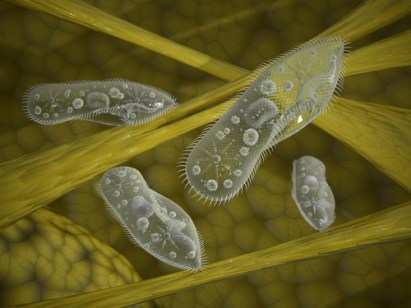 Scientists started their research on the single celled organism to understand its behavior better. Multiple unicellular organisms were put through a ‘Poke Test’ where they were provided with the same stimulus over a period of time. It was observed that other organisms regularly responded less to repeated stimuli. Stentor roeselii, however, first bent far from the source of the stimulus, but later changed its procedures and flapped its cilia in defense, contracted, or floated away. This behavior is different from other similar single celled organisms.
 Emeritus William Romoser, a professor at Ohio University, has been conducting detailed research and study on this very topic. He claims that Mars has always had some kind of life on it. Romoser supports his claim by showing internet images taken of the planet where he highlights what looks like an insect on Mars.
 Some researchers do not agree with Romoser on his findings. They say that the proof which the professor is providing is not authentic enough. The ‘insects’ which he has highlighted can just merely be rocks or blips on the images. There is no proper believable image proof for the discovery which he claims to have made. They also say that one cannot simply believe such a big claim just because of something which is just a guess and was found in a blurry picture. They refuse to come to terms with the fact that the insect-like forms which he discovered in the pictures really are insects on Mars. They can even be shadows if one wants to call it that.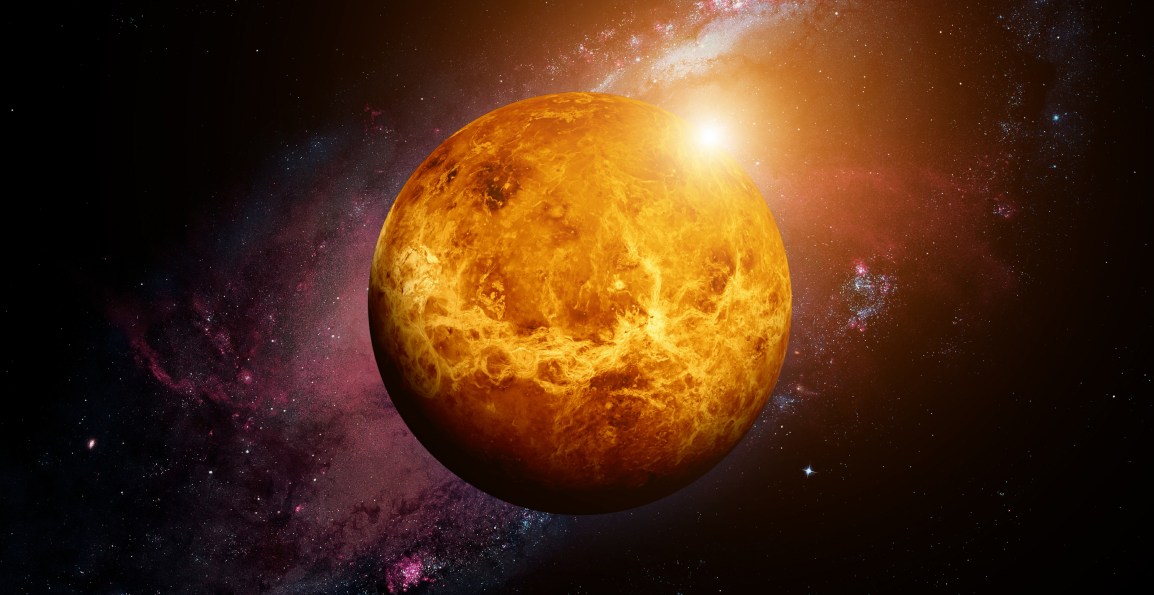
 mainly because of the high temperature and other toxic conditions including thick sulphuric acid clouds. However, scientists from NASA are on a mission to explore the planet in the hope of providing us with the most astonishing discoveries. Just like they discovered water while exploring the moon.
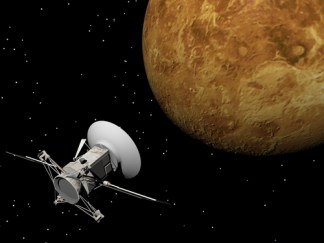 NASA’s still don’t know how long it would take to implement a manned mission to Venus since the required technology is not yet available to the scientists. So that means, there is not only a lot of research to do, but the team also needs to figure and invent the right technology to turn the impossible into possible.

 R. E. KEARNEY
