
A significant effort is being made to create functioning Hyperloop systems that will increase the speed at which we can travel. The system would go around in a loop and work similarly to high speed railways, with pods to transport passengers via tubes. The pods would be propelled along air skis, or magnetic tracks, through tunnels which have had most of the air removed. This will reduce friction and allow them to travel at up to 750 miles per hour. There have been several potential routes sketched out worldwide, including in parts of the United States and India, and it is expected that the first Hyperloop system should be functional by 2021.
Hyperloop travel is being proposed as an alternative to short plane journeys, as well as a means of daily commute. Although the idea of travelling at super speed via tubes has been introduced before, public interest began to peak after Elon Musk published his Hyperloop Alpha paper in 2013. It detailed his plan to create the system, with new technology that would make it possible. Musk also invited other teams worldwide to provide input, in an effort to increase the project’s success. The first route Musk intends to set up would be a 350 mile network from Los Angeles to San Francisco, which would transport passengers along at 760 mph. The entrepreneur estimates the cost of putting up the system at between US$ 6 and 7.5 billion, allowing passengers to pay as little as US $20 per journey.

The advantages of a Hyperloop system are significant, and would include:
- The possibility of travelling up to two times faster than a commercial airplane.
- Travel would be unaffected by weather conditions.
- Lower operating costs due to autonomous systems.
- No possibility of a collision, due to the system operating on a loop.
- Low power consumption, as well as energy storage for 24 hour emergency operation.
Musk’s company, SpaceX, built a track to test pod designs, with a team from MIT designing the first prototype. Their invention uses electrodynamic suspension for levitating the pod, and eddy current braking. To date, the top speed in the Hyperloop Pod Competitions has been achieved by the design from The Technical University of Munich. Their pod accelerated to a maximum speed of 201 mph. Critics have expressed concern that the speed at which the system operates would make it uncomfortable for passengers, but Musk has guaranteed that the acceleration and deceleration process will be specialized to ensure maximum safety and comfort for commuters.


 Becoming a Diamond
  An Atmospheric Release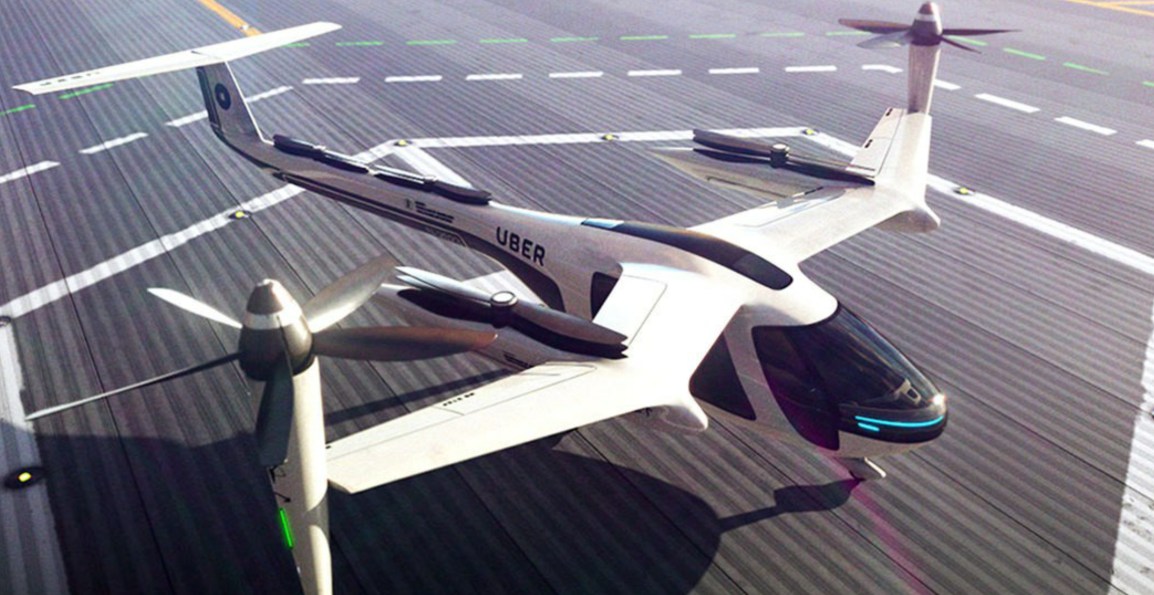
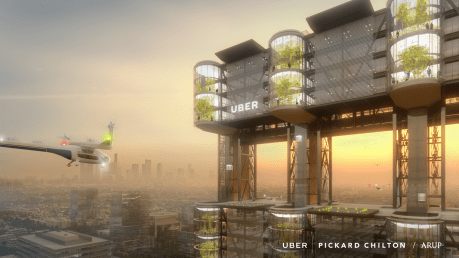 The vehicles would be Vertical Takeoff and Landing Vehicles (VTOL), which the company plan to make cheaper than taking a car. They are also expected to be autonomous, when this becomes possible. Uber has announced plans to begin testing prototypes within the next two years. The company has several obstacles that will need to be overcome before this can be attempted, however, and have put an extra effort into recruiting top aviation researchers to put the pieces together. Company officials are also hoping to collaborate with governments, vehicle developers, and other technologically advanced companies to bring the best product to the market.
 Forever Labs has developed a system to harvest and store these ideal stem cells for future use, where necessary. The company has partnered with doctors, predominantly plastic and orthopedic surgeons, to extract stem cells which their labs will keep for an annual fee. The extraction is a fifteen-minute process, and the company’s website provides those interested with a list of doctors that do the procedure. The process is virtually pain free, with little or no recovery period. This means that you could essentially be saving your own life, with an effortless procedure, conducted during your lunch break!
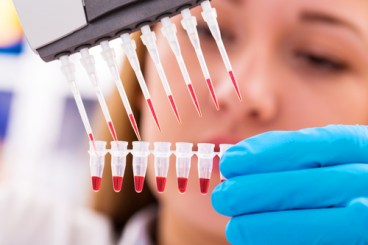 The procedure is straightforward, harmless and, for most patients, risk-free. Those that may face risks will be told beforehand. Scientists continue to research the possibilities that exist with stem cell treatment including: combating Alzheimer’s, osteoarthritis, heart disease and strokes. A study conducted with rats has shown where stem cell application may even be able to treat alcoholism. Regardless of the cures that will arise, most scientists believe that harvesting stem cells at a younger age will give individuals a higher fighting chance if they find themselves dealing with age-related diseases in the future.
 Tokyo Institute of Industrial Science have recently created a biohybrid robotic finger with the ability to bend itself up and down. They published the results in Science Robotics recording that the finger remained functional for more than a week.
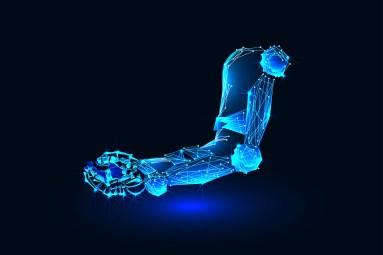 to undertake specific tasks. The inclusion of muscle tissue would result in smoother, steadier overall movements. Scientists are planning to use these biorobots for more detailed exploration of the human body, as well as to enhance our medical capabilities. This could be partially accomplished by performing tests on the biorobots, instead of humans. In addition, they would increase the manufacturing ability of robots, currently limited due to intricate parts and assembly necessary, and their ability to monitor certain environments.
 R. E. KEARNEY