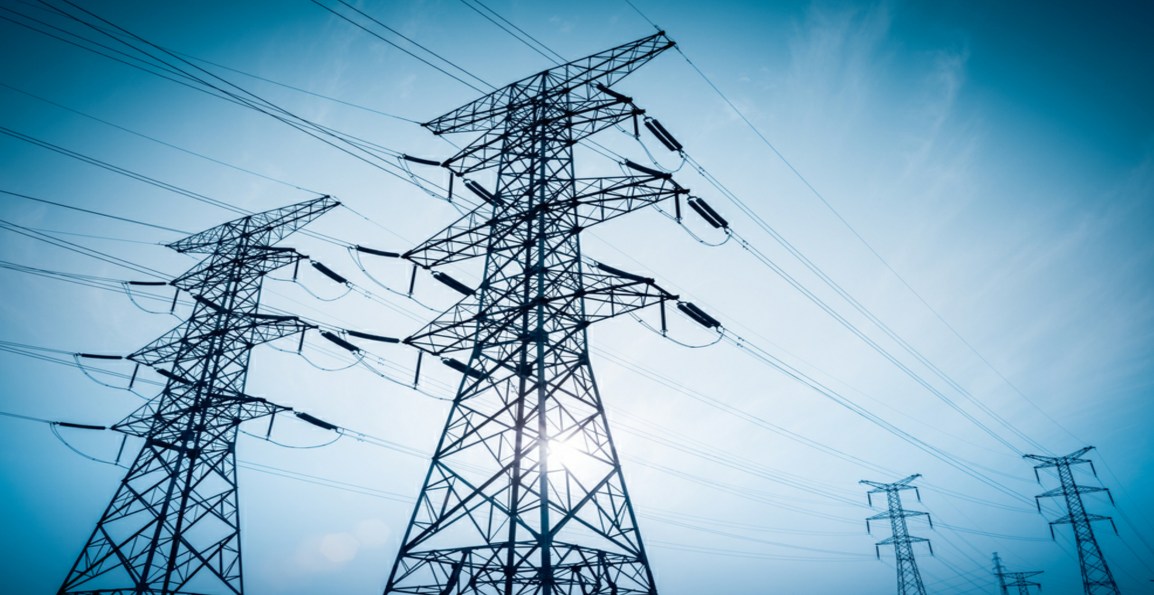
Global warming and the dangers it poses to the planet has many countries converting to renewable sources of energy. Research into new ways of accomplishing this has been ongoing, and the last few years have unearthed numerous possibilities. Since the problems associated with non-renewable energy sources are global, many researchers are looking into ways of adapting the resources to benefit the entire world. Previous use of renewable resources, such as solar or wind powered energy, has been restricted because of intermittent energy drops. Scientists believe that this can be fixed by using grids across continents to tap into energy sources when they are needed, not only when they are available.
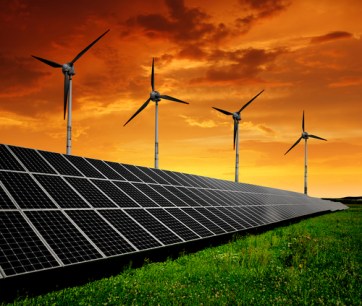 Most of our current energy grids operate on alternating current (AC). Converting these renewable energy sources to direct current (DC), where energy flows in a single direction, is making it possible for high-voltage lines to be installed throughout the United States. This is beneficial because DC can transport a substantial amount of power over longer distances, while reducing energy loss often associated with AC systems. Construction has begun in Wyoming on the Chokecherry and Sierra Madre Wind Farm, which will have a DC connecting Wyoming to California, Nevada and Arizona. The line is being made from a series of steel transmission towers which can carry up to 3,000 megawatts of electricity and, in addition to transporting energy from Wyoming, would also allow energy to flow from California on sunny days.
Research into ways of transporting renewable energy has resulted in a paper being published in Nature Climate Change, which shows that a better transmission infrastructure would be benefit the entire country. The United States has sources of renewable energy throughout the country, which would be sufficient to maintain its own energy requirements at costs similar to those that currently exist. This would be possible with the current technology available and research has calculated future costs, demand, generation and transmissions and shows where greenhouse gas emissions would decrease by 78% below the levels of 1990 in 15 years.
Although the USA has just started applying this technology, macro grids are already being used by other countries. Four-fifths of the hydroelectric power in China is produced in the south-west, but most people live in eastern mega cities. The country has adapted to transporting large amounts of power over significant distances in both directions. As a leader in technology, China also plans to invest $50 trillion to transport clean energy globally. This project, known as Global Energy Interconnection would connect a wind farm at the North Pole, solar power from near the Equator, as well as other natural sources, and transport it to cities throughout the world. The technology is expected to be in place by 2050, and would significantly impact the way in which the world’s energy is acquired.


 Alphabet’s CEO, Sundar Pichai, highlighted ways in which Google is utilizing machine learning in their products, even though the technology is still in its early stages. One of these is the new Google’s Clips camera, which is powered by artificial intelligence and uses this knowledge to decide the best time to take photos. The camera is designed to be positioned in the home, and programmed to decide when conditions are ideal for taking pictures. These photos would be hard to capture manually because of how fleeting these moments are, or a need for somebody to be behind the camera.
 Pichai also mentioned the advances in Google Assistant, since the inclusion of AI technology in its design. The Assistant’s intelligence level is currently equivalent to that of the average fifth grader. The system is, however, is gaining more knowledge each day and using it to assist people in getting things done. DeepMind, Google’s artificial intelligence researcher, is the world leader in the field and is dedicated to applying the technology positively. The company’s recent advances include adding imagination to machine learning, as well as expanding the ability of artificial intelligence to accomplish real life tasks.
 A significant amount of research has gone into ways in which HIV can be stopped before it begins to multiply, thus preventing it from breaking down the immune system. A study was recently conducted at Loyola University in Chicago, which suggests that this might be possible. Results were published in The Proceedings of the National Academy of Science, and showed a method which would incorporate the microtubule tracks through which the virus travels and a protein called bicaudal D2.
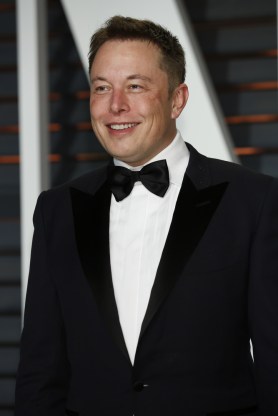
 Elon Musk continues to expand his interests, with more innovative methods of transportation. He has introduced the idea of the Hyperloop, which would facilitate travelling between major cities in a much shorter period of time. The concept consists of a network of low pressure tunnels, which will propel passengers along in pods, would be weather resistant and powered by renewable energy. Although the Hyperloop is currently just a proposal, Musk founded The Boring Company with the intention of creating transportation tunnels underground and decreasing the amount of traffic on bus interstates and city streets.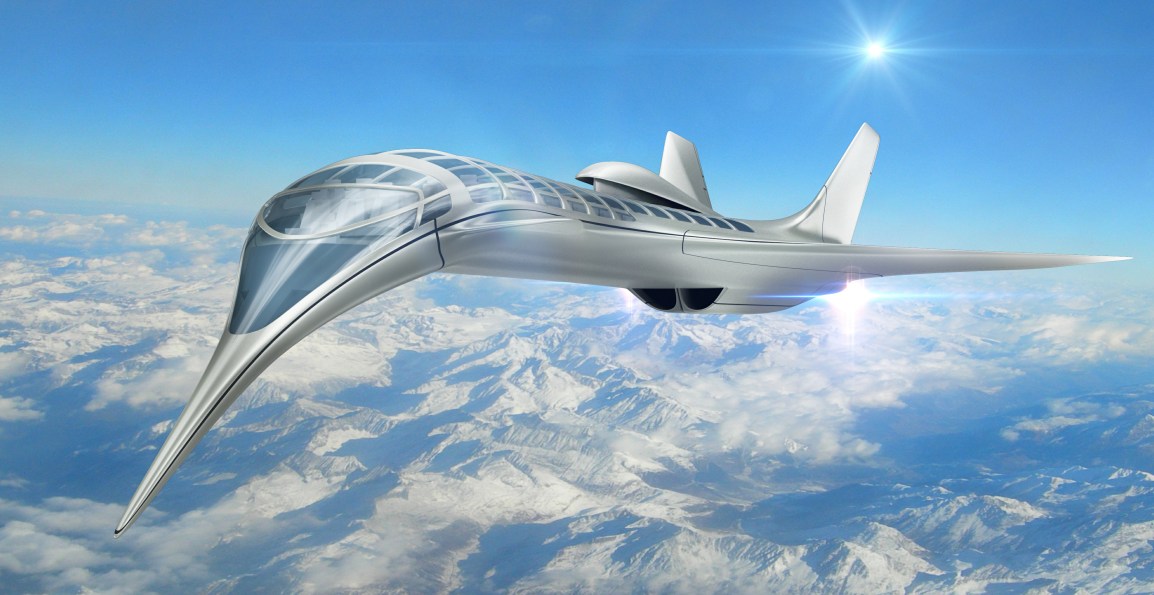
 Many new plane designs are geared towards getting passengers to their destination quicker. The first of Bombardier’s concepts is a commercial hypersonic plane, The Paradoxal that could fly 550 passengers from Los Angeles to Sydney, Australia in as little as three hours. Initially, the airplane would use its two Rim-Rotor Rotary Ramjet Engines (R4E) to accelerate to three times the speed of sound, and rise to an altitude of 15 km.
 R. E. KEARNEY