Nanotechnology Today – Remarkable Feats Achieved by Miniscule Technology

Nanotechnology, being conducted at such a small scale, was once thought of as beyond our capabilities. The microscope that allows us to see Nano particles has only been available in the last 30 years, so all of the relevant advances have taken place since then.  With the constant developments in the field, nanotechnology has been integrated into our lives without us even being completely aware of when it happened. The way in which nanotechnology works is by controlling individual atoms and molecules, and as technology increases its uses are guaranteed to expand.

One of the areas where nanotechnology is currently making the biggest impact is in the medical field, helping to revolutionise the way we detect and treat disease. It is currently used in wound dressings to cease excessive bleeding, to help in early recognition of plaque build-up in arteries, and gold nanoparticles can detect Alzheimer’s in its early stages. Other big achievements in the field include:


Artificial Muscles
– Made from billions of microscopic, straw-like carbon nanotubes which have been twisted together, these muscles move in a similar way to an elephant’s trunk and squid’s tentacles. They are able to change their shape in response to stimuli, and with this there is great potential in terms of propelling medication throughout the body.

shutterstock_275643833Targeted Drug Delivery Capsules – Developed with the aim of getting medication straight to the targeted cells, it is hoped that these capsules transform the way in which we treat cancer patients. The drugs are transported in nanoscale capsules and move through the body towards the sick cells. When they are within the correct range they will release the medication, which attacks and kills the cancer cells but doesn’t harm the rest of your body.

Nanotechnology is also being used in other areas, and some of the ways that it is creating a difference are with:

Self-healing Plastic – Made to respond to damage in the same way as human skin, by bleeding and then healing (much like the terminator does), this material will be able to fix itself in the case of any damage. It won’t be very long before this technology is being used on vehicle fenders and the outside of aeroplanes.

shutterstock_314299358Electricity Generating Viruses – Scientists have discovered that when pressure is applied to certain viruses, they are able to convert it into electricity. This concept means that in the near future we will be able to start powering our kitchen appliances by stepping on a mat made of viruses on the floor, or similar methods.
Like all other technological advancements, there is more that is surfacing about nanotechnology every day, and within a short period of time other methods that include it will be employed to make our daily lives easier. The feats that have already been accomplished using this technology are proof that objects don’t need to be big in order to make a gigantic difference in our world.

Part Human, Part Machine – Cyborg Technology already among us

The idea of making ourselves superhuman via technological advancements used to be a hypothetical concept. Becoming a cyborg has always been supported by a part of the population but considered taboo by others. Regardless of personal beliefs and opinions it is a concept that has started becoming a reality, much quicker than anybody really expected. Even though it is normally portrayed as ideas that will make our species more advanced, in reality they are also allowing people with disabilities to enjoy doing the things that the rest of us consider normal.

As this technology increases our cyborg prospects will expand rapidly, and eventually there may be full body enhancements that will be accepted as the norm. Until then, let’s look at some of the ones that have already begun to change our lives.

Prosthetic Limbs – One of the first set of experiments with cyborg technology included attempting to make artificial limbs that work as well as our human ones do. This gives amputees the opportunity to move in the best way possible.

The BeBionic limb is taking this goal to new heights. It is a prosthetic hand that’s connected to the wearer’s skin and muscles in their upper arm. It is operated via muscular movements, and each individual finger joint can be moved separately. This means that it enables amputees to do some of the things that other prosthetic hands don’t allow, such as being able to tie their own shoelaces.

Eyeborg – Designed by Neil Harbisson, an artist who was born completely colour blind, the eyeborg is a one of a kind invention. Harbisson wears a colour sensor that is mounted on an antenna on his head and then connected to a microchip in his skull. The sensor turns colours into sounds which he hears via bone conduction. This means instead of seeing colours he is actually hearing them. It took him a while to differentiate the different sounds each colour makes on the spectrum, but he is now able to recognise many more than the average person shutterstock_143005078can see. After a battle between Harbisson and the British government, the eyeborg is now acknowledged as a part of his body.
RFID – Meaning radio frequency identification, these are chips that are imbedded between the index finger and the thumb. They allow the wearer to connect to Android devices, open doors, turn on lights and other useful every day activities. The surprising thing about having an RFID implanted is that it can be done anywhere, by anybody. There are even DIY kits available online for those that are daring enough to undertake the process themselves.

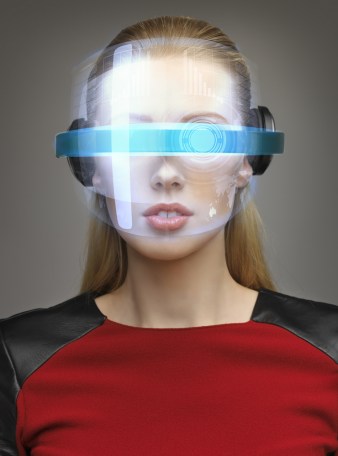
Terminator Lens – We all know about the terminators’ ability to zoom in on any object. As implied by its name this contact lens will do the same for the person wearing it. Even though it is not yet available for public purchase, it has been proven to work well. The terminator lens allows an individual to magnify their vision up to 2.8 times instantly, by using a liquid crystal shutter that is located in the lens itself. It works well in 3D glasses, but the manufacturers are still trying to come up with a way to put the crystal shutter in the softer plastic that is used to make normal contact lenses.

The human race has finally become advanced enough to begin to transform themselves. Let’s hope that with greater knowledge comes the acceptance of the added responsibility of using it wisely.

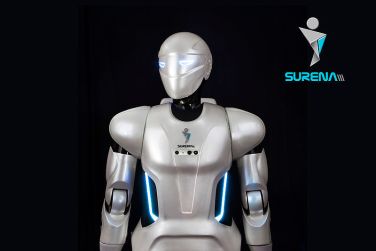
Surena III – humanoid robot

If you think that smart robots are a thing of the future, you need to meet Surena III. At 6 feet 3 inches tall, and weighing 216 lbs, Surena III is the closest thing the scientific community has ever had to a perfect humanoid robot. Equipped with sensors, 3D vision, powered joints and a sleek casing with LED lights, this robot can climb a ladder, stand on one foot, and can now walk at a faster pace than its predecessors at 0.2 m/s.

Robots like Surena have been in development for years, and some similar models were used at Fukushima.

The humanoid robot, funded by the Industrial Development and Renovation Organization of Iran, can walk up and down stairs, take hold of objects, kick a ball and can even adapt to different terrain. Video footage has shown the robot standing upright on uneven ground. It is the third robot in its series and has significant upgrades over its predecessors. Iranian researchers upgraded the robot’s sensors and actuators over the previous version. The vision system now allows the robot to detect faces and objects and track a person’s motions. A speech system can recognize some predefined sentences in Persian. Encoders embedded on all joints, six-axis force/torque sensors on the ankles, and an IMU on the torso help the robot remain stable. To power Surena’s hips and legs, the researchers used a combination of Maxon brushless DC motors, harmonic drives, and timing belt-pulley systems.

SURENA_III
Image: CAST (Center of Advanced Systems & Technologies)

It took over seventy students, engineers, and professors from Tehran University and five other Iranian institutions to design and build Surena III. Local companies developing robotics software and speech systems also contributed to the project, and experts expect that some of the technology developed for the humanoid could find applications in manufacturing, healthcare, and other industries.

Scientists are now working to make the robot more autonomous and are working to help it increase its ability to interact with humans. Recent studies have also claimed that the level of AI shown in science-fiction movies can never actually happen. If consciousness is based on the integration of lots of pieces of information, computers can’t be conscious and capable of experiencing emotions like humans.

Technology That Changed The World

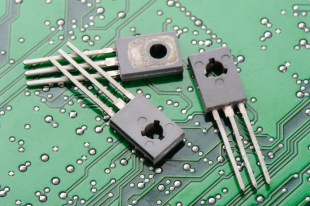
The Transistor Is the Daddy of All Technology.

shutterstock_275792237Without the transistor, pretty much all the technology we take for granted today wouldn’t exist – or if it did, our home computers would be the size of Belgium. The basic building block of everything electronic, the transistor is widely credited to Bell Labs’ William Shockley, who based his own research on findings by John Bardeen and Walter Brattain in 1947.
The IBM PC Gave Birth to the Home Computer.

The first IBM PC was powered by an Intel 8088 microprocessor, was the size of a portable typewriter and packed 16K of RAM. It cost nearly $2,000. It’s dated now, but if it weren’t for this first PC, we might not have computers at all. At the time, it would have been impossible to imagine that one day we would have computers small enough to fit inside our phones—but it all comes from the 8088 microprocessor.

The PC brought computing to the desktop, and its influence lives on. When IBM stopped fighting clone manufacturers and licensed technology to them instead, it led directly to today’s modular, upgradeable and customizable machines. When you’re upgrading your aging graphics card to play Crysis or swapping out your old DVD drive for a Blu-ray/HD DVD combo unit, you’ve got IBM to thank. Or curse.

TCP/IP Holds the Internet Together.

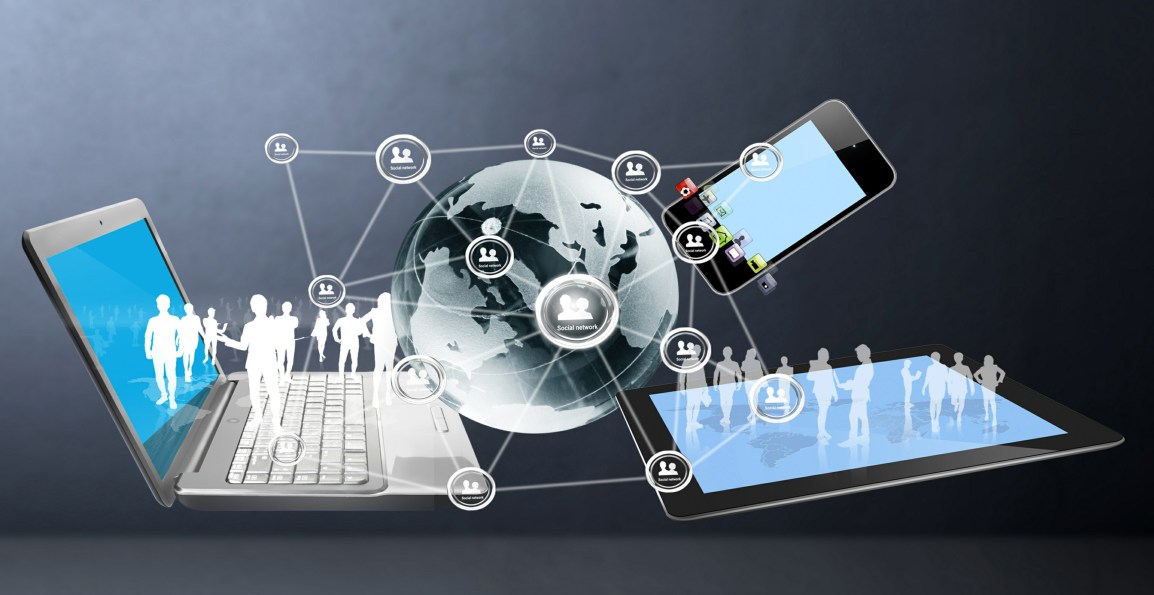
Developed by Vint Cerf and Bob Kahn of the Defense Advanced Research Projects Agency in the early 1970s, Transmission Control Protocol / Internet Protocol is the glue that holds the Internet together. Without it, we’d just have a bunch of networks that couldn’t talk to one another.

The Apple iMac Made Technology Stylish.

The original iMac is one of the most influential designs of the last decade. In a world where computers were ugly, blocky and beige, Apple showed machine-makers a better way of doing things. And the iMac has influenced not just computers, but irons, vacuum cleaners and even baby bottle sterilizers. With the iMac, Apple rediscovered its groove, giving it the platform to design other icons of our time like iPods and iPhones. You may have heard of them, but without the Apple iMac we would never have had them.

The World Wide Web Makes It All Possible.

The World Wide Web isn’t the Internet. Created by Tim Berners-Lee in 1989 and released in 1992, the web took off in 1993 with the introduction of the Mosaic Web browser. Without the World Wide Web, modern Internet as you know it wouldn’t exist. Berners-Lee could probably have made enormous stacks of money from patenting and licensing his invention, but he gave it away instead.

shutterstock_119624326The Mouse.

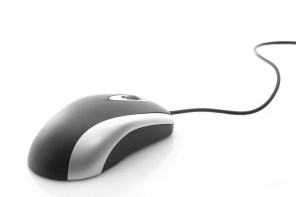
Invented by Douglas Engelbart at the Stanford Research Institute in 1963, the mouse changed the way we interact with machines – but Engelbart didn’t receive a penny in royalties for his invention, because his patents ran out before the mouse turned up in PCs. The mouse ball came along in 1972, making tracking easier, and while the nuts and bolts have changed – today we have wireless mice and laser mice, not to mention mice with more buttons than a tailor’s shop – the mouse is still an essential part of our computing kit.

SMS Changes the World.

It may well have ruined the English language, but SMS (Short Message Service) has also transformed the way we communicate – and it was done so entirely by accident. While the idea was kicking around during the mid-1980s, nobody thought of it as a way for people to send messages to one another; instead, it was envisaged as a way to let people know they had new voicemails. The first mobile phone SMS was sent by a Nokia student engineer in 1993, and by 2000, the average user was sending 35 SMSes per month. We now know people who send that many messages every few minutes.

Brief Introduction to Nanotechnology

In modern times, the use and control of tiny matter (nanotechnology) has become increasingly important. It has many uses from developing sports equipment to medical applications, to uses within the textile industry and even helping with energy. There are, however, some concerns about its use. The tiny matter is referred to as nanoparticles. These particles are measured in nanometers (nm). A nanometer is one billionth of a meter (0.000,000,001m). Nanotechnology is concerned with the use and control of structures that are 1-100 nanometers in size.

Some of these nanoparticles occur naturally, for example in volcanic ash. Some occur by accident, for example during the combustion of fuels. Many occur by design. However, nanotechnology has a number of interesting potential applications in areas.

shutterstock_289678541Medicine

Things behave differently at the nanoscale. An excellent example is the fact that gold actually reflects red light at the nanoscale. This has resulted in the design of experimental systems that kill cancerous cells with normal visible light, but leave normal cells unharmed. Also, body tissue can be reproduced or repaired using nanotechnology, which could eventually develop into treatments to replace or repair organs.

Energy

Nanotechnology could be harnessed to consume extremely low amounts of energy, making it a vital alternative to current methods of supplying power.

Textiles

Nanotech is already at use in consumer products ranging from stain-resistant and anti-wrinkle textiles in clothing, to cosmetics. If keeping clothes clean isn’t enough, ‘smart clothing’ could monitor your heart rate and other vital signs.

Filtration

The relationship between the volume and surface area of some particles can change at nanoscales in such a manner that they can end up with more ‘outside’ than ‘inside.’ (If you’re a “Dr. Who” fan, think of it as the opposite of a TARDIS.) The advantage is that the more surface you have, the more reactions you can have on that surface. This can allow new kinds of filtering, such as water for drinking or light for solar energy.