
After NASA’s marvelous achievement of sending humans to the moon for the very first time in 1969, NASA is now aiming to send the very first woman to the moon through its Artemis program.

NASA recently revealed a new rocket named the Space Launch System, entrusted with the responsibility of carrying the first woman to the moon at the beginning of the new decade. Almost 212 feet tall, the Space Launch System is the tallest of NASA rockets to be constructed with more than a thousand businesses taking part in the construction of the SLS. Not just the tallest, the Space Launch System is the most technologically sophisticated rocket built by NASA. The rocket is expected to play an instrumental role in future space endeavors.
Before being publicly revealed, the Space Launch System had been tested for its reaction to compression, tension, and integrity. SLS behaved accordingly to the engineers’ expectations so will now be launched on an unmanned mission to the moon in 2020 which, if proven successful, could open new doors for NASA to explore our vast solar system with the next destination being Mars.
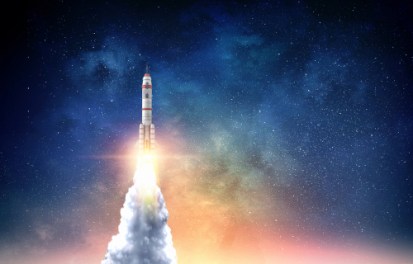 Of course, exiting the Earth’s atmosphere and escaping into the vast universe is no easy job. For a rocket to overcome such a strong gravitational force, it requires an extremely powerful thrust and that is exactly what the engineers at NASA had in mind when designing the Space Launch System. While taking off Space Launch Rocket is capable of producing an unbelievable 8.8 million pounds of thrust. To imagine such a figure is mind-boggling let alone building a machine capable of doing it. If you think that wasn’t “jaw-dropping” enough, the Space Launch System is capable of achieving a record speed of Mach 23 or more than 17,000 miles per hour before separating from the crew capsule. For a rocket the size of a 20 story building, exiting earth at a rate of 17,000 miles per hour is simply a scientific marvel.
According to the NASA officials, The Space Launch System is capable of scientific feats.
“Missions to the Moon are about 1,000 times farther from Earth than missions to the International Space Station, requiring systems that can reliably operate far from home, support the needs of human life, and still be light enough to launch”
Moreover, According to NASA:
“These technologies will become increasingly more important for the 34 million mile trip to Mars.”
With billions of dollars spent on the construction and testing of NASA’s most powerful rocket the discovery of other distant planets including Mars may be another step closer.

 Emeritus William Romoser, a professor at Ohio University, has been conducting detailed research and study on this very topic. He claims that Mars has always had some kind of life on it. Romoser supports his claim by showing internet images taken of the planet where he highlights what looks like an insect on Mars.
 Some researchers do not agree with Romoser on his findings. They say that the proof which the professor is providing is not authentic enough. The ‘insects’ which he has highlighted can just merely be rocks or blips on the images. There is no proper believable image proof for the discovery which he claims to have made. They also say that one cannot simply believe such a big claim just because of something which is just a guess and was found in a blurry picture. They refuse to come to terms with the fact that the insect-like forms which he discovered in the pictures really are insects on Mars. They can even be shadows if one wants to call it that.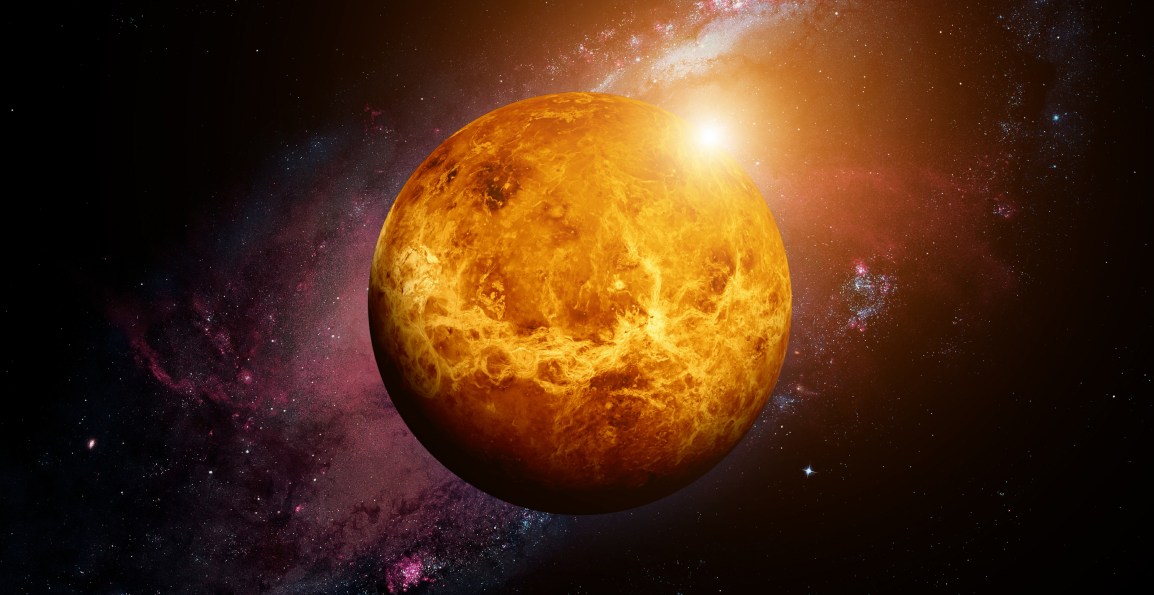
 mainly because of the high temperature and other toxic conditions including thick sulphuric acid clouds. However, scientists from NASA are on a mission to explore the planet in the hope of providing us with the most astonishing discoveries. Just like they discovered water while exploring the moon.
 NASA’s still don’t know how long it would take to implement a manned mission to Venus since the required technology is not yet available to the scientists. So that means, there is not only a lot of research to do, but the team also needs to figure and invent the right technology to turn the impossible into possible.


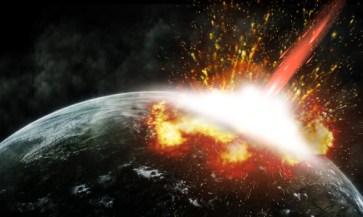 Another piece of research done at Oxford showed that we do not consider mass extinction of humans as a very tragic thing. The 2,500 participants included residents of the United States of America and the United Kingdom. They were given the option of choosing between best to worst-case scenarios where the options were: no catastrophe, a catastrophe that wipes 80% people off the Earth, and a catastrophe that causes mass extinction. Most people considered the no catastrophe situation as the best-case scenario as predicted. However, when asked about the severity of the situation and which one made them feel bad, they chose the 80% of humans being wiped out, rather than mass extinction of humans, showing that humans do not consider mass extinction a tragic event. However, when the questions were switched from humans to zebras, it turned out that people considered losing all zebras as the worst possible outcome and felt very bad and sad about that possibility.

 One such step taken towards the future is the construction of the world’s first hologram that can be touched, seen and even heard. Researchers from the University of Sussex have developed a prototype device by the name Multimodal Acoustic Trap Display (MATD).
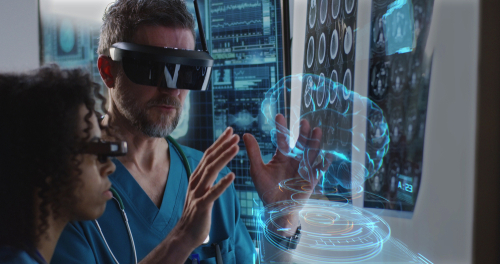 Moreover, as far as the sensory and auditory feedback is concerned, Multimodal Acoustic Trap Display makes use of ultrasound waves, which are a type of mechanical wave that carry energy through the air. So when a hologram is displayed it utilizes the energy of the ultrasound waves to create a sensory and an audible feedback.
 R. E. KEARNEY
