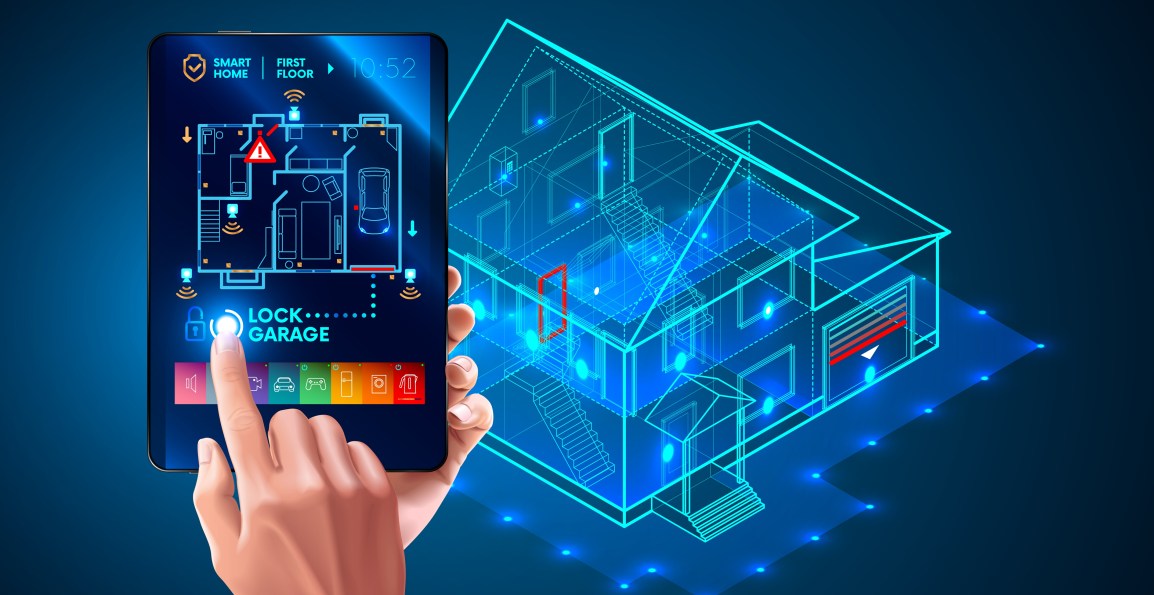
If you think that scientific exploration has covered every aspect of our lives, well think again! Traditional home surveillance methods normally include locks and maybe an alarm system and cameras. Well, Alex Pachikov, ex Evernote executive and CEO of Sunflower Labs seems to think there is quite a lot of room for improvement. Here is how the Sunflower system may be innovating the way we secure our homes.
Cute Name, Disturbing Game?
The name for the company (Sunflower Labs) and its products (the Sunflower sensors and the Bee drones) are all inspired by things we find in the garden. That may seem very cute, but their functions, which are autonomous, may be disturbing for some. With all the privacy scandals against big companies such as Apple, Facebook, and Google, some may think it is not wise to leave our home surveillance to autonomous machines.
The Sunflower sensors that are camouflaged as garden lights are built to detect vibrations near the home and can differentiate between the whir of your coffee machine, pets, and footsteps. The ‘Sunflowers’ around all corners of the ground outside the home so that it can create maps and also sense the people and objects present within the space. The kicker, however, is that the sunflower system includes a drone, named the ‘Bee,’ which flies out from its station called the ‘Hive,’ all by itself. The Bee leaves the Hive and flies around the home if any suspicious activity has been discovered, using the Sunflowers that have been installed to establish a pathway. Moreover, it uses the sensors and built-in cameras in order to avoid any object that may come in the way during flight. It streams live footage on your tablet or phone, which is automatically saved on the cloud system later on. It can be manually deployed if the homeowner gets an alert from the Sunflower sensors and lands. The homeowner will have to press the relevant button in the Sunflower app, signalling the drone to dock all by itself to the Hive, which also works as a wireless charger.

Who Can Use This?
It is evident that such a sophisticated home surveillance product would not be affordable to the general public. The CEO says that the Sunflower Labs will soon be offering this device on a subscription base to the wealthy homeowners residing in the suburbs of California. It may become affordable for the general public if the costs get subsidized, but for now only the elite can afford this system. This arrangement works for Sunflower Labs, as the Federal Aviation Administration does not allow drones to be flown out in public. Thus, lawn owners in suburban areas are the suitable target audience for this system.
Can It Be Trusted?
With the recent allegations of smart home devices listening to and recording conversations without obtaining permission, hacking of several accounts, and the leak of private information, it may not be the best option to trust technology to maintain our privacy.

 Many companies have been working on autonomous vehicles for quite a while now. In recent years, certain companies have been working hard to make self-driving delivery services a norm. From Nuro that already have a working model, to Ford that has teamed up with Walmart and Postmates to deliver everyday groceries to customers at affordable prices. Self-delivery services are deliveries that are made using autonomous vehicles. No drivers, just the goods you want. Ford has been testing using a research vehicle that mimics autonomous vehicles to gather more info about customer preferences. Ford has stated that commercial autonomous vehicles will be available by 2021.
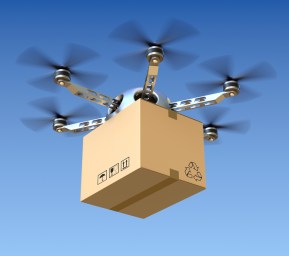 Besides the ‘technology becoming smart enough to come alive and kill people’ scenario from terminator coming true, there are some realistic dangers that autonomous vehicles pose. Firstly, they could lead to unemployment with stores opting for self-deliveries rather than hiring deliverymen. It may also lead to excessive social anxiety and laziness, and people will really not need to leave their homes in order to get something, but would rather just avail the services of an AV to get the job done.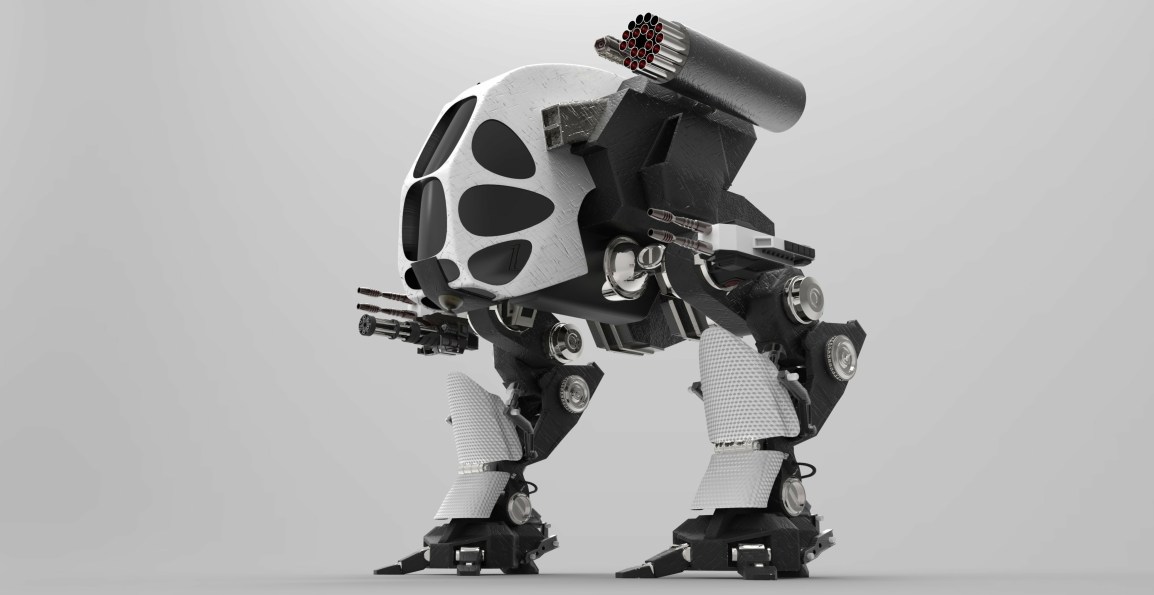
 Just four years ago, Stephen Hawking warned everyone that, ‘the development of full artificial intelligence could spell the end of the human race…. It would take off on its own, and re-design itself at an ever-increasing rate. Humans, who are limited by slow biological evolution, couldn’t compete and would be superseded.’ And with the superpowers all investing in autonomous weaponry, it is frightening to think of the consequences that could prevail in the near future. The US Department of Defense already displayed 103 autonomous drones flying over the state of California. Even though they were not armed, they flew without any human input, reaching their destination automatically with the algorithms set. Weaponry with differing degrees of self-sufficiency actually being upgraded and used by those who have a high-tech military, including China, the US, Russia, the UK, Germany, South Korea and Israel. Countries such as China are completely silent regarding their position on LAWs (lethal autonomous weapons), and others are vague, which is quite a frightening thing to think about.
 International campaigns such as Campaign to Stop Killer Robots has been urging countries to talk about banning autonomous weapons since 2013. Just by banning two functions involved in autonomous weapons such as automatically selecting targets and using violent techniques can really save the world from the potential horrors of autonomous killer robots, without hampering researchers’ advancement in AI technologies.
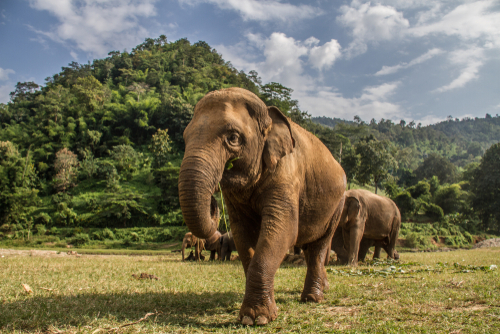 However, it is important to take the disheartening statistics of how many elephants are now left into account. Just a few decades earlier there used to be over 4000 elephants residing in Gorongosa National Park, Mozambique. Ever since the civil war, there are only 200 adult females left now as Joyce Poole’s research suggests. Joyce Poole is an expert in elephant behaviour who is bringing light to this astounding occurrence. Out of the 200 adult females in Mozambique, 51% of the elephants older than 25 are without tusks. 32% of the elephants that were born after the war are biologically tusk less. This phenomenon is not just occurring in Mozambique, as 98% of the 200 female African elephants found in Addo Elephant National Park are also without tusks. In Tanzania’s Ruaha National Park, there was a heavy amount of poaching done during the 70s and 80s. Josephine Smit, an elephant behaviour researcher who has been tracking these female elephants has noticed that approximately 21% of females that are older than the age of five are born without tusks.
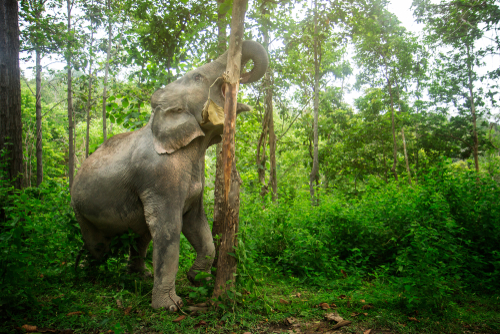 healthy even without their tusks. Scientists have observed that with the handicap of tusklessness, elephants are adapting accordingly to their environment. Tusks are useful, besides just being overgrown teeth. They were used in the daily life of elephants in order to dig up water and minerals from the ground, debark trees to get some fibre-laden food and help males in their competition for females. Elephants have been observed to now use their trunks and teeth to strip off bark from trees for food.
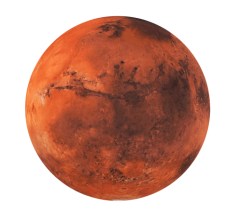 According to the most recent news, evidence has been found that shows signs of microbes and even fossils on Mars. However, only photographic evidence has been sent as yet; more cannot be found out until samples from Mars are brought back to earth for examination. However, this has made it certain that there is some presence of life, or at least the precursor of life in the form of microbes, on Mars.
 Tersicoccus phoenicis is a bacteria that has only been found where space crafts are assembled and can be used as a key technique by explorers to differentiate between Mars and Earth organisms. The microbes present in the space crafts can be used in order to monitor contamination levels. If there is a sample from Mars that contains the same or similar microorganisms to the spacecraft assembly rooms, then it can indicate contamination rather than sign of life on Mars. Technology can also help distinguish between Alien matter and Earth matter, and even if both come out as similar, genomes sequencing can be done in order to confirm that it belongs to Mars.
 The benefits of being able to efficiently convert our solid waste into usable biofuels are tremendous, from powering vehicles and creating heat sources to the obvious – cleaning up our world oceans and landfills. Not to mention that our current fossil fuel system contributes to greenhouse gas emissions at every step of its production and use, from extracting it, to processing and shipping and burning it as fuel. Already we can see that this gasification process for solid wastes is contributing more positively than the harm caused by utilizing fossil fuels, and the hope is that plants built and run in certain locations across the globe (those most affected by trash build-up) will lead to more plants being built, thus a clean energy cycle can begin to perpetuate itself, instead of the wasteful fossil fuel/combustion system we are currently stuck in.
 The biofuel created through the gasification process is called syngas and can be used for a variety of things. The most common use is as a fuel additive. By combining it with regular gasoline it acts as an ethanol mix. Many cars are now able to use gasoline with added ethanol and some vehicles even run on up to 85% ethanol mixes.
 R. E. KEARNEY