
IBM has been recognized for their ability to make accurate predictions for the future of technology. The company employees approximately 380,000 people, and operates in 170 countries. It has also been responsible for many important technological items that we use every day including: UPC barcodes, ATMs and the hard drive disc. At the beginning of 2017, the company made five predictions for technology that they believe will be widely used within the next five years.
- Artificial Intelligence will use our words, and speech patterns, to recognize mental health problems and improve our understanding of them.
Humans can determine many things about a person’s character based on the way that they are speaking, including their current emotional standpoint. Artificial intelligence (AI) has caused a rapid advance in speech analysis, and IBM has predicted that in the near future it will use telltale signs in our speech patterns to determine both our physical and mental health. This will allow Parkinson’s and other mental diseases to be detected and treated earlier, possibly using a mobile phone app. A program that detects variations in normal speech patterns, invented by a team from the University of Southern California, is currently being used to identify when somebody is suffering from depression.
- Hyperimaging and AI leading to an increase in our visual capacity.
As humans, we cannot view the electromagnetic spectrum with the naked eye. IBM has predicted that technology which will allow us to see microwaves and infrared waves, will be available sooner rather than later. Variations have already been applied to several devices, including Enchroma glasses, which allow people who are colorblind to view the color spectrum.
- A greater understanding of our planet using macroscopes.
The most accurate description of a macroscope is a microscope which would amplify details of the Earth to much larger spectrums. This would allow us to combine all the data we receive to determine factors such as the state of the planet, the number of resources available and events in outer space that may devastate the Earth.
-
 Diseases will be traced on the nanoscale by ‘Labs on a Chip.’
Nanotechnology has already played a great factor in increasing our ability to detect diseases and help to contain and cure them. IBM has predicted that this technology will continue to expand and could be applied at home by capturing and assessing bodily fluids. The earlier illnesses are detected the easier and more effective treatment is, and this application would help to significantly decrease the number of people that die from disease annually.
- Environmental pollution will be detected quickly and easily using smart sensors.
IBM has stated that smart sensors could be embedded in the ground, or fitted to drones, to detect pollutants and emissions. These would be extremely beneficial if placed near natural wells, pipelines and storage facilities to detect methane leaks. Methane is currently the second largest environmental pollutant, and is extremely difficult to detect. The application of the technology would significantly reduce its effect on the environment.


 Alphabet’s CEO, Sundar Pichai, highlighted ways in which Google is utilizing machine learning in their products, even though the technology is still in its early stages. One of these is the new Google’s Clips camera, which is powered by artificial intelligence and uses this knowledge to decide the best time to take photos. The camera is designed to be positioned in the home, and programmed to decide when conditions are ideal for taking pictures. These photos would be hard to capture manually because of how fleeting these moments are, or a need for somebody to be behind the camera.
 Pichai also mentioned the advances in Google Assistant, since the inclusion of AI technology in its design. The Assistant’s intelligence level is currently equivalent to that of the average fifth grader. The system is, however, is gaining more knowledge each day and using it to assist people in getting things done. DeepMind, Google’s artificial intelligence researcher, is the world leader in the field and is dedicated to applying the technology positively. The company’s recent advances include adding imagination to machine learning, as well as expanding the ability of artificial intelligence to accomplish real life tasks.
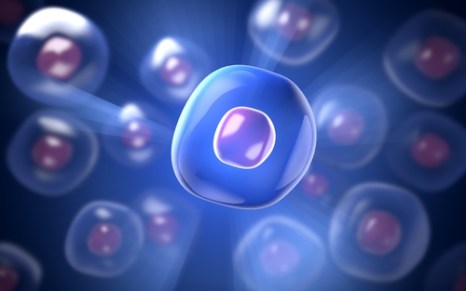 It is believed that there are billions of habitable planets in our galaxy, which could become the target for Project Genesis. These planets are known as ‘oxygen’ planets, and revolve around M-dwarfs. Although oxygen is necessary for the sustenance of life, their oxygen rich atmospheres are the reason why complex organisms cannot develop. Astronomers are focused on finding planets that are around M-stars, which are relatively common but can be very dim, to introduce complex life. The planets have become oxygen rich because of the UV radiation emitted by the star during its cooling phase, which can take between 100 million to 1 billion years, which split the water on the planets into hydrogen and oxygen molecules. Hydrogen will then escape the planet’s atmosphere, leaving the oxygen behind. Even though oxygen is necessary for the maintenance of life, this arise from chemical disassociation (not plant life), results in the planet becoming barren. It can, however, sustain life once it has been introduced.
 The planets would be introduced to the organisms in two phases: the first would include unicellular autotrophs, mainly photosynthesizing bacteria; followed by heterotrophs, which feed on other organisms. The life initially seeded on these planets would take between 10 – 100 million years to fully unfold, and transport methods are currently being explored. One possible way of transporting the organisms would be to use laser technology to send probes through the universe, which would determine if the planet had life or not. Dr. Gros believes that this method will be possible within 50 – 100 years.
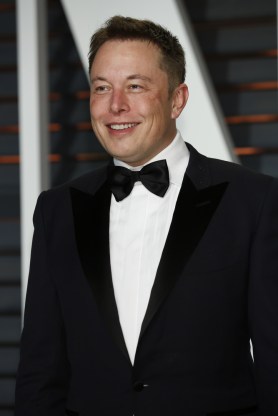
 Elon Musk continues to expand his interests, with more innovative methods of transportation. He has introduced the idea of the Hyperloop, which would facilitate travelling between major cities in a much shorter period of time. The concept consists of a network of low pressure tunnels, which will propel passengers along in pods, would be weather resistant and powered by renewable energy. Although the Hyperloop is currently just a proposal, Musk founded The Boring Company with the intention of creating transportation tunnels underground and decreasing the amount of traffic on bus interstates and city streets.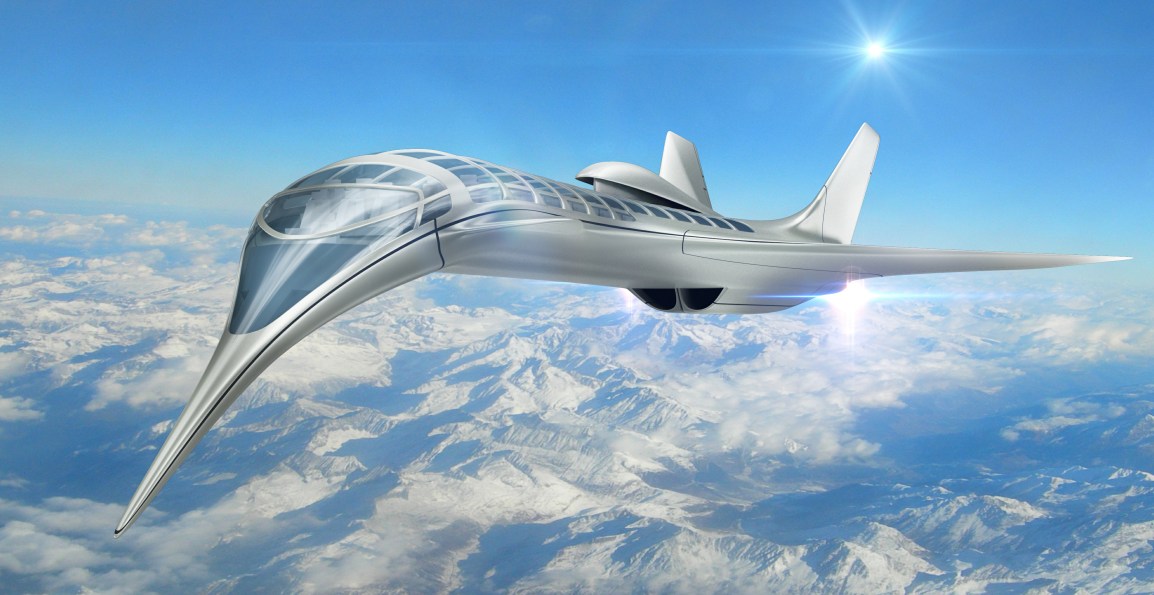
 Many new plane designs are geared towards getting passengers to their destination quicker. The first of Bombardier’s concepts is a commercial hypersonic plane, The Paradoxal that could fly 550 passengers from Los Angeles to Sydney, Australia in as little as three hours. Initially, the airplane would use its two Rim-Rotor Rotary Ramjet Engines (R4E) to accelerate to three times the speed of sound, and rise to an altitude of 15 km.
 R. E. KEARNEY