
Earth’s atmosphere is designed for the survival of millions of organisms. Once most of these leave the planet’s protective covering, however, they would perish within minutes, if not seconds. Scientists are always looking for ways that will allow us to survive in the harsh environment of space, to facilitate our universal expansion. As they have discovered many times in the past, sometimes the smallest things provide the biggest answers.
 One of the simplest plants in our atmosphere is algae, which has proven its resilience repeatedly due to the extreme earthly environments in which they can exist. As a part of the Biology and Mars Experiment (Biomex), scientists decided to put the plant’s durability to the test. They released algae into the universe next to the International Space Station, located outside of the earth’s perimeter, for a total of 16 months.
Biomex is a project aimed at figuring out the possibility of survival on the surface of one of Earth’s closest neighbours, Mars. Here the temperature is extremely low and there is almost no protective covering from the sun’s harmful UV rays. The conditions that the algae had faced in space would have been impossible to replicate on Earth, and would not have provided the most accurate results.
 Even though the plants were exposed to extreme temperature changes, and both cosmic and UV radiation, the algae were retrieved alive and many of the strands even thriving. Further tests of the species will be crucial to future space travel, as they will demonstrate some of the conditions that may be faced by astronauts and show possible ways to overcome them. Algae might also be used as a source of food for these explorers, as it can be eaten when grown in large quantities. The plant can be transported to Mars, and many scientists believe it might be the key to breathable air on the planet, as algae survives by taking in carbon dioxide and releasing oxygen, which is essentially to human and animal life.
The plants survival also supports the theory that organisms can travel around the universe on comets, asteroids and other moving particles. When one of these crashes into a planet that has life on it, organisms become trapped in it and are carried to the particle’s next destination. The theory that life on Earth developed in this way has been proposed and, even though it doesn’t provide conclusive evidence, the algae’s survival shows that this is possible.

 The first form of digital currency to be developed was Bitcoin, from an idea proposed by Satoshi Nakamoto. Created and held electronically, this type of money is known as cryptocurrency and is based on blockchain technology. It is produced using software designed to solve mathematical problems. One of the major differences between Bitcoin and paper currency is the fact that it can’t be decentralised, meaning that no single institution would be able to control the network. The currency is created digitally by a group of people that anybody can join, and a limit has been placed on the number of Bitcoins that can be ‘mined’ in this controlled online environment. To encourage transparency, the mathematical formula which is used for Bitcoin production is available for everybody to view online.
 These currencies have set Africa apart as the pioneers of a new era of financial stability. The security and transparency of the blockchain technology, means that the system cannot be tampered with and the economy will be allowed to thrive. After being introduced into circulation in Senegal the eCFA will be introduced in other countries that currently use the West African franc including: Ivory Coast, Benin and Niger.
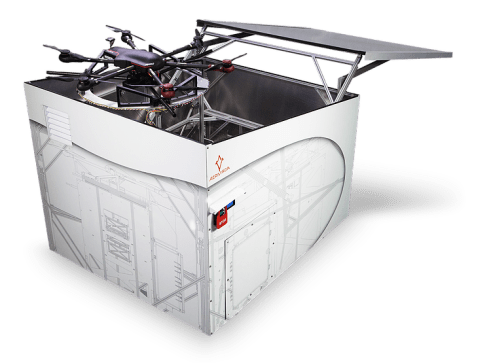 Technological mastermind, Airmada, has developed a storage system for drones which is capable of supporting missions without the need for human intervention. The storage box releases the drone once it has been activated, by opening up to become a launch pad facilitating its take off. Once its mission has been completed the drone will fly back, land on the launch pad and the storage box then closes up in order for the battery to be charged. All of this is done automatically without the need for a drone operator.
 One of the areas that is greatly affected by any technological advancement is the medical field. Through the breaking down of DNA, medical research has proven that treatment which has been modified for each individual tends to be more effective. Even though they have identified that our genes are made up of protein molecules, medical researchers do not have technology that is currently able to analyse these proteins. Quantum computers will be able to map these in the same way that we are currently able to map DNA will a classic computer. This will be a tremendous leap in treating hereditary and deadly diseases, quickly and efficiently, based on an individual’s genetic makeup.
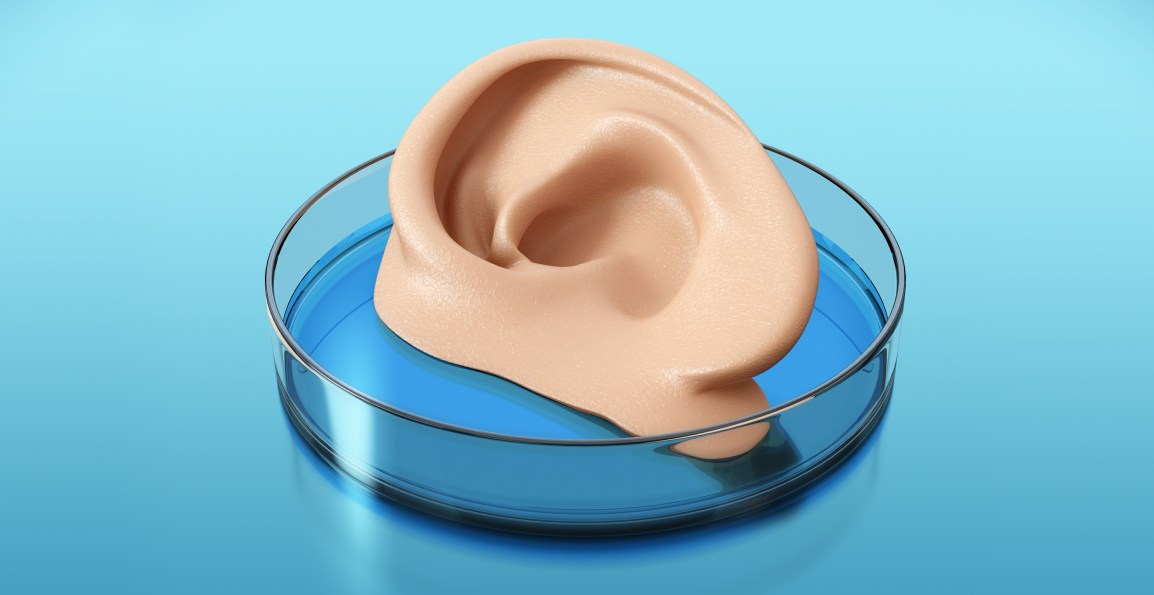
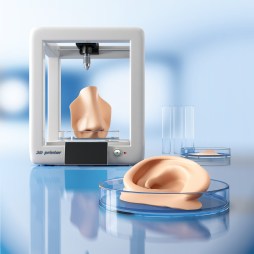 Bioprinting is the name given to this process, and is basically the 3D printing of human tissue. It begins with creating an ink from living human cells, and layering them together to form the tissue. Most bioprinting is currently undertaken by independent laboratories, under carefully monitored conditions. This means that those who would be using the organs do not have the actual facilities to make them. The Queensland University of Technology and the Metro North Hospital and Health Service have formed a partnership in order to change this. This collaboration has set out to establish a ‘biofabrication institute,’ which will be able to undertake all the steps needed to print the patient’s tissue and use it in one place.
 The cost of a transplant would also decrease over time, as the organ is unlikely to be rejected by the body. This means that there will be much less aftercare needed, and the use of antibiotics and metallic implants practically eliminated. The 3D printing of organs is just the beginning, as engineers are hoping to progress to 3D printing of bones and customized prosthetics. The specifics also mean that drugs can be tailored to each patient’s needs. Bioprinting continues to be a source of hope for many, as the need for organs increases daily, and the creation of the institute has given a new lease on life to those that continue waiting.
 R. E. KEARNEY