Blog

Elon Musk – Contributions to our Planet and its Future

A well-known name in innovation and technology, Elon Musk has contributed greatly to the future of our nation. Musk’s successful career began after he co-founded X.com, which was sold to Ebay for 1.5 billion and is now the most frequently used international money transfer system, Paypal. The entrepreneur’s main interests are the preservation of the human race and space exploration. They have been the inspiration behind the other companies he has founded that all operate under The Musk Foundation, which is committed to exploring space and discovering clean, renewable energy sources.

Image: Kathy Hutchins / Shutterstock.com

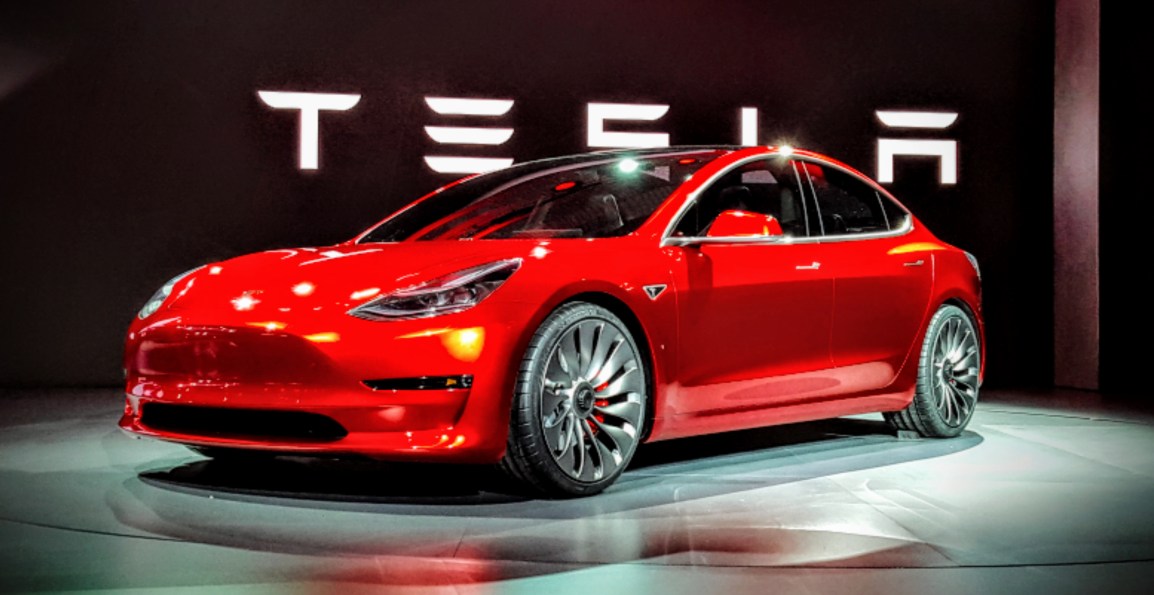
Tesla Motors is one of Musk’s leading ventures, and was founded with the intention of producing affordable electric cars. The company launched its initial public offering in June 2010, which raised in excess of $226 million, and has since produced many different vehicles that have been favorably accepted worldwide. In 2017, Tesla surpassed General Motors as the most valuable car maker in the United States. The company continues to develop ideas that are decreasing the number of gasoline fueled vehicles on the road, while still appealing to buyers’ needs. In 2006, Musk co-founded SolarCity Corp, with his cousins, and 10 years later purchased an all stock deal in the company. Tesla and SolarCity Corp have now been combined to create fully integrated products which improve the way in which energy is generated, stored and consumed.

Launched in 2002, SpaceX is another of Musk’s companies, whose mission is to build space crafts for commercial space travel. In 2008, the company was awarded a contract from NASA to handle cargo transportation to their International Space Station, with plans to include astronaut transportation in the future. In May 2012, SpaceX launched an unmanned capsule with 1000 pounds of supplies, making history as the first private company to send a spacecraft to the facility. The company has had other successful space ventures, as well as developed a way for more affordable space travel with the creation of their Falcon 9 rocket made from reusable parts.

Elon Musk continues to expand his interests, with more innovative methods of transportation. He has introduced the idea of the Hyperloop, which would facilitate travelling between major cities in a much shorter period of time. The concept consists of a network of low pressure tunnels, which will propel passengers along in pods, would be weather resistant and powered by renewable energy. Although the Hyperloop is currently just a proposal, Musk founded The Boring Company with the intention of creating transportation tunnels underground and decreasing the amount of traffic on bus interstates and city streets.

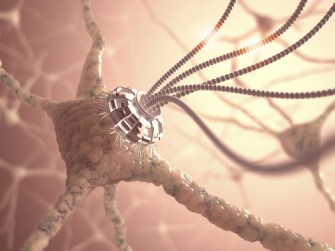
Elon Musk has also shown an interest in artificial intelligence, and promotes the advancement of digital intelligence to benefit mankind. This interest has led to the entrepreneur’s support of Neurolink, which aims to create devices that would be implanted in the human brain, facilitating a merger with software.
The Future of Flight – Hypersonic Airplane Concepts

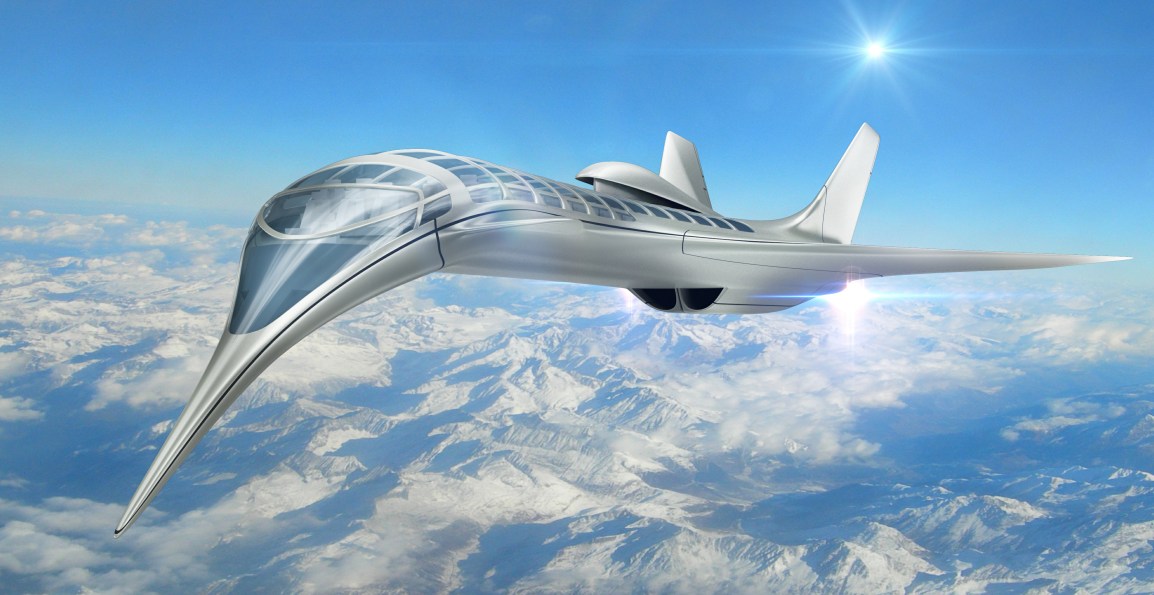
The human imagination has always been the beginning of all our achievements, and technological advancements. Once it can be visualized, then it can be realized. This extends to flight and travel technology, and Canadian inventor, Charles Bombardier, has recently released some innovative, new designs that he hopes will be developed in the future. The designs are both for commercial and military purposes, and include:

The Paradoxal

Many new plane designs are geared towards getting passengers to their destination quicker. The first of Bombardier’s concepts is a commercial hypersonic plane, The Paradoxal that could fly 550 passengers from Los Angeles to Sydney, Australia in as little as three hours. Initially, the airplane would use its two Rim-Rotor Rotary Ramjet Engines (R4E) to accelerate to three times the speed of sound, and rise to an altitude of 15 km.

In the next phase, to reach suborbital levels, the plane would be boosted to its parabolic midpoint by an injection of liquid nitrogen into the engines. At this altitude, passengers would experience a short feeling of weightlessness. They would also be able to view the earth’s curvature, and the stars, through video feed. Long Penetration Mode (LMP) Nozzles would be used to maintain the hypersonic speed, for the second half of the flight, as well as cool the engine down before landing.

The Antipod

There are several circumstances in which military planes may need to cover a large distance in a short space of time. Another of Bombardier’s concepts is a two seater military plane which can reach speeds of up to 20,000 km/h. This is half the Earth’s diameter, and ensures that any distance would be covered within an hour. The Antipod would also be equipped with LMP Nozzles to help keep it cool at the high temperatures generated by the speed, as well as cushion the plane from the shockwave that would be created by breaking the sound barrier. The plane would come to a stop by gliding along a 6000 ft runway.

The Mach 10 Skreemr

Bombardier’s final proposed concept was another commercial airplane that would be able to transport passengers at high speeds. This Mach 10 Skreemr would be propelled into the sky by a magnetic railgun, instead of taking off on a runway. This system could be run on clean energy and would, therefore, be more environmentally friendly. After propulsion, rockets built into the plane’s structure would boost the speed and start the main engines. The plane is expected to be able to reach speeds that are five times greater than the Concorde, and carry a maximum of 75 passengers per flight.

Vespa Electtrica – Piaggio’s Pioneer Electric Scooter

Leading Italian motorcycle designer, Piaggio, is always at the innovative forefront when it comes to two-wheeled vehicles. Putting a modern spin on their classic Vespa, a scooter that’s been one of their most popular vehicles since 1946, the company has revealed their intention to release the Vespa Electtrica in 2018. The scooter retains its original design, but will now be powered by an electric motor, and is available in chrome grey with the choice of seven different colored trims. Electric vehicles are environmentally friendly and operate silently, decreasing noise pollution in busy cities. Piaggio has announced that the Vespa Electtrica will also make driving easier and more natural.

In addition to maintaining the Vespa’s original design, the electric scooter also provides total connectivity, accessibility and customization. It is equipped with the brand’s multimedia system, which allows the scooter to be connected to and operated by a smartphone. The system can be controlled by voice commands and the app will alert the user to incoming calls and messages. The scooter has a color display screen which shows the amount of charge and range remaining. It is also equipped with four brightness levels, which adapt to a variety of lighting for the best possible display at all times.

Piaggio had announced plans to produce this scooter at the 2016 EICMA Motorcycle Show in Milan, unveiling the final version at the 2017 show. The two versions, Electtrica and Electtrica X, are expected to surpass the original Vespa’s performance. The scooters can be fully charged within four hours and the Electtrica has the ability to deliver two kilowatts of power continuously, and up to four kilowatts. Its range of 100 kilometers can be doubled by the Electtrica X, which comes equipped with a gas powered generator. The charging cable is stored in the seat compartment and can be plugged into a standard wall socket, or a vehicle charging station.

The design also boasts other features such as under seat storage, an LED light, USB socket, and a matching helmet and backpack. Although the scooter’s price has not yet been revealed, it is expected that this will be done before its release in 2018. Piaggio feels that this electric version of the Vespa has shuttled in a new era in motorcycle technology. Even though the emissions scooters produce are minimal in comparison to larger vehicles, powering the Vespa using electricity will help create less emissions and protect the planet. Recognizing the need for cleaner energy sources other motorcycle companies have released, or are planning, new electric versions of their products including motorcycle giants, Honda and Renault.

Urban Development is Causing an Unprecedented Rise in Species Evolution

The evolution of a species has always depended upon the ‘survival of the fittest,’ meaning that only those able to adapt will continue on. Urbanization has played a major role in changing the way of life for many species. The number of animals in certain areas has increased, and pollution and environmental changes have caused entirely new species to emerge. Our planet’s evolution has entered a new age, known as The Anthroposcene or ‘Era of Man.’ Instead of adapting to the earth’s changes, like humans have been doing for thousands of years, we have begun intentionally recreating the world around us. Man’s footprints on the earth will now be visible for millions of years in the future, as we have altered about 50% of the land and pumped an exorbitant amount of pollutants into the air. This has led to the planet undergoing its sixth mass extinction, caused primarily by the deeds of man.

In the midst of this mass extinction, the creatures sharing our urban spaces are evolving drastically so that they can survive. Biology professors, Marc Johnson and Jason Munshi-South, have published a paper which illustrates the evolution of these animals. Notable species changes, listed in their document, include:

  • The beaks of finches, and other domesticated birds, have lengthened to facilitate eating from bird feeders.
  • Puerto Rico’s crested anole lizard has experienced a growth in its limbs, and its toes have become stickier.
  • Many fish, and other pets, have developed resistance to household poisons.

There are countless other changes taking place within urbanized areas, many of which scientists do not understand the reasons for. The mutation in these animals makes them remarkably different from their ancestors, and incorporates their behavioral patterns, their appearance and the way in which they respond to their environment.

Researchers have noted that some of the factors, in urban areas, which facilitate these changes are artificial lighting, asphalt, brick and pollution. There are many other differences between our cities and the natural habitats of these animals, which affect their evolution. Scientists found that pollution alone boosted the rate at which many species mutated. This was even faster in areas of concentrated pollution, such as steel plants.

Although yet to be researched in detail, this evidence strongly suggests that pollution, urbanization and climate change have combined to push evolution to its limits. Highways, and other manmade structures, that isolate many animals show where they evolve in a different way from the rest of their species. The Anthroposcene effect of humans on the world is not limited to the evolution of animals, but also affects plants, the climate and our human population. Scientists are unable to determine whether these evolutionary changes will be beneficial to the animals long term, or if the accelerated rate of change will do more harm than good. As with many of the changes humans are responsible for on our planet, only long-term observation and time can tell.

Nanotechnology – Basic Particles Used to Advance Technology

Most of our everyday measurements are done in meters and kilometers. Whenever something cannot be seen by the naked eye and is too small to be measured in this way, a microscope is used to view it. Nanos are the particles, such as atoms, molecules, cells and proteins that form the foundation of animals, plants and things. Nanos are measured and observed using the nanoscale, which is 1000 times smaller than the microscopic scale. Nanotechnology consists of using particles that can only be measured using the nanoscale, to build new items. It is currently the fastest growing and, in many ways, the most versatile method of technology being explored.

Nanoscience helps us to understand how things function at a nano level, which can be significantly different from others. Once we have acquired this knowledge it can be converted into technology, which is the application of science to solving problems. Electron microscopes, which work by using beams of electrons instead of beams of light to magnify things, are used to view particles on a nanoscale. Other nanoscopes include quantum effects to produce visuals, and come equipped with tiny probes used to rearrange atoms.

Nanotechnology is already being applied in specific fields, including:

Electronics

Nanotechnology is being applied to electronic devices to decrease their weight and power consumption, while increasing their output. Other ways it has been used in the electronics field include: improving the display screens on electronic devices, increasing the density of memory chips and reducing the size of transistors used in integrated circuits.

Medicine

One of the most useful applications of nanotechnology is in the medical field. The technology has already played a major role in the way we treat diseases and repair damage done to the body. Researchers are exploring ways in which it can be developed to transport drugs directly to diseased cells, so that healthy cells are not damaged during treatment. This would be particularly helpful in patients that are undergoing chemotherapy.

Other scientists are experimenting with ways in which nanotechnology can be used to deliver vaccinations. The vaccine would be protected during transportation, throughout the system, allowing the body to develop stronger immunity to the disease.

Food Science

The food industry is always expanding, and methods of product growth and preservation modernized. Nanotechnology is being applied in ways that will make the food taste better, as well as make it safer to consume. Clay nano composites have been used to provide a barrier that is impermeable to gases, such as carbon dioxide and oxygen, in lightweight bottles, packing film and cartons. In addition, storage bins are being made that contain silver nanoparticles embedded in the plastic. These kill bacteria that may be present in the container and decrease the chances of people becoming ill from the organisms.

Other areas in which nanotechnology is currently being applied, or researched, include: fuel and solar cells, space technology and providing impoverished societies with clean drinking water.

Negative Emissions Power Plant – Cleaning Up Our Carbon Footprints

The devastation that humans have brought on the environment has resulted in climate change, and other global crises. This has led scientists, researchers and world leaders to create strategies that will help us eliminate our carbon footprint, and clean up our environment. Geoengineering solutions are now being created, to be used worldwide by 2030, to remove carbon from the air. Once implemented on a global scale this carbon dioxide removal will significantly reduce the effects of global warming, by counteracting the greenhouse effect and ocean acidification. Some of the ways in which geoengineering can be used for this purpose are:

Afforestation – A global tree planting effort.

Biochar – Burying ‘charred’ biomass to enclose its carbon in the soil.

Ocean Fertilization – Adding nutrients to the ocean to increase primary production, which would then pull carbon dioxide from the atmosphere.

Ambient Air Capture – The making of large machines that can remove carbon from the air, and store it elsewhere.

Enhance Weathering – Exposing large quantities of minerals, to react with the carbon dioxide in the air, and store the created compound in the soil or ocean.

Showing that their technology may be more advanced than the rest of the world, Iceland has recently produced a 300-megawatt geothermal power plant. The plant emits approximately one-third the amount of carbon that a traditional coal one does, but captures even more carbon dioxide than it produces. This means that its emissions are negative, because it produces less waste than it cleans from the environment.

The system is made up of a wall of fans that suck in air. They then separate the carbon dioxide, from the other particles, and inject it into water. This liquid is pumped into the ground, where it turns into rock. This simple process, produces useable energy while cleaning the environment. The current cost for purifying a ton of carbon dioxide is U$30. As the amount of carbon dioxide taken from the air increases, so would the costs. This means that the technology is currently financially inaccessible to many countries. The technology’s creators are attempting to modify the system, to lower the associated costs, so that it can be used in other areas of the world. The technology’s adaptation will prove beneficial, as any steps towards decreasing global warming will have a positive effect on the planet. Scientists advise that new technology also takes into consideration planetary needs, and be built in an effort to control the current pollution level in the world.