
As concerns of water scarcity in the wild west of the United States grow, scientists continue to resort to modern weather modification techniques to create rain in areas of the West Coast facing the worst drought in centuries. With limited rainfall and continuing droughts, the Colorado River and its water-banks are running dry, risking the water supply to over 30 million Americans.
To overcome the drought, in the snowcapped mountains of the West Coast, crushed particles of a chemical compound are being launched from the ground up into the sky or being directly injected into the clouds through airplane flares. The purpose of injecting these particles in the clouds is simple: encourage precipitation, in common terms, provoke rainfall.

While the idea of a cloud making machine may sound as if it’s out of a comic, this process is called cloud seeding, and it is very real. The technique uses particles of silver iodide injected in the clouds. The structure of silver iodide is very similar to ice and thus attracts droplets causing them to cluster and freeze eventually resulting in rainfall/snow. The snow melts during the warmer months and the water is added to the running streams increasing the supply to the population.
The concept of cloud seeding has been around for over 5 decades. It has been used not only to encourage rainfall, but to also reduce hailstone size and to cause clouds to precipitate earlier than when they are expected to.
The effectiveness of the process is still a point of huge discussion as most of the experiments done in the second half of the 20th century didn’t yield satisfactory results and no significant increase in precipitation was ever recorded. However, scientists working on the cloud seeding project believe that right now is the best time to address the issue as global temperatures continue to rise, posing an even greater risk of drought that could last for decades.
Scientists believe that in order to better manage the water supply across America, authorities have only two choices. The first is to reduce the demand by introducing conservation and recycling methods and the second is to somehow increase the water supply. “Cloud seeding is a relatively inexpensive proposition,” remarked Jeff French, an atmospheric scientist at the University of Wyoming.
While Jeff French himself is doubtful about cloud seeding being a viable option to increase rain/snow in the regions, it is a technique worth trying to help regions prone to drought.

The states of Utah, Colorado, and Wyoming, among others are not holding back in their attempts to modify the weather of the region and induce rainfalls and have all introduced cloud seeding projects.
Research recently suggested a 5 – 15% increase in rain/snow fell in regions where the technique was implemented, but unfortunately, scientists haven’t been able to draw a concrete link between increased rain and cloud seeding.
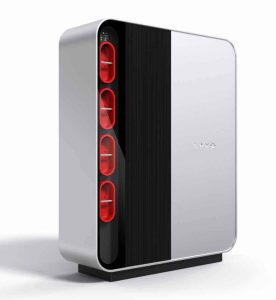 The Tesla Powerwall typically works on Lithium Battery Systems and until now served as the perfect alternative to generating and storing energy for when the sun went out.
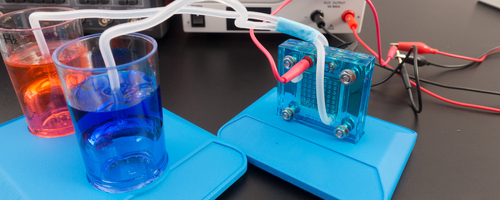 simultaneously storing hydrogen in a metal hybrid sponge. When the energy is needed, the battery uses a fuel cell to deliver this energy directly to your home and power your appliances.
 Project Neu-Chip
  Dr. Jordi Soriano, an associate professor of Physics at the University of Barcelona said that the ability to engineer neuronal circuits in a dish and train them to conduct data analysis will provide new insights into how the brain computes information and finds solutions. The developed technology may even help to design unique and exciting human-machine interfaces.
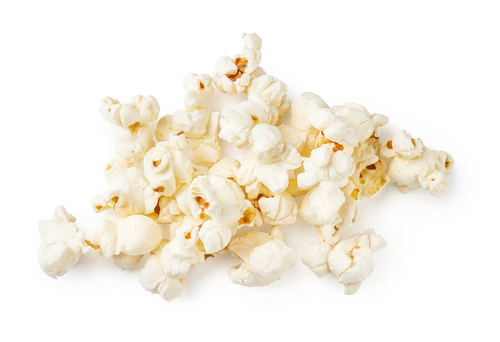 With his team of researchers, Ceron drafted a paper explaining how simple robots can be powered by Popcorn without electricity or hydraulics, at the IEEE International Conference on Robotics and Automation. Yes, it’s true! In this ultra-modern era, it has become commonplace that we come across strange yet astounding developments in the sci-fi field and a popcorn robot is exactly that. The engineers from Cornell University demonstrated their hypothesis. Inside a silicon beam that was fastened with toasted wire, they put 36 kernels. An electrical current was dispersed through the metal chord, warming up the kernels which eventually started popping due to the heat, moving the silicon.
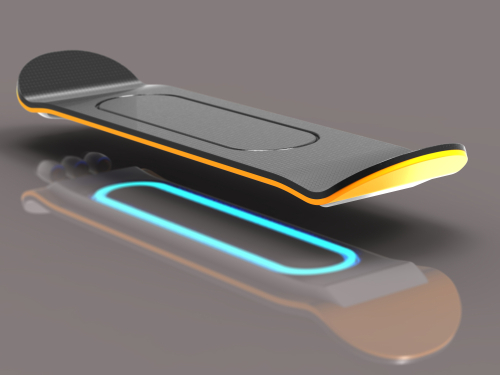 The genius who conceived the hoverboard project was Jimmy Zhou, an intern at Hacksmith Industries who is also an engineering student in Canada. Zhou devoted a number of hours to work on the complex technicalities that entailed the creation of the hoverboard. The founder of Hacksmith Industries, James Hobsen, gave a befitting analogy in his attempt to describe how hard Zhou worked: “He drank more Red Bulls than a frat house on spring break.” The statement reflects the unbridled dedication and consistency that Zhou displayed, both of which serve as key components in creating something of scientific value.
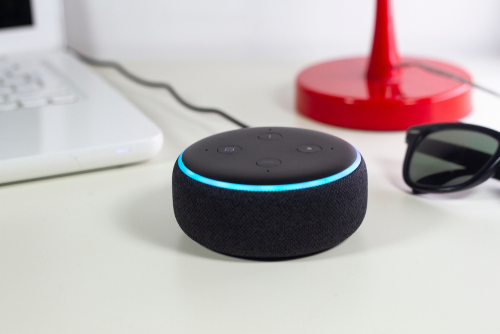 Credible sources associated with the project recently reported that this is a palm-sized device with the core objective of monitoring your breathing and sensing if there are any interruptions. In case there are, it detects that you have a sleep apnea disorder. There have been no details released by those working on the project regarding the final product’s look.
 The goal of installing the tracker may not be limited to detecting signs of sleep apnea; Amazon could employ its AI prowess to examine various other sleeping disorders like sleepwalking or insomnia. Through its cloud technology, the tracker could have the potential to develop a wide-ranging sleep analysis system that keeps these disorders in check.
 R. E. KEARNEY