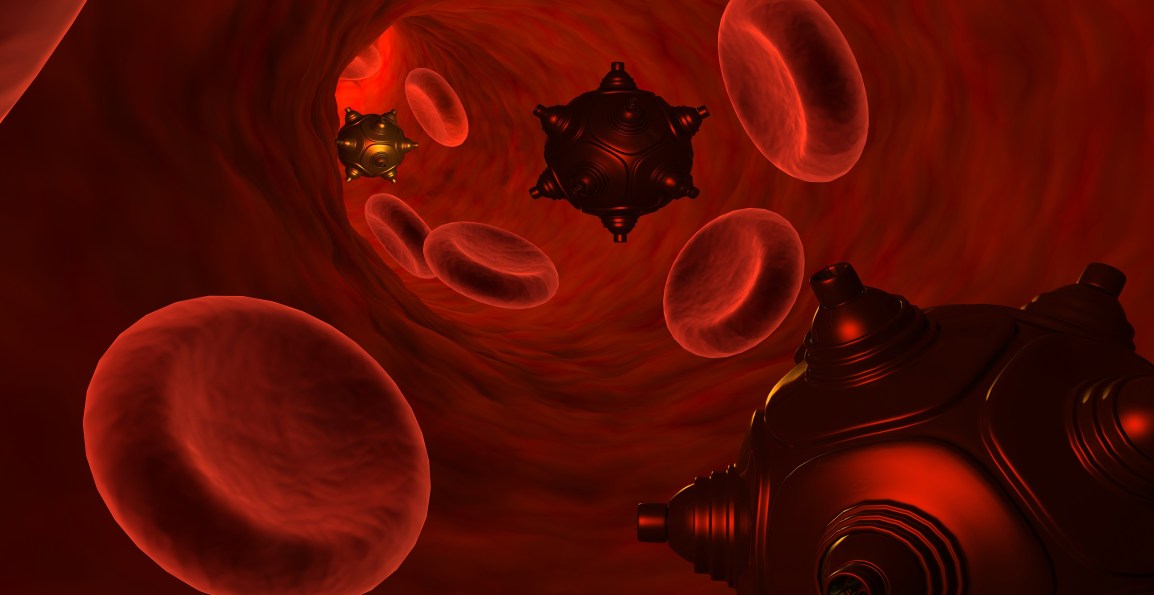
There have been many movies focused on robots – plots that glorify robots, and plots that show them in a negative light, or even taking over the human race. In reality the time isn’t far off when robots will equal human intelligence. And interestingly, the first living robot has already been created.
A team of scientists claim to have built living robots called Xenobots which can pick up things, move around and most importantly, they can heal themselves. Just like we see in the movies.
 The reasoning given behind the creation of these robots is that the researchers hope that one day these robots could be used to clean up microplastics in the ocean, helping the environment. And secondly, they could be used to inject drugs inside humans.
The robots are made from cells taken from frog embryos which are then rearranged to create primitive beings. The scientists believe these are one of a kind living machines. They are not robots in the traditional sense; however, they are not human beings either. They have synthesized the two together and created a new class altogether. They are living beings that are easily programmable.
The robots are a millimeter in length and were developed with the help of a supercomputer that uses an evolutionary algorithm. The supercomputer first tested thousands of 3D designs to create a form of life. The scientists then chose a handful of designs and tested them to see whether they could move or perform a basic task that was assigned to them.
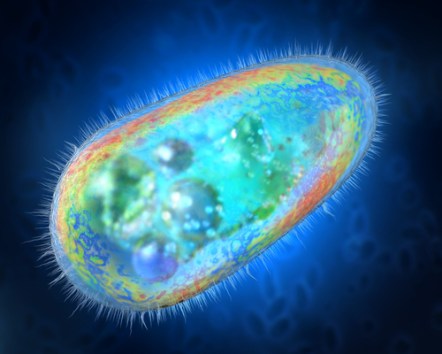 The robots only have a lifespan of about 10 days as the heart cells are only able to contract and relax for that specific duration on their own. The functions the robots perform vary. They can go from pushing pellets into a central location to actually moving around objects.
Another advantage of these robots is that they are completely biodegradable. They cause no harm to the Earth, unlike robots that are made from other materials like steel and metal. There are no traces left behind of their existence.
Right now these robots are very tiny but researchers plan to expand their size and they believe that they could be built with nerve cells and other cells that are used to give cognitive abilities at some point in the near future.
When we consider the reality of the situation, it seems we are much closer to a world where humans and robots live together side by side. It may seem odd to many, however, with such discoveries and inventions, that the idea of robots becoming equal to humans is becoming stronger and stronger.

 Historians and climatologists have tried to map out exactly what would happen if a nuclear war were to occur and as expected the results were horrendous. They believe that the people within a specific radius of the bomb would be obliterated immediately, but the impact would not stop there. Every part of the world would feel the impact of the bomb, including the oceans and wildlife.
 Scientists report that in a nuclear war that there would be so much smoke and dust generated that it could block the Sun’s light for up to 5 years. They believe that not only would it be much colder with a significant lack of sunlight, but also there will be excess UV rays as the ozone layer would become damaged or even destroyed during a nuclear war. Lower temperatures, due to smoke and dust blocking the sun would result in freezing, even in the summers, destroying fruit, vegetable and grain crops.
 One such astrophysicist named Ron Mallett was confident that he had theoretically found a way to travel to the past. In an interview with CNN, he said that he has written a scientific equation that can be used as the basis for the actual time machine. He further said that using this equation, he had made a preliminary version of the time machine to demonstrate the main components of his theory to the world.
 For traveling back in time, the astrophysicist again used Einstein’s theory that states that space-time is bent by gigantic objects subject to gravity. The stronger the gravity is, the slower time passes and vice versa. Mallett told CNN that in Einstein’s theory when we talk of space, we involve time in it too and that’s why it is called space time, whatever you do to space also happens with time. He further said that if you can bend space, the possibility exists that you can twist it too.
 What will happen next?
 How will this be done?
 These findings showed that aging is not simply the result of one specific gene or pathway acting on its own, but rather a union of networks all working together for the long term. This will certainly help explain why no single gene or pathway has been found that can provide longer life for worms, humans, or any other animal.
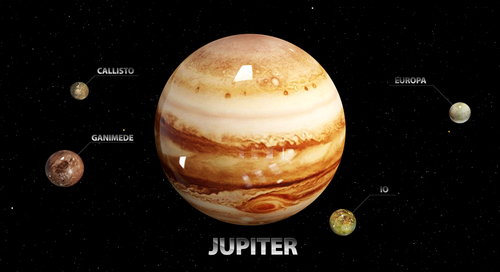 Europa is one of Jupiter’s 79 moons. About forty years ago, a voyager spaceship was sent to photograph it and it was able to take a close-up photograph of the exterior of the moon. In these pictures it was visible that Europa had an ice surface, with cracks and splits, which gave it the look of an eyeball.
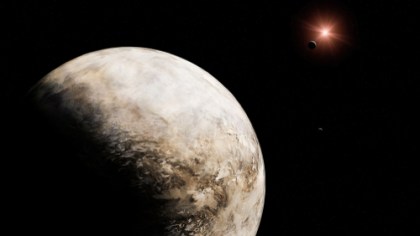 Then further research took place where scientists started researching the inner workings of the planet and the water’s location. It is believed by many researchers that a large water ocean, double the size of the Earth’s surface is present underneath the icy surface of Europa. Another theory which the scientists believe is that there might be shallow reservoirs of melted water below the thick exterior of the moon. The third theory was that the reason water vapor exists outside Europa is Jupiter’s powerful radiations, which are stripping water vapors off of the ice shell of its moon. This theory was made due to the fact that when water was discovered on Europa, it was always near the part of the moon which was facing Jupiter during the orbit.
 R. E. KEARNEY